 Hable con un agente al (888) 572-7520
  Enviar mensaje a un agente



In 2026, the U.S. logistics industry faces an increasingly clear reality: even the most advanced technology loses value if the human behind the wheel is exhausted, distracted, or mentally disengaged. For decades, the trucking industry focused primarily on improving engines, optimizing routes, and increasing operational efficiency. Today, however, the strategic focus is shifting toward driver well-being as a central pillar of safety and productivity.
Leading fleets across the United States are moving away from reactive safety programs that address incidents only after they occur. Instead, they are implementing comprehensive preventive strategies that combine artificial intelligence, biometric monitoring, and health services designed specifically for life on the road.
This shift is not driven solely by ethical or workplace concerns. It is also an economic decision. Preventable accidents, multimillion-dollar lawsuits, and constant driver turnover have demonstrated that the physical and mental health of drivers is a critical factor in the sustainability of the trucking industry.
According to industry estimates, nearly 27% of long-haul drivers in the United States experience symptoms of depression in 2026. Companies and regulators are increasingly seeking to reduce that number through in-cab technology, better rest conditions, and access to mental health support.
Smart Cabins: Technology Focused on the Driver
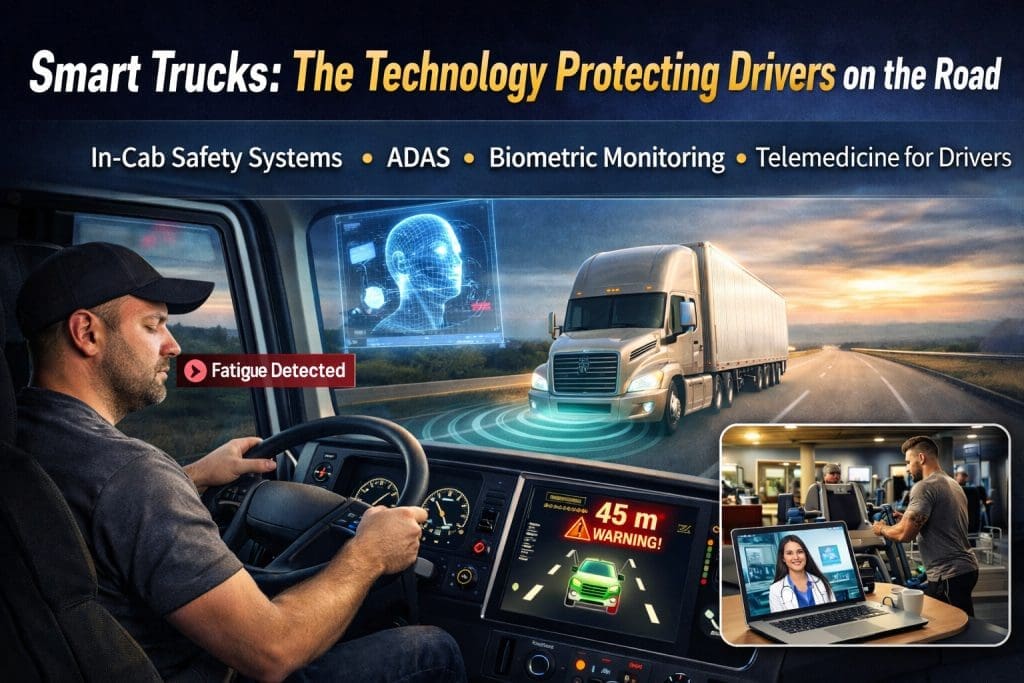
One of the most visible changes is happening inside the truck cab itself. What was once simply a driving environment is becoming an advanced monitoring space designed to enhance driver safety.
Among the most widely adopted innovations are driver attention monitoring systems, which use infrared cameras to analyze driver behavior in real time. These systems track eye movements, blinking patterns, and head position to detect signs of fatigue before they become dangerous.
Modern technology can even identify what experts call the “fixed gaze” phenomenon, a form of cognitive fatigue in which a driver stares at a single point for several seconds without actively processing the road environment.
At the same time, Advanced Driver Assistance Systems (ADAS) have become standard equipment in many commercial fleets. These systems manage features such as adaptive cruise control, lane-keeping assistance, and automatic emergency braking.
The goal is not to replace the driver, but to reduce the cognitive load during driving shifts that can extend up to ten hours. By managing constant micro-adjustments to steering and speed, the truck helps reduce accumulated stress throughout the day.
Another major innovation involves the evolution of human-machine interfaces (HMI) inside the cab. Truck manufacturers are redesigning dashboards to avoid what experts call “information overload fatigue.” Instead of harsh alarms, alerts can now appear as gentle seat vibrations or subtle audio cues that warn drivers without triggering unnecessary stress responses.
Wellness Programs for Life on the Road
Preventive strategies also include wellness programs that, until recently, were mostly associated with office jobs.
One of the most innovative initiatives is telemedicine designed specifically for truck drivers. Through specialized platforms, drivers can access medical consultations and mental health services while on the road. These programs connect drivers with professionals who understand the unique challenges of over-the-road (OTR) life, including isolation, irregular schedules, and limited access to healthy routines.
Meanwhile, traditional truck stops are beginning to evolve into driver wellness hubs. Some locations now offer quick-access gyms, healthier “farm-to-table” food options, and high-quality sleep cabins designed to provide true restorative rest during mandatory breaks.
Another structural change is the digitalization of driver medical certifications. With the full implementation of the FMCSA’s National Registry II system, driver health records are now fully digital. This allows companies to identify health trends such as hypertension or sleep apnea before they become serious safety risks on the road.
Mental Health and Operational Costs
Driver well-being is also beginning to show measurable financial benefits for trucking companies.
Insurance providers in the United States are starting to offer premium reductions for fleets that implement fatigue-monitoring technologies and mental health programs.
These initiatives are also helping address one of the industry’s most persistent challenges: driver turnover. In an increasingly competitive labor market, recent studies show that 84% of drivers would accept slightly lower pay in exchange for better work-life balance, more home time, or stronger mental health support.
For trucking companies, reducing turnover means lowering recruitment costs, training expenses, and operational disruptions.
Case Study: A Zero-Fatigue Fleet Strategy
A major logistics fleet in the U.S. Midwest recently implemented a fatigue-prevention strategy that illustrates the impact of these technologies.
The company discovered that 35% of its minor accidents occurred during the final two hours of drivers’ 11-hour shifts, regardless of driver experience.
To address the issue, the fleet equipped its trucks with radar sensors, advanced cameras, and eye-tracking technology capable of analyzing driver gaze behavior.
When the system detects that a driver’s gaze remains fixed for more than four seconds—a classic sign of highway hypnosis—the seat gently vibrates and the audio system recommends a nearby rest stop.
If the driver fails to respond to multiple alerts, the truck automatically activates hazard lights, maintains lane position, and safely slows to a complete stop on the shoulder.
After one year of implementation, the results were striking. Rear-end collisions dropped by 75%, stress-related sick leave declined by 40%, and the company renegotiated its insurance policy with a 12% reduction in annual premiums.
A New Standard for the Trucking Industry
The transformation underway in U.S. logistics shows that highway safety is no longer determined solely by stronger engines or better infrastructure.
Today, the decisive factor is the physical and mental condition of the driver.
As a phrase increasingly heard across the trucking industry puts it:
“In 2026, a truck no longer just transports cargo. It actively protects the life of the person behind the wheel, turning the cab into a space for preventive health.”
In an industry where a single incident can lead to multimillion-dollar losses or litigation, driver well-being is no longer an optional benefit. It has become the new operational standard for trucking in the United States.
 Business hours: Monday to Friday from 8:00 AM to 5:00 PM. California time