 Hable con un agente al (888) 572-7520
  Enviar mensaje a un agente

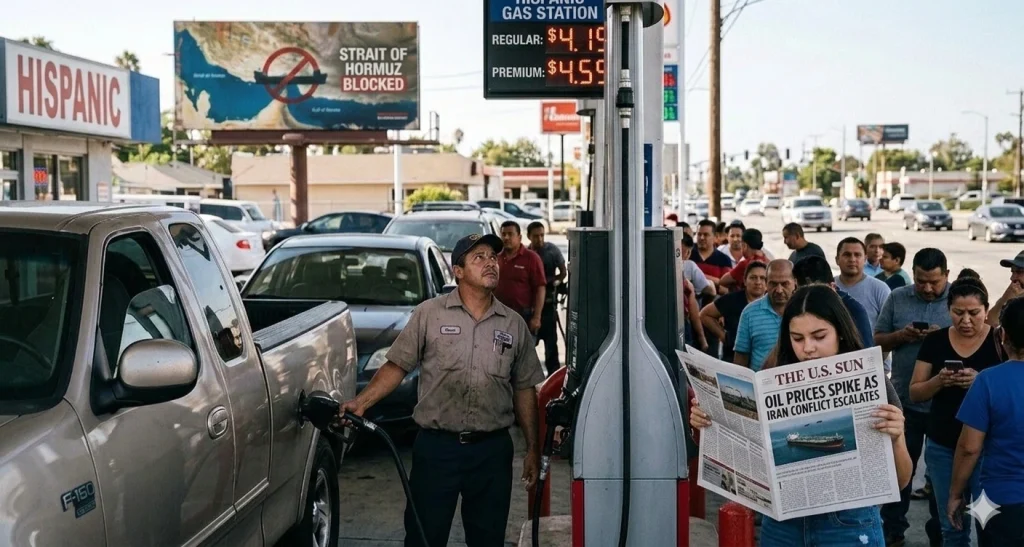

The outlook for U.S. truckers and drivers has taken a drastic turn this week. After months of relative stability, the eruption of a direct conflict involving Iran has sent shockwaves through global energy markets. Recent reports from major news outlets and specialized sites confirm that gas prices have begun a climb not seen since the invasion of Ukraine, driven by fears of a prolonged disruption in the global crude supply.
The closure of the Strait of Hormuz, a waterway through which nearly 20% of the world’s oil flows, is the critical factor keeping analysts on edge. The Financial Times highlights that the paralysis of this route has forced refineries to seek costlier alternatives, translating almost immediately into higher prices at local gas stations. For those who rely on their trucks or delivery vehicles for their daily livelihood, this increase represents an “indirect tax” that bites directly into their profits and household budgets.
Time magazine notes that geopolitical uncertainty is fueling unprecedented volatility. Although the United States is a major energy producer, the gasoline market is globally interconnected, preventing the country from isolating itself from the impact of international prices. Experts consulted by financial media agree that if hostilities continue, the national average per gallon could break the four-dollar barrier in a matter of weeks, disproportionately affecting sectors that move the economy by road.
Gasoline, War, and Transportation
This situation comes at a delicate time, just as families were beginning to feel relief from general inflation. Rising gas prices don’t just hit the fuel tank; they create a domino effect on the price of food and basic consumer goods due to increased freight costs. The transportation sector—where the Latino community has a vital presence—is now on the front lines of this economic crisis stemming from the armed conflict.
Projections from The Wall Street Journal suggest the federal government may be forced to release Strategic Petroleum Reserves to try to stabilize the supply, though they warn this is only a short-term fix. The reality at the pump already shows increases of 10 to 20 cents per gallon in several states, a trend that seems far from reversing as long as the smoke from attacks lingers in the Middle East. Monitoring gas prices has become the number one priority for fleet owners and independent drivers across the U.S. territory.

In light of this scenario, analysts recommend caution and rigorous financial planning. Rising gas costs force route optimization and adjustments in transport rates to survive a period of inflated operating costs. The Latino community, known for its resilience in the logistics sector, now faces the challenge of navigating an energy crisis brewing thousands of miles away, but felt deeply every time they fill up to go to work.
What is the Market Saying Today?
A recent report from Bloomberg highlights that the energy market has suffered its biggest shake-up in four years, with an immediate jump in crude prices already reflecting in consumer gas projections. Bloomberg Brief analysts warn that Brent and WTI have seen spikes of up to 13%, a visceral reaction to fears that key infrastructure in Saudi Arabia and Kuwait could become systematic targets in the conflict.
This volatility isn’t just a passing fluctuation; it responds to the real risk of a supply paralysis that could push oil to $90 per barrel in the short term. The magnitude of the impact now depends on the duration of hostilities, as a prolonged disruption in the Strait of Hormuz would take a fifth of the world’s crude flows out of circulation. Bloomberg notes that while the U.S. has significant domestic production capacity, the surging dollar and geopolitical uncertainty are inevitably driving up the cost of gasoline.
For the transportation sector, this means economic relief will be delayed as refineries adjust their margins against the possibility of the conflict escalating into a full-scale regional war affecting all Gulf producers.
 Business hours: Monday to Friday from 8:00 AM to 5:00 PM. California time