 Hable con un agente al (888) 572-7520
  Enviar mensaje a un agente



The tax season in the United States once again opens a debate that directly affects millions of workers and small transportation business owners: the possibility of filing a tax return at no cost.
Although about 70% of U.S. taxpayers can file their taxes for free, very few actually do. For independent truck drivers, small fleet owners and owner-operators, understanding these options can represent significant savings and better financial planning for their businesses.
The tax landscape recently changed after the administration of President Donald Trump eliminated the Direct File program after the 2025 tax season. This left the Internal Revenue Service Free File system as the main free alternative for filing taxes in 2026.
However, despite its availability, the program remains widely underused.
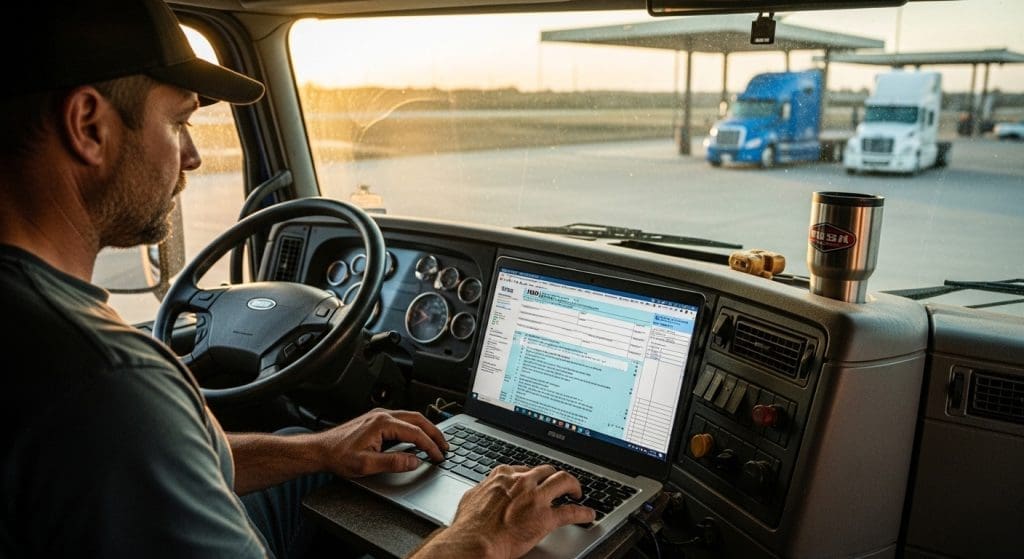
A free program almost nobody uses
The IRS Free File system was created in 2003 to allow taxpayers with moderate incomes to submit their returns using tax preparation software at no cost.
In 2026, the program is available to individuals with an adjusted gross income of up to $89,000 per year, which includes a large portion of transportation professionals, particularly owner-operator truck drivers, small transportation business owners, fleet owners with moderate personal income and drivers working under independent contracts.
Despite this, the latest data shows that only 2% of eligible taxpayers used Free File in 2024.
That same year, about 3 million tax returns were filed through Free File, while the average taxpayer spent $270 on tax preparation services.
For many truck drivers and small fleet owners, that expense may be unnecessary if their tax situation is relatively simple.
Why the program is underused
Many analysts find it surprising that such a useful free tool is so rarely used.
A report from the financial platform NerdWallet described the program as “dramatically underused,” noting that millions of taxpayers could save money each year by taking advantage of it.
Part of the problem, according to journalistic investigations, is linked to the role of large tax software companies such as TurboTax and H&R Block.
A 2019 investigation by the nonprofit newsroom ProPublica found that these companies hid the Free File option on their websites and redirected users toward paid versions of their products.
Today, both companies are no longer partners in the Free File program, although they still offer limited free versions of their software.
What this means for truckers and fleet owners
For professionals in the transportation sector—especially trucking—tax season can be complex.
Many transportation professionals deal with tax situations involving fuel deductions, maintenance expenses, truck depreciation, commercial insurance costs and travel or per diem expenses.
In these cases, some taxpayers prefer to hire a professional accountant or tax preparer. However, not every case requires paid services.
For many owner-operators with relatively straightforward tax returns, free tools may be sufficient.
This is particularly important at a time when operating costs in the trucking industry continue to rise, including fuel, maintenance and commercial insurance.
Reducing administrative expenses—such as tax preparation—can help improve cash flow for small fleets and independent truck drivers.
Free tax filing options available in 2026
Although the Direct File program is no longer available, several free alternatives still exist.
1. IRS Free File
This remains the main option for taxpayers with income of up to $89,000.
The system allows users to file their returns using tax software provided by certified partners, including:
- 1040Now
- 1040.com
- ezTaxReturn
- FileYourTaxes
- OnLine Taxes
- TaxAct
- FreeTaxUSA
- TaxSlayer
The process works through a guided questionnaire, similar to commercial tax software.
2. IRS Fillable Forms
Another option is Fillable Forms, which allows taxpayers to complete IRS forms directly online.
This option is available to all taxpayers, but it does not provide step-by-step guidance and is generally used by individuals who already have experience preparing their own tax returns.
3. AARP Tax-Aide program
Another important alternative is AARP Tax-Aide, the largest volunteer tax preparation program in the United States.
In 2025, the program helped more than 1.7 million people file their tax returns.
It operates through more than 3,600 locations nationwide, including:
- Libraries
- Community centers
- Banks
- Shopping centers
Although it primarily targets individuals over 50 or those with moderate income, any taxpayer can use the service.
Tax tips for transportation professionals
For truck drivers and small fleet owners, several basic strategies can help reduce costs during tax season.
1. Check whether you qualify for Free File
If your adjusted gross income is below $89,000, you may be able to file your return for free.
2. Always use the official IRS portal
Access the IRS website directly to avoid paid services disguised as free options.
3. Evaluate the complexity of your tax return
If you have multiple business deductions, consulting a professional may be advisable.
4. Review available tax credits
Programs such as the Earned Income Tax Credit (EITC) can represent thousands of dollars in potential benefits.
A political debate that continues
The elimination of the Direct File program reignited the political debate about free tax filing access.
Senator Elizabeth Warren and other lawmakers have proposed legislation to restore the system and make it permanent.
Consumer advocates argue that a truly free tax filing system could save taxpayers billions of dollars every year.
While the debate continues in Washington, the reality for millions of workers—including truck drivers and small transportation business owners—is that free filing options already exist, but many people still do not know about them.
For the trucking industry, where every dollar matters, understanding these tools could mean the difference between spending hundreds of dollars unnecessarily or keeping that money inside the business.
 Business hours: Monday to Friday from 8:00 AM to 5:00 PM. California time