 Hable con un agente al (888) 572-7520
  Enviar mensaje a un agente

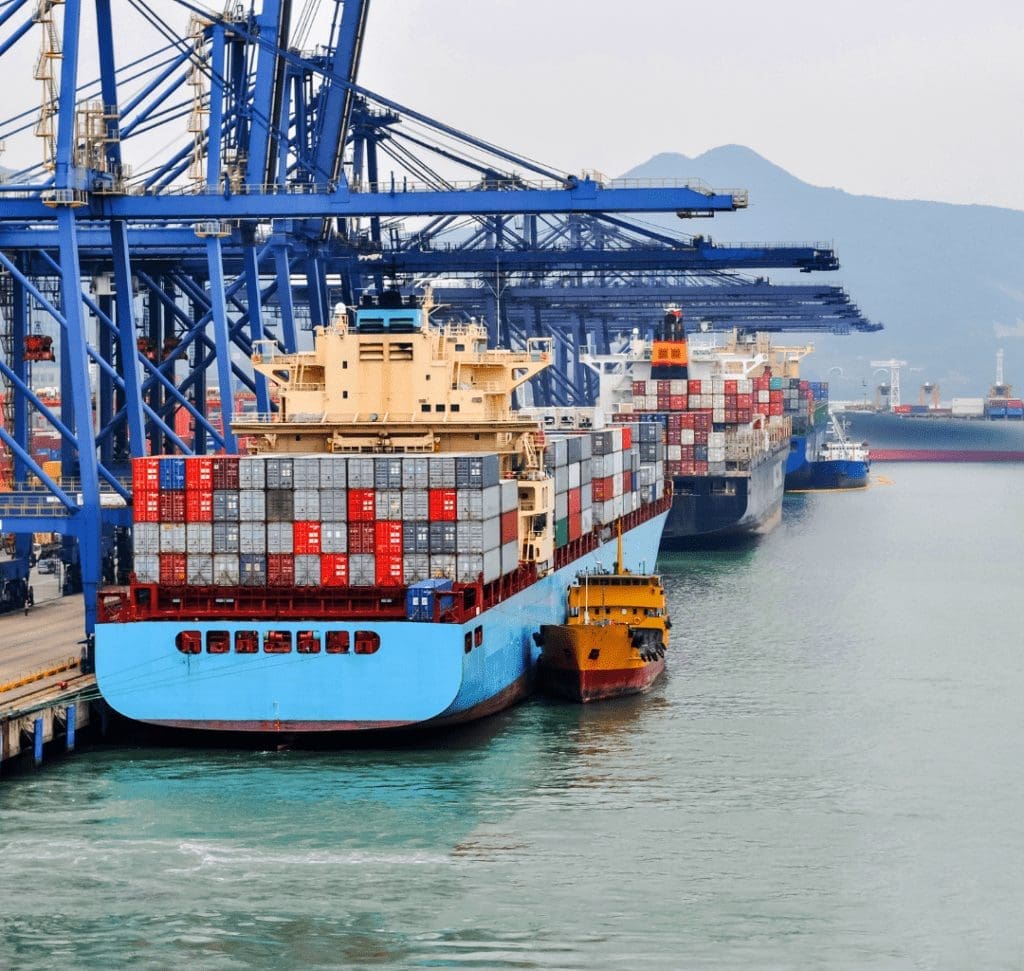

Global trade is experiencing a period of instability and tension. The war in Iran has ceased to be a distant geopolitical concern and has become a factor with direct effects on U.S. transportation, which—as is well known—drives the country’s economy. What happens in the waters of the Strait of Hormuz has a domino effect that could eventually reach gas stations in Texas, truck stops in Illinois, and the docks of Long Beach.
Energy and logistics experts warn that blockades or instability in Middle Eastern shipping lanes not only affect cargo ships but also disrupt the entire intermodal supply chain on which owner-operators and small fleets depend.
The most immediate effect of the war in Iran is the volatility of crude oil prices. Iran controls access to the Strait of Hormuz, through which approximately 20% of global oil consumption passes. For a U.S. trucker, this translates into a few words: expensive diesel.
According to the Energy Information Administration (EIA), any significant disruption in this region can cause immediate spikes in international prices. “The fuel market reacts to fear rather than actual shortages,” notes a Goldman Sachs analyst. For the carrier already struggling with tight profit margins, a 50-cent-per-gallon increase can mean the difference between profitability and operating loss on a cross-country trip.
Bottleneck Effect at Ports
While the conflict is happening on the other side of the world, the ports of Los Angeles and Long Beach—the gateway for 40% of U.S. imports—are already feeling the shockwaves. The Iran-Contra War is forcing shipping companies to reroute their lines, avoid the Suez Canal, or face “astronomical” cargo insurance premiums.
When shipping is disrupted, arrival schedules in California become unpredictable. For dray truckers, this is a logistical nightmare.

The California Case
Appointment Congestion: Changes in ship arrival times lead to massive cancellations and then a backlog of appointments to pick up containers.
Chassis Shortage: With unloading delays, the flow of chassis is disrupted, leaving many drivers waiting for hours without being able to invoice.
Storage Costs: Increased ocean transit times pressure importers to accumulate inventory, filling Inland Empire warehouses and driving up storage fees, reducing the budget for inland transportation. Industry Voices
“It’s not just the fuel,” commented Julian Rodriguez, owner of a small fleet in Fontana, California. “If the ships don’t arrive on time because of the Iran-Contra War, my guys sit around. If the ship is late and everyone wants to unload at the same time, the port collapses and we lose the day in lines,” he added, convinced. For its part, the International Maritime Federation has expressed concern for crew safety, leading some companies to circumnavigate the Cape of Good Hope in Africa. This detour adds 10 to 15 days to the voyage, delaying the arrival of truck parts, tires, and technology manufactured in Asia and Europe, exacerbating rising maintenance costs for local carriers.
What can we expect?
In the short term, uncertainty will be the norm. FreightWaves analysts suggest that truck owners should review their fuel surcharge clauses to ensure they are protected against sudden spikes in diesel prices.
Furthermore, the Iran-Contra affair could accelerate a trend that was already gaining momentum: nearshoring. Faced with the instability of global shipping routes, many companies are moving their production to Mexico. This could represent a golden opportunity for Latino truckers in the U.S., especially those operating on the southern border, as the flow of overland freight from Mexico could offset the drop or delay in Asian imports arriving by sea.
The war in Iran isn’t just an international news headline; it’s a determining factor in the bottom line of every truck traveling on Interstates 10 or 5. The resilience of the Latino trucking community will be tested once again. Staying informed about crude oil prices and port updates in California will be critical to navigating these turbulent times.
In a globalized market, a spark in the Persian Gulf can end up burning through the maintenance budget of a San Bernardino garage. Vigilance and strategic planning are, now more than ever, the key.
War with Iran: Keys to Anticipating It
- Synchronization with the EIA Index: It is essential to use the Energy Information Administration’s (EIA) weekly report as a legal and commercial basis. This ensures that rate adjustments are not perceived as arbitrary, but rather as a technical response to the international market.
- Break-Even Point Update: Given the increase in operating costs, it is imperative to recalculate the fixed cost per mile. An increase in fuel prices alters the profit margin if the new break-even point is not precisely known.
- Adoption of Dynamic Fuel Surcharges: It is recommended to abandon “flat” or fixed rates. Implementing a surcharge clause that fluctuates according to the price per gallon is the only guarantee against absorbing the costs of the War with Iran.
- Reduction of Quote Validity Cycle: In a highly volatile environment, freight quotes should have a maximum validity of 24 to 48 hours. This avoids financial commitments based on fuel prices that could become outdated in a few days.
- Optimizing fuel consumption through speed: Technical speed management (maximum 65 mph) translates into savings of up to 15% in fuel consumption. On long-haul routes, this energy efficiency measure is the fastest defense against diesel inflation.
- Eliminating deadhead runs: Under current conditions, moving equipment without cargo is financially unsustainable. The priority should be route triangulation to ensure that every mile traveled generates revenue, even with reduced margins.
- Monitoring flow at California ports: Ship diversions due to the armed conflict are disrupting schedules in Los Angeles and Long Beach. Carriers should verify chassis availability and appointments before dispatch to avoid downtime.
- Negotiating based on metrics: When requesting adjustments from brokers, carriers should present concrete data: percentage increase in crude oil prices, impact on maintenance, and logistical delays. Data-driven professional negotiation has a higher success rate.
- Proactive inventory management: The war in Iran is also affecting the supply chain for components. It is advisable to acquire tires and critical spare parts in advance to avoid technical shutdowns due to a lack of imported parts.
- Diversification toward nearshoring: Given the crisis in transoceanic maritime transport, land transport from Mexico is emerging as a stable alternative. Evaluating routes to the southern border can open up more predictable and profitable cargo opportunities.
 Business hours: Monday to Friday from 8:00 AM to 5:00 PM. California time