 Hable con un agente al (888) 572-7520
  Enviar mensaje a un agente



The transportation sector is facing its most radical transformation in a century. According to recent reports in The New York Times, 2027 has been marked as the point of no return for the mass deployment of autonomous trucks on major U.S. highways. This technology, which until recently seemed like science fiction, is already an everyday reality in states like Texas, where companies such as Aurora Innovation, Kodiak Robotics, and Waabi are operating fleets in test mode with results that are astonishing investors and keeping workers on their toes.
The choice of Texas as the epicenter of this revolution is no coincidence. The Lone Star State offers predictable weather, long-distance routes ideal for machine learning, and, most importantly, an extremely favorable regulatory environment that allows for the testing of heavy vehicles without a human on board with minimal legal obstacles.
For large corporations, the economic incentive is undeniable. In the current cost structure of trucking, driver wages and benefits account for approximately 40% to 45% of the total operating cost per mile. By eliminating the need for a human driver, companies not only save on wages but also break the physical limitations of Hours of Service (HOS) imposed by federal law.
An autonomous truck doesn’t need to sleep, eat, or take breaks, allowing a unit to operate nearly 24 hours a day, doubling the productivity of a traditional truck. However, this advancement comes at a high price: while a new conventional truck might cost around $160,000 to $200,000, a unit equipped with Level 4 autonomous driving technology can exceed $300,000 or even $400,000 due to the cost of LiDAR sensors, long-range radar, and high-performance computing systems.
Truckers vs. autonomous trucks
The workers’ response was swift. Unions like the Teamsters have raised a national alarm, demanding legislation that mandates a human operator in the cab of any heavy commercial vehicle.
Union leaders argue that this isn’t just about protecting jobs, but a matter of basic public safety. The Teamsters maintain that the technology is not yet capable of reacting with the intuition of a seasoned road worker to unforeseen situations, such as an oil spill or a sudden accident. In states like California and Colorado, union pressure has led to intense legislative debates to halt what they consider a dangerous experiment with the lives of citizens who share the roads with these algorithm-controlled steel giants.
One of the biggest technical fears surrounding autonomous trucks is the phenomenon known as “phantom braking.” This error occurs when the truck’s vision system detects a non-existent object—such as a shadow under a bridge or the reflection of a traffic sign—and applies the emergency brakes at full speed for no real reason.
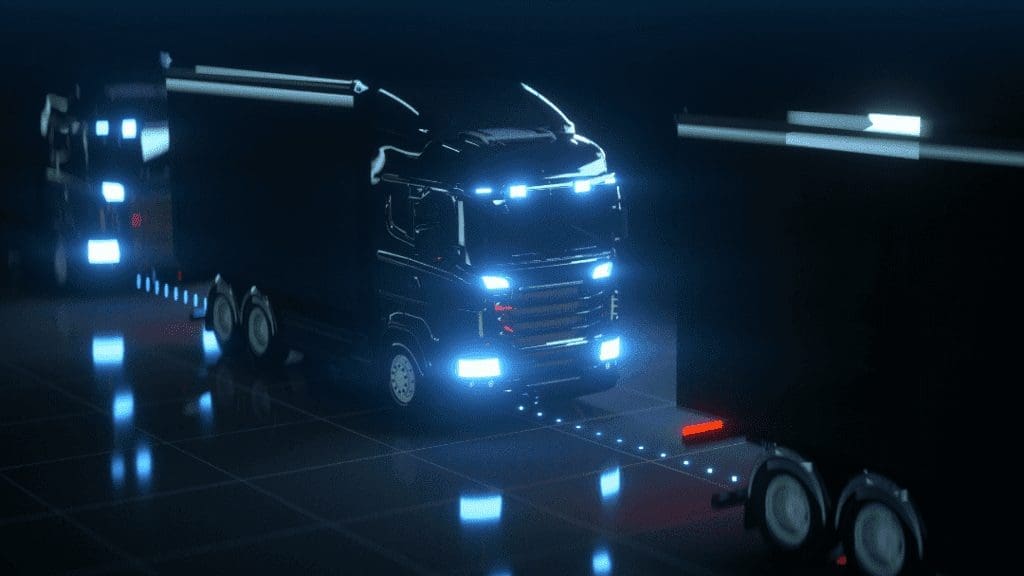
For a truck loaded with 80,000 pounds, a sudden phantom braking event on a busy highway can lead to massive rear-end collisions and fatal tragedies. It is this type of technical failure that makes remote driving viewed with skepticism by many experts.
Although the idea of an “office operator” controlling the truck seems like a solution, internet latency and cybersecurity risks make remote driving inadvisable for critical maneuvers, since losing the connection for even a second could mean total disaster on the road.
Despite the challenges, the advance of autonomous trucks seems difficult to stop, at least in the medium term. Leading companies defend themselves, asserting that their systems have already covered millions of miles with fewer incidents than human drivers, promising a future of cheaper and more efficient logistics.
For the trucker, who has been the backbone of the sector for decades, this scenario demands an urgent adaptation toward roles with greater technical specialization or fleet management. 2027 isn’t just a date on the calendar. It may be the start of a new era where the roar of engines will no longer necessarily be accompanied by a firm hand on the wheel, but by a computer processing thousands of data points per second to deliver cargo on time.
What can truckers do?
For the trucker who sees 2027 as a threat, the key is to stop seeing themselves as a “driver behind the wheel” and start seeing themselves as a “technological asset manager.” The arrival of autonomous trucks won’t eliminate the need for human oversight. On the contrary, it will create a new critical role: the Autonomous Fleet Monitor or Mission Operations Specialist.
Here are some key pillars for making this strategic transition:
- ADAS and Level 4 Certifications. The first step is mastering the language of machines. Drivers should seek technical certifications in Advanced Driver Assistance Systems (ADAS). Understanding how LiDAR sensors, radar, and cameras work can not only make you a better driver today, but also prepare you to calibrate and monitor these systems tomorrow. Technical institutions and manufacturers like Aurora and Kodiak are beginning to offer training programs to help seasoned drivers become “in-cab safety specialists” during the deployment phases.
- Telemetry Management Specialization. Fleet monitoring is no longer done by radio, but through data screens. It is vital to become familiar with fleet management platforms (such as Samsara, Motive, or Geotab) that integrate artificial intelligence. A supervisor must be able to interpret “phantom braking” alerts or sensor degradation in real time to decide whether a truck should continue its route or be diverted to a repair shop.
- From Handling to Port-to-Port Logistics. The most viable autonomous transport model is the “Transfer Hub.” In this model, the autonomous truck handles the long highway journey, but a human operator must manage the “last mile” or complex maneuvers at logistics centers.
Hub Supervisor Role: Coordinate the arrival of autonomous units, perform physical inspections of sensors upon arrival, and manage trailer coupling/uncoupling.
Cybersecurity Training: Understand the basic protocols for protecting the fleet network against hacking or signal interference.
Real-world driving experience is something that takes an algorithm years to learn. Autonomous trucking companies highly value drivers who can “read” the weather, traffic, and human behavior, as this intuition is what allows them to program better safety algorithms.
 Business hours: Monday to Friday from 8:00 AM to 5:00 PM. California time