 Hable con un agente al (888) 572-7520
  Enviar mensaje a un agente

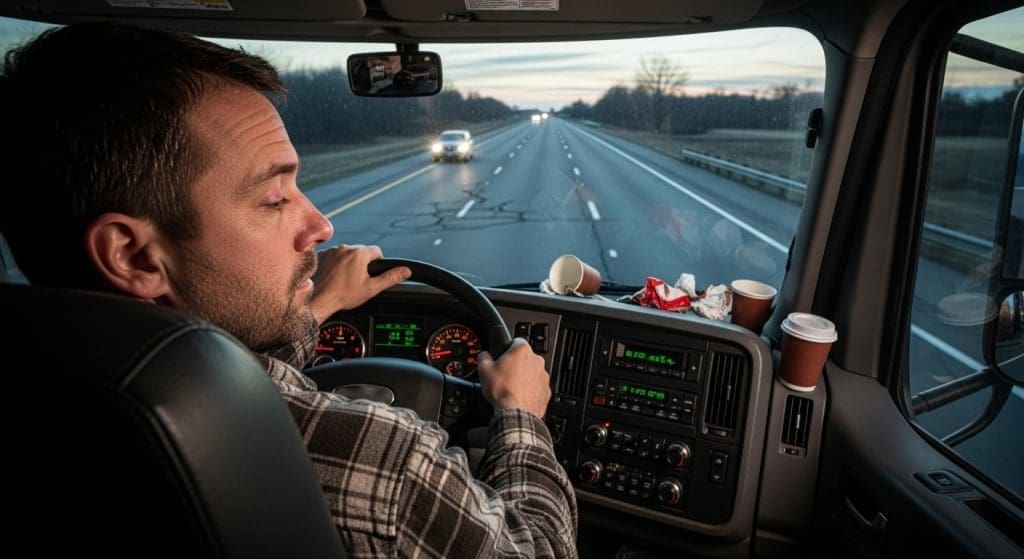

Being a truck driver in the United States means operating under one of the strictest regulatory systems in the world. The Federal Motor Carrier Safety Administration (FMCSA) enforces rules that go far beyond “driving tired” or using a phone behind the wheel.
The problem is that many drivers—even experienced ones—are unaware of several of these prohibitions until they face an inspection or receive a fine. In an environment where compliance directly impacts safety, employment, and profitability, understanding these rules is not optional.

01
Using a handheld phone while driving
High penalty
The FMCSA strictly prohibits handheld mobile phone use while operating a commercial motor vehicle (CMV). This includes dialing, texting, or holding the phone at any time while driving. Only hands-free use with a single-touch activation is allowed, requiring drivers to plan communication in advance.
Fine: up to $2,750 per violation · CDL disqualification after 2 offenses

02
Driving more than 11 hours
HOS
Under FMCSA Hours of Service (HOS) rules, a driver may operate for a maximum of 11 hours after 10 consecutive hours off duty. Exceeding this limit is one of the most common violations found during roadside inspections, especially under tight delivery schedules.
Penalty: immediate out-of-service + carrier fines
03
Being on duty more than 14 hours in a day
HOS
Even if you drive fewer than 11 hours, you cannot remain on duty for more than 14 hours after starting your shift. Breaks, fueling, loading, and paperwork all count toward this limit. The clock does not stop, making proper time management critical.
Direct HOS violation · Tracked via ELD
04
Skipping the mandatory 30-minute break
Required
If you have driven more than 8 cumulative hours without taking at least a 30-minute break, you are in violation. This break can be on duty (not driving) or off duty, but it must occur before continuing.
Applies to property-carrying drivers
05
Falsifying or tampering with the ELD
Federal violation
Since 2017, most CMVs are required to use Electronic Logging Devices (ELDs). Altering, disconnecting, or entering false data into the system is a serious federal offense. DOT inspectors are trained to detect inconsistencies quickly.
May result in CDL loss and criminal charges

Did you know?
According to the FMCSA, HOS violations are the second most common reason drivers are placed out of service during roadside inspections. The ELD records all activity, even when the engine is off.
06
Driving under the influence of alcohol or drugs
CDL at risk
The legal BAC limit for CMV drivers is 0.04%, half the limit for regular drivers. FMCSA drug testing includes marijuana—even in states where it is legal—as well as cocaine, opioids, amphetamines, and PCP.
Positive test = immediate suspension + mandatory SAP program
07
Exceeding maximum weight limits
FMCSA
The federal gross vehicle weight (GVW) limit is 80,000 pounds without special permits. Exceeding total or axle weight limits can lead to immediate fines. Overweight loads also increase accident risk and damage infrastructure.
State and federal fines depending on excess weight
08
Operating with a suspended or expired CDL
High penalty
Driving a CMV with a suspended, revoked, or expired CDL is a serious traffic violation. It does not matter if you hold a valid regular driver’s license. States share records, so violations follow you nationwide.
Fine: up to $5,000 · Extended CDL disqualification
09
Failing to report accidents to the DOT
Mandatory
The FMCSA requires carriers to report accidents involving fatalities, injuries requiring medical treatment, or vehicles towed due to damage. Failure to report is a federal violation, and drivers must cooperate fully in the process.
Must be reported within hours of the incident
10
Transporting hazardous materials without HAZMAT endorsement
Federal violation
Hauling hazardous materials without the proper HAZMAT endorsement on your CDL is illegal. The vehicle must also display correct placards, and shipping papers must be accessible in the cab.
Civil penalties + potential criminal charges depending on the load
Understanding DOT regulations for truck drivers is not optional. It is essential to protecting your CDL, avoiding costly fines, and staying safe on the road. As inspections become more frequent and technology-driven, staying up to date with trucking laws USA and FMCSA compliance is part of being a professional driver today.
 Business hours: Monday to Friday from 8:00 AM to 5:00 PM. California time