 Hable con un agente al (888) 572-7520
  Enviar mensaje a un agente

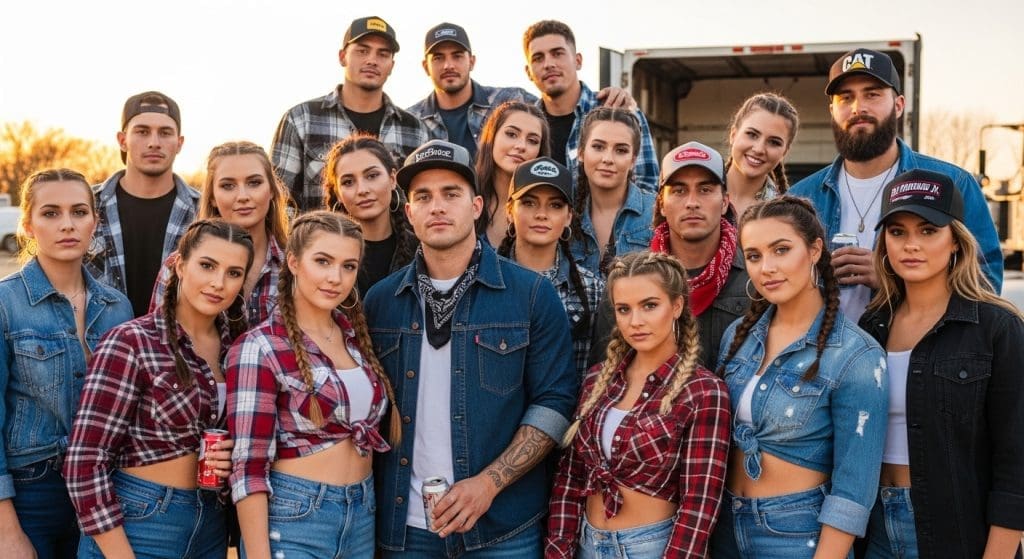

Trucker fashion is one of the most distinctive phenomena in contemporary style. Unlike trends that originate on runways and later trickle down to the masses, this movement was born in the heart of hard work: endless highways, gas stations, agricultural fields, and long workdays. What began as a functional response to workers’ needs in the 1970s has evolved into a global aesthetic language embraced by pop culture, streetwear, and high fashion.
This reverse journey—from utilitarian to aspirational—is what makes trucker style a unique case in fashion history.
The origin: pure functionality in the 1970s
To understand this aesthetic, it is essential to look back at the United States during the 1970s and 1980s. At the time, truck drivers, farmers, and manual laborers needed clothing that was durable, affordable, and suited for demanding conditions.
Two key pieces emerged that would define the DNA of trucker fashion:
The trucker hat, designed with a foam front and mesh back for ventilation, was built to withstand long hours under the sun. It was also commonly distributed as a promotional item by agricultural and transportation companies.
The trucker denim jacket, popularized by Levi’s with its Type III model, offered durability, mobility, and a structured design ideal for physical labor.
None of these garments were created with aesthetics in mind. Their value was purely practical. Yet that lack of intention became their greatest strength: authenticity.

From the road to youth culture
In the 1990s, trucker style began to migrate into urban subcultures. Movements like grunge and skateboarding adopted these garments as a form of rejection of traditional fashion norms.
Dressing like a worker became a cultural statement:
Anti-luxury
Anti-perfection
Anti-establishment
This reinterpretation transformed trucker fashion into a symbol of rebellion and authenticity.
The major breakthrough came in the early 2000s, when celebrities such as Pharrell Williams and Justin Timberlake incorporated trucker hats into their outfits, pushing them into the mainstream spotlight. At the same time, brands like Von Dutch capitalized on the trend, turning a functional accessory into an aspirational fashion item.
Why trucker fashion is still relevant
The longevity of trucker fashion is not accidental. It is sustained by structural factors that keep it relevant decades after its origin.
First, nostalgia and authenticity. In an increasingly digital world, trucker aesthetics connect with something tangible: physical work, effort, and the road. It represents a real identity in contrast to the ephemeral nature of modern trends.
Second, its adaptability to streetwear. Contemporary urban fashion constantly draws inspiration from workwear and industrial codes. Within this ecosystem, trucker style fits naturally.
Third, its reinterpretation by luxury fashion. Brands like Balenciaga, Off-White, and Amiri have reimagined trucker elements using premium materials and refined designs, elevating the aesthetic without losing its essence.
The result is a hybrid style that blends ruggedness with sophistication, function with aspiration.
Key elements of trucker style
The visual language of trucker fashion is built around specific pieces that maintain both aesthetic and functional coherence.
The trucker hat is the defining icon, with its structured front, breathable mesh back, and bold or vintage-inspired logos.
The trucker jacket, typically made of denim, provides structure and durability, featuring defined cuts and signature front pockets.
Jeans follow a similar logic: durable, straight or slightly relaxed fits that prioritize function over tight silhouettes.
T-shirts are usually basic or feature simple graphics, often inspired by automotive or workwear culture.
Footwear completes the look with sturdy boots or robust sneakers, reinforcing the functional identity.
However, one essential element cannot be purchased: attitude. Trucker style requires a natural, effortless approach—never forced or overly styled.
How to wear trucker style today
Today, trucker fashion is not about replicating the full look, but about integrating it into modern outfits. Balance is key.
A single trucker piece can define an entire outfit. A hat or jacket alone can convey the aesthetic without excess.
Avoiding logo overload is crucial to maintaining a clean and contemporary appearance.
Combining trucker elements with modern garments helps update the look while preserving its identity.
Playing with proportions, mixing fitted and oversized pieces, adds visual interest.
The rule is simple: look natural, not costume-like.
Trucker fashion proves that true style does not originate from luxury, but from functionality and identity. It is an aesthetic that has endured for decades because it represents something deeper than clothing: a way of life tied to movement, work, and authenticity.
In a world where trends constantly change, trucker style remains relevant precisely because it never tried to be a trend.
It simply was.
And it still is.
 Business hours: Monday to Friday from 8:00 AM to 5:00 PM. California time