 Hable con un agente al (888) 572-7520
  Enviar mensaje a un agente

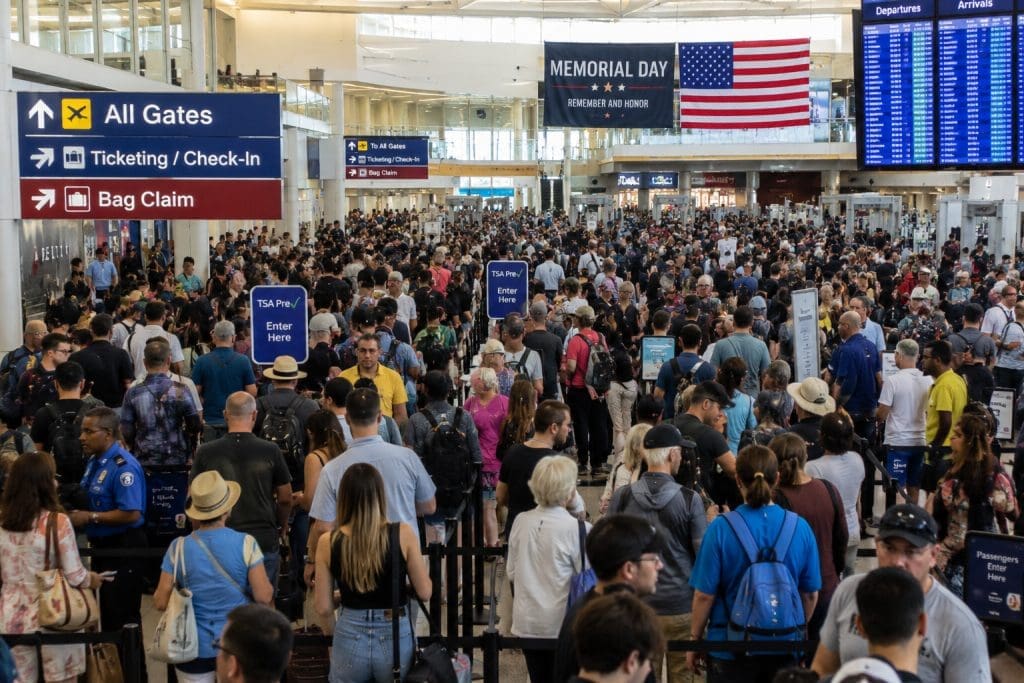

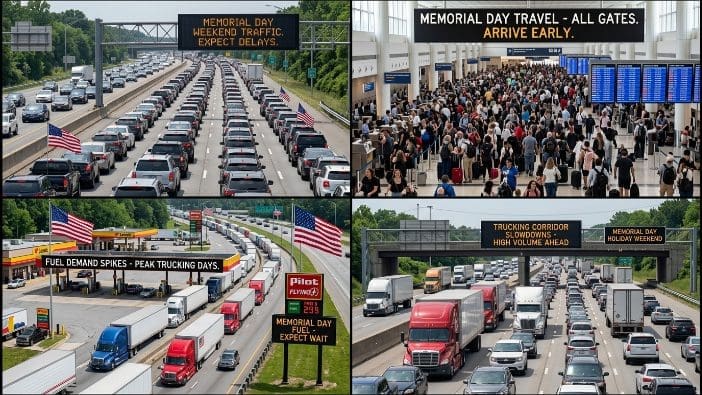
Every year, Memorial Day transforms the United States into one of the busiest travel environments in the world. Highways become congested, airports reach peak capacity, fuel demand rises sharply, and trucking corridors experience major slowdowns as millions of Americans travel simultaneously.
But why is Memorial Day one of the busiest travel weekends in the U.S.?
The answer combines history, culture, weather, economics, and the structure of the American transportation system itself.
Originally created to honor military personnel who died while serving in the U.S. Armed Forces, Memorial Day has gradually evolved into far more than a national day of remembrance. Today, it is widely considered the unofficial beginning of summer in America — and for many families, it represents the first major opportunity of the year for vacations, road trips, outdoor events, and long-distance travel.
Because Memorial Day is observed on a Monday, most workers receive a three-day weekend. That extended break creates the perfect conditions for mass movement across the country.
The Start of America’s Summer Travel Season
For the travel industry, Memorial Day marks the beginning of the summer economy.
Hotels, restaurants, gas stations, beaches, national parks, and entertainment venues all prepare for a major increase in activity. Families often plan vacations months in advance, while others decide to travel at the last minute due to favorable weather and the extra holiday day.
The timing is important. By late May:
- Schools are closing or preparing to close
- Temperatures are rising
- Outdoor events increase nationwide
- Tourism destinations reopen at full capacity
- Summer promotions begin across multiple industries
As a result, Memorial Day becomes one of the first large-scale travel moments after winter and spring.
According to travel industry estimates from recent years, tens of millions of Americans travel during Memorial Day weekend, with the overwhelming majority choosing to drive rather than fly.
That creates enormous pressure on interstate highways.
Why Roads Become So Congested
The American transportation system relies heavily on personal vehicles. Unlike many countries where rail systems dominate long-distance movement, the U.S. road network remains the primary form of domestic travel for millions of people.
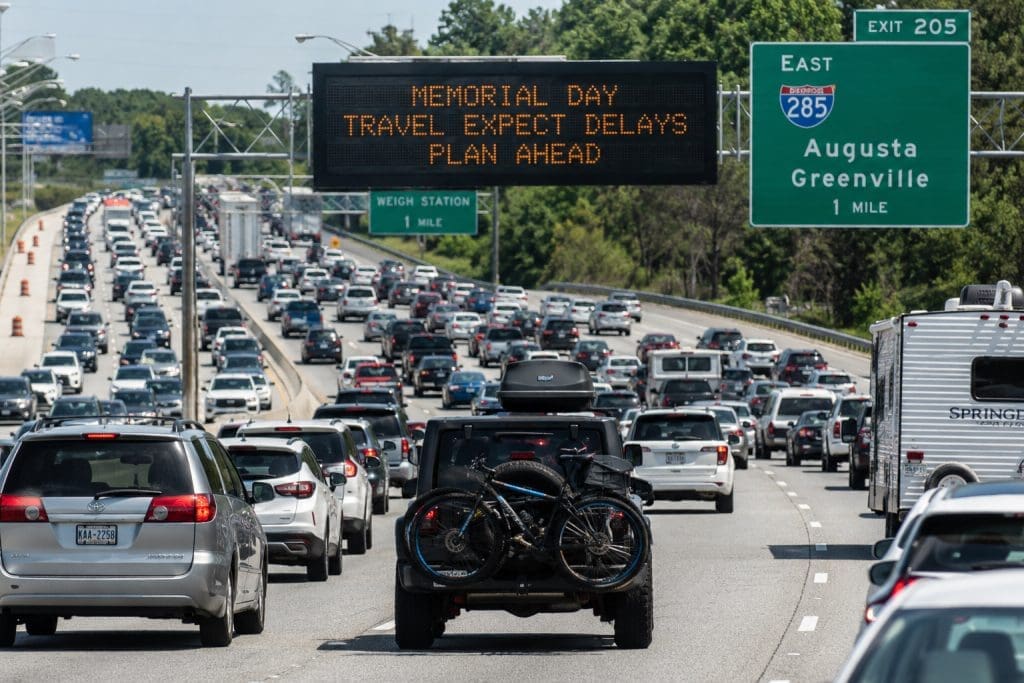
During Memorial Day weekend, major highways often experience:
- Multi-hour traffic delays
- Stop-and-go congestion
- Increased accident rates
- Construction-related bottlenecks
- Fuel station overcrowding
Some of the busiest corridors typically include:
- I-95 on the East Coast
- I-75 in the Southeast
- I-10 across southern states
- I-80 and I-90 in northern regions
- Highways connecting major cities to beaches and vacation destinations
Traffic tends to peak on Friday afternoon and Monday evening as travelers leave and return home at the same time.
For truck drivers and logistics companies, these conditions can become extremely difficult.
How Memorial Day Impacts Trucking and Logistics
While millions of families travel for vacations, the trucking industry continues operating behind the scenes.
Freight deliveries do not stop during Memorial Day weekend. In fact, many sectors experience increased shipping demand before the holiday due to:
- Retail promotions
- Grocery restocking
- Fuel distribution
- Seasonal inventory movement
- Hospitality supply chains
However, crowded highways create major operational challenges for truck drivers.
Congestion increases:
- Delivery times
- Fuel consumption
- Driver stress
- Accident exposure
- Freight delays
In some areas, trucking companies also face temporary restrictions on oversized loads or changes in delivery schedules due to traffic management measures.
The result is a transportation environment where passenger travel and commercial freight movement compete for the same highway space simultaneously.
Fuel Prices Often Rise Before Memorial Day
One reason Memorial Day receives so much economic attention is its connection to fuel demand.
As millions of Americans prepare for road trips, gasoline consumption rises dramatically. Fuel companies, logistics operators, and market analysts closely monitor Memorial Day because it often signals the beginning of higher summer fuel consumption trends.
Historically, gasoline prices tend to increase before Memorial Day due to:
- Seasonal demand spikes
- Refinery adjustments
- Increased tourism activity
- Higher freight movement
For trucking companies and owner-operators, even small fuel increases can significantly affect operational costs.
This is especially important in long-haul freight sectors where profit margins are already under pressure from inflation, maintenance costs, and fluctuating freight rates.
This weekend is more than a three-day break or the unofficial start of summer. It's a time to reflect on the bravery and sacrifice of those who gave their lives in service to our country.
— US Department of the Interior (@Interior) May 22, 2026
National memorials like the Vietnam Veterans Memorial offer space to gather, mourn and… pic.twitter.com/QYQ6Cf2CQZ
Airports and Supply Chains Also Feel the Pressure
Memorial Day does not only impact roads.
Airports across the United States often experience:
- Record passenger volumes
- Longer security lines
- Delayed flights
- Increased baggage traffic
- Staffing pressure
At the same time, supply chains experience unusual stress because consumer demand rises rapidly in sectors like:
- Food and beverages
- Hospitality
- Retail
- Tourism
- Outdoor recreation
Hotels and restaurants often require emergency restocking during the holiday weekend, increasing pressure on regional freight systems.
Why Memorial Day Has Become a National Movement Weekend
Over time, Memorial Day has evolved into something larger than a federal holiday. It has become a nationwide movement event.
Millions of Americans travel simultaneously to:
- Visit family
- Attend ceremonies
- Go to beaches or lakes
- Begin summer vacations
- Participate in sports events
- Attend concerts and festivals
That synchronized travel behavior creates a unique national traffic pattern rarely seen at other times of the year outside Thanksgiving.
For transportation analysts, trucking companies, insurers, and logistics operators, Memorial Day is not simply a holiday. It is a large-scale operational challenge involving highways, freight systems, fuel networks, airports, and public safety.
And every year, as Americans begin summer travel season, Memorial Day once again turns the nation’s roads into one of the busiest transportation environments in the world.
 Business hours: Monday to Friday from 8:00 AM to 5:00 PM. California time