 Hable con un agente al (888) 572-7520
  Enviar mensaje a un agente

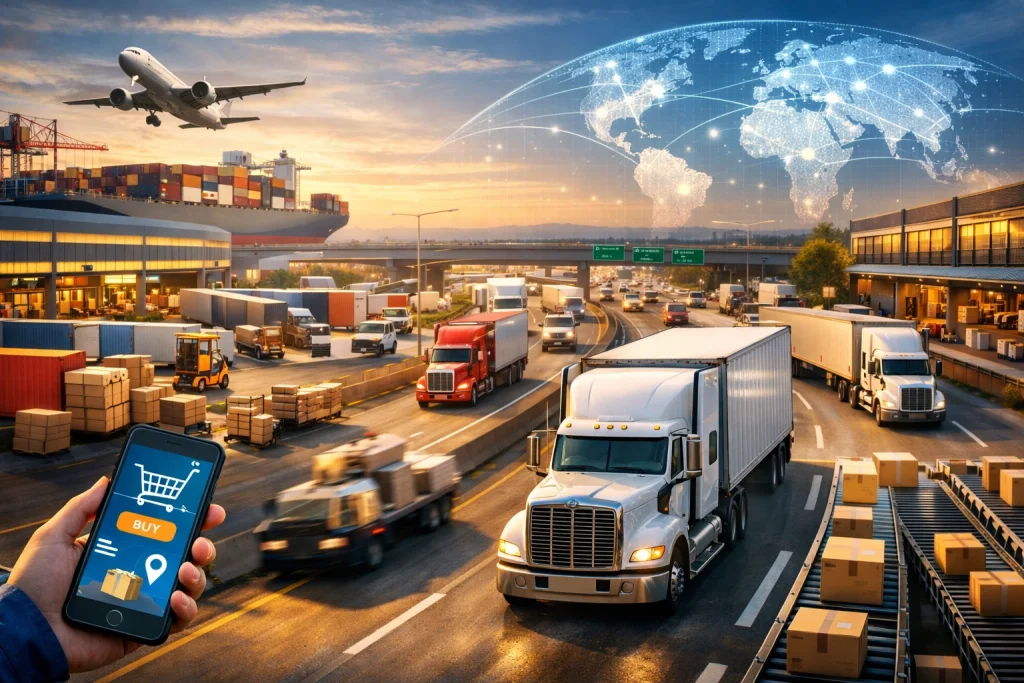

While traditional stores face historic challenges to their physical infrastructure, the nation’s highways are experiencing a steady increase in demand for heavy freight transport services. E-commerce has radically transformed the landscape of commercial product distribution in the real world, increasing the continuous flow of cargo on eighteen wheels.
For the thousands of independent truckers and corporate fleets that drive the national production system, digital purchases are becoming the primary catalyst for job creation, cargo volume, and competitive rates in today’s market. The digital shift in retail consumption habits doesn’t diminish the need for physical transportation; rather, it multiplies it by fragmenting traditional deliveries and demanding much more dynamic logistics chains.
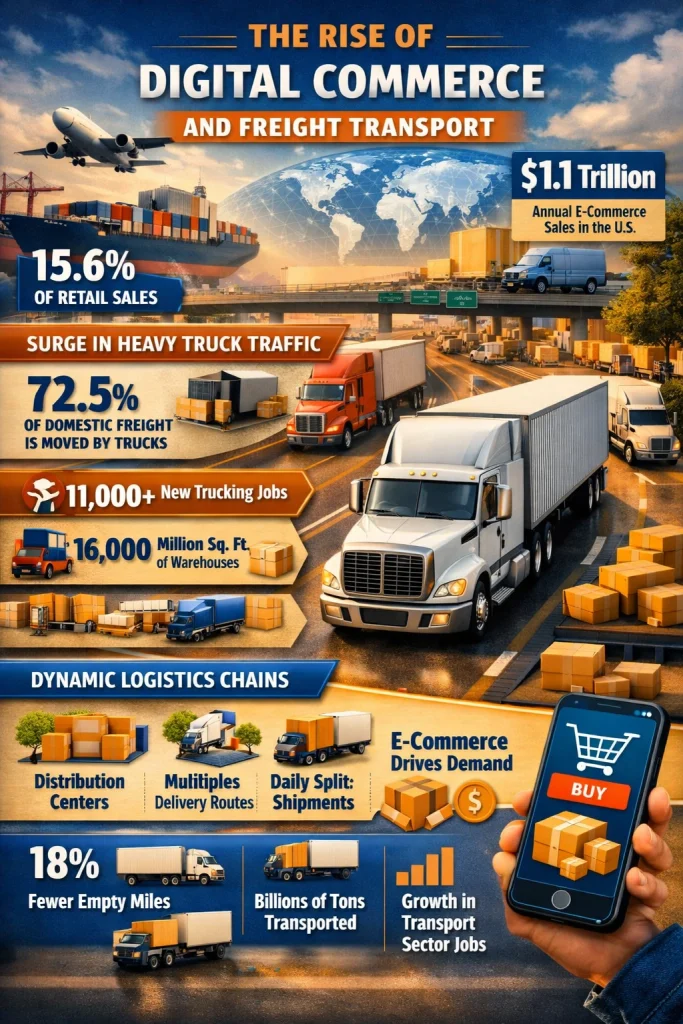
The U.S. Census Bureau, part of the Department of Commerce, reported that cumulative sales through digital channels reached $1.1 trillion annually in its most recent report. This record financial volume represents 15.6% of the country’s total retail sales, translating into billions of additional tons of merchandise incorporated into supply chains.
Each transaction processed on online platforms requires multiple road transport routes, from primary port terminals to regional mega-distribution centers. Statistical data compiled by the American Trucking Association shows that commercial fleets transport 72.5% of the total domestic freight tonnage within the country. With the uninterrupted expansion of online transactions, the national economic structure’s dependence on commercial truck operators is steadily increasing each quarter, a fact that can be verified.
This dynamic of digital consumption has structurally altered the operational design of logistics chains implemented by corporations worldwide. A technical report developed by the Center for Transportation and Logistics at the Massachusetts Institute of Technology details that digital channels generate up to three times the intensity of road transport compared to conventional wholesale systems.
While a traditional store relied on bulk replenishment through a single weekly shipment, e-commerce demands multiple daily, fractional shipments to meet the expectations of the end consumer. This logistical segmentation directly benefits independent carriers and medium-sized fleets, multiplying contracts for medium-distance routes that previously did not exist within traditional corporate structures. Trucking is becoming the indispensable logistical link that enables the immediacy commitments that online platforms promise their global user base.
More logistics centers are boosting routes
The impact of online shopping is clearly evident in the geographical transformations that the distribution of goods is undergoing in the country. The Annual Report on the State of Logistics from the Council of Supply Chain Management Professionals highlights that the corporate sector has increased the total area of decentralized warehousing to more than 16 billion square feet nationwide.
This structural reconfiguration, which e-commerce is driving toward optimizing last-mile delivery processes, has modified the traditional routes of long-haul drivers to promote short-haul routes. For professional drivers, this structural change means a hiring market with diversified operational alternatives that facilitate the reconciliation of long-haul freight with regional routes, allowing them to return to their base of operations on the same day. The diversification of unloading destinations reduces unproductive waiting time and significantly optimizes the financial indicator of profitability per mile for motorized units.
The private sector has responded to this macroeconomic scenario by injecting capital to expand the installed capacity of its commercial vehicle fleets. Corporate reports from global operators such as C.H. Robinson and Prologis reveal a sustained annual increase of 12% in the outsourcing of freight trucks to meet the logistics demand generated by digital platforms and e-commerce.
Logistics brokerage firms indicate that the operational viability of their business models depends critically on the availability of qualified carriers to cover seasonal peak demand. This business competition to secure transport capacity strengthens the negotiating position of independent operators on freight allocation platforms, keeping charter rates at profitable levels and guaranteeing predictable income through long-term contracts. The continuous flow of digital consumer goods acts as a countercyclical buffer against traditional slowdowns in conventional industrial sectors.
Greater Digitalization, Greater Efficiency
The technological development accompanying e-commerce platforms provides advanced management tools that improve the performance of professionals on the road. Research from the University of Arkansas’ School of Supply Chain Management highlights that the use of automated freight matching systems reduces empty runs by 18% for small carriers. This operational advancement directly addresses one of the financial inefficiencies that has historically affected the profitability of small freight transportation companies.
By precisely coordinating outbound freight with compatible return loads in the same geographic region, analytical systems optimize overall diesel fuel consumption and mitigate structural wear and tear on heavy vehicles. Truckers thus achieve greater net profit per mile traveled, minimizing prolonged operational downtime at the country’s terminals.
Official projections from the U.S. Bureau of Labor Statistics strongly support the long-term sustainability of this economic trend. The federal government’s Occupational Outlook Handbook projects the creation of more than 110,000 additional jobs for heavy-duty truck and tractor-trailer drivers this decade. The government document explicitly attributes this sustained demand for personnel to the expansion of digital retail channels and the critical need to maintain the smooth operation of the national logistics system.
State transportation agencies agree that the land infrastructure requires urgent structural upgrades to address this increase in commercial traffic, which justifies the allocation of federal funds for the modernization of the country’s main economic corridors. Truck drivers are firmly at the heart of the economic structure, confirming that the delivery of digital products will always require a skilled specialist behind the wheel on the highways—an essential link in the e-commerce chain.
 Business hours: Monday to Friday from 8:00 AM to 5:00 PM. California time