 Hable con un agente al (888) 572-7520
  Enviar mensaje a un agente



Soccer is much more than a sport. It is a passion that brings together cultures, generations, and entire nations. With the start of the FIFA Minimalism World Cup 2026, thousands of families and communities come together to watch their favorite teams compete, sharing unforgettable moments that will be remembered for years to come. But how did this story begin, the one that today captivates much of the planet?
There is evidence of games similar to soccer dating back thousands of years. In ancient China, people played “Cuju,” an activity that involved kicking a ball into a net. Records also exist of ball games in civilizations such as the Greeks, the Romans, and several Mesoamerican cultures. The Aztecs called it “Tchatali,” a game played with a stone ball that symbolized the sun (although in this version, the captain of the losing team was sacrificed to the gods—a practice that fortunately remains in the past).
In the 12th century, in England, what was probably the first version of what we now know as soccer emerged. Games resembling soccer were played in fields and along roads, where players used not only their feet but also their fists. It was a much rougher and more violent form of the game, but it paved the way for the sport’s modern development.

The Birth of Modern Soccer and Its Global Expansion
However, it was not until 1863 that a fundamental step was taken, when several English sporting associations came together to establish a common set of rules after the earlier versions had resulted in bans, injuries, and in some cases even deaths. Thus, the Football Association (FA) was born, widely considered the first official soccer organization.
In 1871, the Football Association Challenge Cup (FA Cup) became the first major competition. The following year, the first match between two national teams was played, and twelve years later, in 1883, the first international tournament was held, featuring four national teams: England, Ireland, Scotland, and Wales.
The creation of clear rules allowed the sport to grow rapidly and spread throughout Europe and other parts of the world. Thanks to British merchants, sailors, and workers, soccer reached numerous countries, where it was embraced and transformed into a true popular passion.
By the beginning of the 20th century, soccer was already being played in the Americas, Africa, and Asia. In 1904, FIFA (Fédération Internationale de Football Association) was founded as the governing body responsible for organizing and regulating international competitions. The first FIFA World Cup was held in Uruguay in 1930 and has been played every four years ever since. Later, in 1991, the first FIFA Women’s World Cup took place in China, and it too has been held every four years since then.
The creation of the World Cup in 1930 marked a turning point. Since then, the tournament has become one of the most important sporting events on the planet, bringing together national teams from every continent.
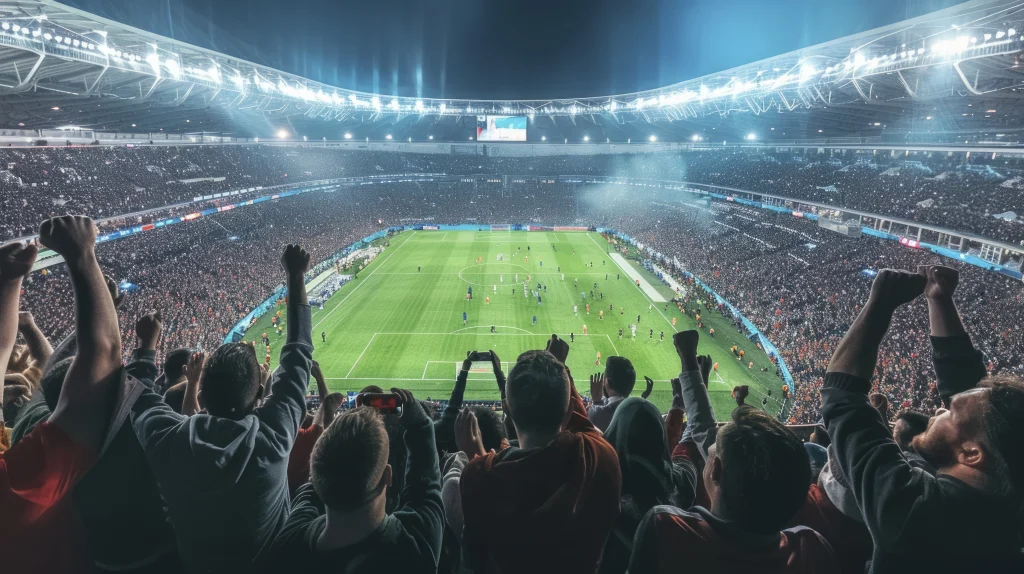
Soccer Today
Today, there are 211 national federations affiliated with FIFA, the sport’s global governing body. The world is divided into six regional confederations: the Confederation of African Football (CAF), the Asian Football Confederation (AFC), the Union of European Football Associations (UEFA), the Confederation of North, Central America and Caribbean Association Football (CONCACAF), the Oceania Football Confederation (OFC), and the South American Football Confederation (CONMEBOL).
Today, soccer is the most popular sport in the world. It is estimated that billions of people follow national and international competitions each year. Beyond being a recreational activity, it represents a major industry that generates employment, drives tourism, and promotes the development of sports infrastructure.
Its impact is also reflected in values such as discipline, perseverance, commitment, and teamwork, qualities that extend beyond the playing field and apply to many professional activities.
What Soccer and Transportation Have in Common
Although they may seem like very different activities, soccer and freight transportation share several fundamental principles. No team wins a championship without coordination, planning, and responsibility. Likewise, every successful delivery depends on the collective effort of drivers, operators, companies, and customers.
Just as a team needs to protect its players to achieve its goals, transportation companies seek to protect their vehicles and operations through insurance solutions that allow them to move forward with confidence.
From its origins to the present day, soccer has demonstrated an extraordinary ability to bring people together and create memorable stories. Because, just like every journey on the road, behind every great victory there is preparation, hard work, and a team willing to go the extra mile.
 Business hours: Monday to Friday from 8:00 AM to 5:00 PM. California time