 Hable con un agente al (888) 572-7520
  Enviar mensaje a un agente

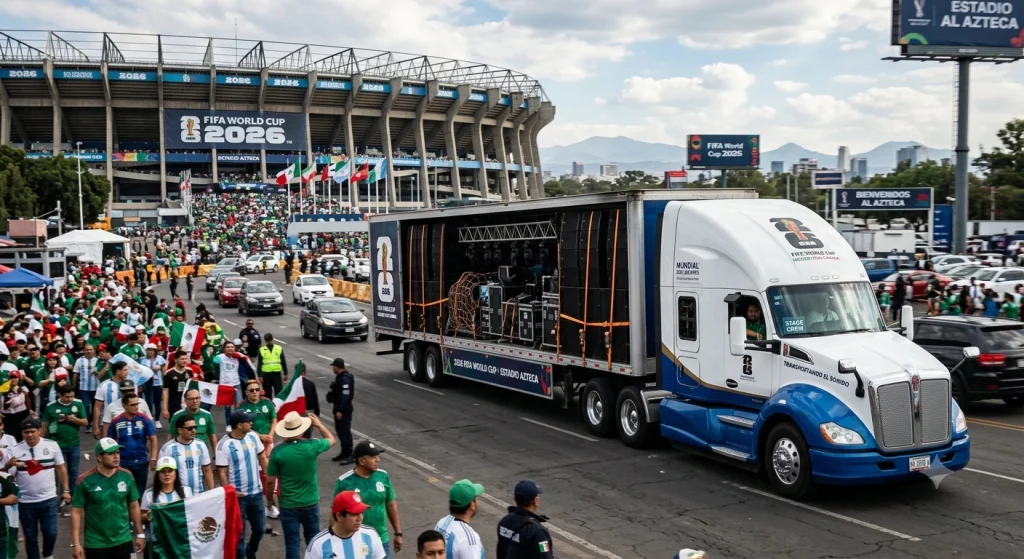

The 2026 FIFA World Cup is officially underway, and before reaching its conclusion it has already become the most geographically expansive tournament ever staged. Mexico City’s iconic Estadio Azteca once again made history by hosting the opening ceremony, featuring Colombian superstar Shakira and launching the largest World Cup ever organized. In the opening match, Mexico defeated South Africa, while South Korea also started its campaign with a victory over the Czech Republic.
While global attention is focused on goals, star players, and results, another competition is unfolding far from the cameras: the massive logistics operation required to support an event spread across three countries and 16 host cities.
Never before has a World Cup required the movement of so many people, goods, and resources across such a vast territory.
The Largest World Cup Ever Held
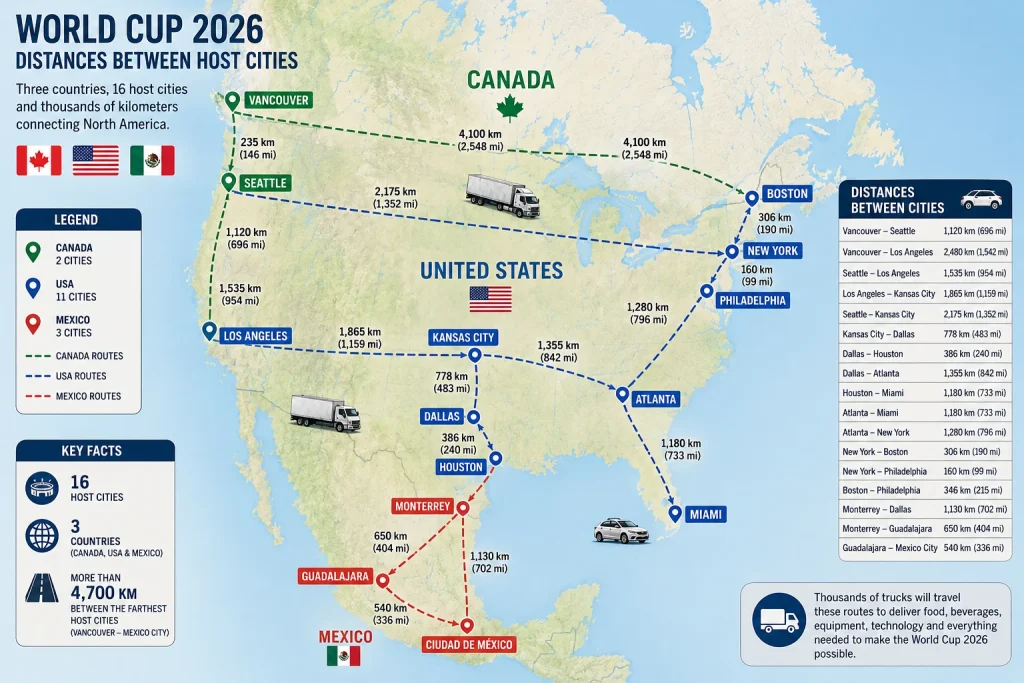
The 2026 edition is the first jointly hosted by the United States, Mexico, and Canada. Host cities stretch from Vancouver on Canada’s Pacific coast to Miami in the southeastern United States, including Mexico City, Monterrey, Guadalajara, Dallas, Houston, Kansas City, Atlanta, Boston, Philadelphia, Seattle, Los Angeles, and New York.
The distances involved are extraordinary. Some host cities are separated by more than 2,800 miles, making this tournament one of the greatest logistical challenges in sports history.
For fans following their national teams across multiple cities, this means frequent flights, road trips, and careful planning. For transportation companies, it represents an unprecedented demand for logistics services over more than a month of competition.
What Happens Before Every Match
Every game requires much more than two teams and a stadium.
Hours before spectators begin arriving, hundreds of workers are already coordinating deliveries of food, beverages, technical equipment, security systems, medical supplies, official merchandise, and broadcasting infrastructure.
Stadiums hosting tens of thousands of people effectively operate as temporary cities. Each match day requires tons of products and equipment to arrive precisely on schedule to ensure seamless operations.
Behind every game stands a sophisticated supply chain involving distribution centers, logistics providers, trucking companies, warehousing operators, and specialized suppliers.
Thousands of Trucks on the Road

Although much of the attention often focuses on airports and international flights, the true backbone of the World Cup is ground transportation.
Most of the supplies used in stadiums and fan zones travel by road.
Refrigerated trucks transport food and beverages. Specialized vehicles move broadcasting and telecommunications equipment. Freight carriers supply official stores, media centers, hotels, training facilities, and fan gathering areas.
As the tournament progresses and travel between host cities increases, the need to coordinate deliveries within strict schedules becomes even more critical. Logistics operators must avoid congestion, maintain inventory availability, and meet precise delivery windows.
Many host cities have already implemented special traffic management plans to facilitate freight movement while minimizing disruptions to local economic activity.
The Cold Chain Has a Match to Play Too
One of the sectors under the greatest pressure during the tournament is refrigerated logistics.
Thousands of tons of perishable food products must remain under strict temperature controls from origin to final consumption.
Meat, dairy products, fruits, vegetables, beverages, and prepared foods often travel hundreds or even thousands of miles before reaching stadiums, hotels, restaurants, and hospitality venues serving visitors.
Any interruption in the cold chain can lead to significant financial losses and negatively impact the experience of thousands of fans. As a result, specialized carriers rely on continuous monitoring systems, real-time temperature tracking, and enhanced quality-control protocols.
Hotels, Airports, and Fan Zones
The logistics impact of the World Cup extends far beyond the stadiums.
Host cities must also support hotels, training facilities, airports, public transportation hubs, media centers, and fan zones where thousands of people gather to watch matches.
Each of these locations requires continuous deliveries, maintenance services, security support, cleaning operations, and technical assistance.
The scale of the tournament creates a multiplier effect throughout the regional supply chain, benefiting trucking companies, logistics providers, distributors, food suppliers, warehousing operators, and businesses involved in freight transportation.
A Tournament Measured in Miles
The 2026 FIFA World Cup marks a historic milestone for FIFA. With 48 national teams and 104 scheduled matches, the tournament far exceeds the scale of any previous World Cup.
While Mexico celebrates its opening victory and South Korea secures its first three points, thousands of trucks continue traveling North America’s highways to ensure every match is played without interruption.
Behind every goal, every broadcast, and every packed stadium lies a massive logistics operation connecting three countries, millions of people, and thousands of miles of roads.
The 2026 World Cup is not only being played on the field. It is also being played on highways, in distribution centers, and throughout the supply chains that keep the world’s largest sporting event moving.
Tip: Review your insurance coverage before traveling during the 2026 FIFA World Cup. Increased traffic, long-distance driving, rental vehicles, and cross-border travel can create risks that proper coverage helps manage.
 Business hours: Monday to Friday from 8:00 AM to 5:00 PM. California time