 Hable con un agente al (888) 572-7520
  Enviar mensaje a un agente



A pre-trip inspection is one of the most important procedures for commercial truck drivers in the United States. In addition to being a regulatory requirement, a thorough vehicle inspection can help prevent accidents, avoid costly roadside breakdowns, and reduce risks that could affect your safety record as well as your insurance costs.
Safety starts before you turn the key. That’s why we’re sharing this practical guide to help you perform a pre-trip inspection efficiently and in compliance with Department of Transportation (DOT) regulations.
What Is a Pre-Trip Inspection?
A pre-trip inspection is a systematic review of the tractor and trailer before starting a route. Its purpose is to identify mechanical issues, safety concerns, or damage that could put the driver, cargo, or other motorists at risk.
Every commercial driver is responsible for ensuring that the vehicle is in safe operating condition before hitting the road. A proper inspection can help:
- Identify mechanical issues before they become serious problems.
- Avoid citations and violations during DOT inspections.
- Reduce the risk of accidents.
- Protect transported cargo.
- Maintain a stronger safety record for drivers and fleets.
- Lower the likelihood of insurance claims.
Pre-Trip Inspection Checklist
1. Check the Engine Compartment
Before starting the truck, inspect the following:
- Engine oil level
- Coolant level
- Power steering fluid
- Belts and hoses
- Signs of fluid leaks
- Battery condition and connections
Any leak or damaged component should be repaired before beginning your trip.
2. Inspect the Tires
Tires are among the most critical safety components of any commercial vehicle. Check for:
- Proper tire pressure
- Adequate tread depth
- No cuts, cracks, or bulges
- Wheel and rim condition
- Properly tightened lug nuts
A damaged or poorly maintained tire can lead to accidents, delays, and additional expenses.
3. Check the Brake System
Carefully inspect:
- Air lines
- Brake chambers
- Brake drums or discs
- Automatic slack adjusters
- Air system pressure
Brakes are one of the primary focus areas during DOT safety inspections.

4. Verify Lights and Reflectors
Make sure all lighting systems are functioning properly, including:
- Headlights
- High and low beams
- Brake lights
- Turn signals
- Hazard lights
- Clearance lights
- Side and rear reflectors
Faulty lighting can result in violations and increase the risk of collisions.
5. Inspect the Tractor-Trailer Coupling
Verify that:
- The fifth wheel is properly secured
- Air lines are connected correctly
- Electrical connections are functioning
- There is no visible damage to coupling components
An accidental uncoupling is one of the most serious roadway safety hazards.
6. Inspect the Trailer
Review the following:
- Overall structural condition
- Doors and locking mechanisms
- Suspension system
- Trailer floor and interior walls
- Cargo condition and securement
Cargo must be properly secured to prevent shifting during transit.
7. Perform an In-Cab Inspection
Once inside the vehicle, check:
- Mirrors
- Seat belt
- Windshield wipers
- Horn
- Dashboard gauges and warning lights
- Air pressure levels
- Parking brake system
It is also recommended to perform a brake test before entering traffic. In addition, make sure your documents are up to date and your hours-of-service records are accurate.
Common Pre-Trip Inspection Mistakes
Many experienced drivers make mistakes due to overconfidence. The most common include:
- Rushing through the inspection
- Skipping inner tire inspections
- Failing to check for leaks
- Ignoring minor mechanical issues
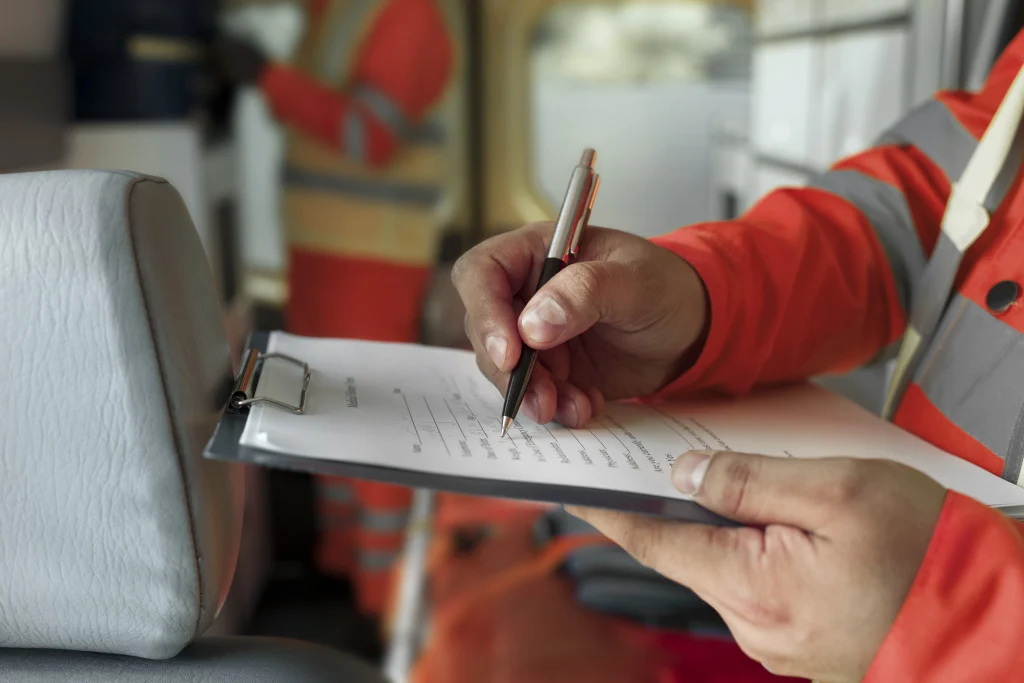
- Not documenting identified problems
A few minutes spent on a thorough inspection can prevent hours of delays and costly repairs.
How Does Safety Impact Truck Insurance?
Insurance companies evaluate multiple factors when assessing risk, including the safety records of drivers and fleets. As a result, companies that maintain preventive inspection programs and ongoing driver training often experience fewer incidents, better regulatory compliance, and stronger overall operations.
A pre-trip inspection is one of the most effective tools for protecting drivers, fleets, and cargo. Taking the time to conduct a complete inspection before every trip can help prevent accidents, reduce operating costs, and ensure compliance with federal regulations.
A strong safety culture not only protects drivers but also contributes to the financial stability of a trucking business. If you have any questions or need assistance, please do not hesitate to contact us.
 Business hours: Monday to Friday from 8:00 AM to 5:00 PM. California time