 Hable con un agente al (888) 572-7520
  Enviar mensaje a un agente



The United States is experiencing one of the most shocking weeks for aviation in recent years. In just four days, four high-profile aircraft accidents left at least 32 people dead, involving military aircraft, a skydiving plane, and a private business jet.
Images of explosions, smoke plumes, and large-scale rescue operations quickly spread across television networks and social media, prompting an inevitable question: Is flying becoming more dangerous in America?
The incidents occurred between Saturday and Tuesday in different parts of the country.
The first involved a U.S. Marine Corps F/A-18 Hornet fighter jet that crashed during a training flight in Washington state. The pilot successfully ejected and survived with minor injuries.
This footage of the U.S. Marine Corps F/A-18 Hornet crash near Rimrock Lake, Washington offers the clearest view yet of what happened and it appears the jet may have impacted the mountainside
— Surajit (@surajit_ghosh2) June 15, 2026
From this perspective, it looks like the jet may have impacted the mountain while… pic.twitter.com/Z0awItu7bo
The following day, the deadliest civilian accident of the week occurred when a Pacific Aerospace P750 skydiving aircraft crashed seconds after takeoff in Butler, Missouri, killing all 12 people on board.
PLANE CRASH
— Sid (@Trending_Sid) June 15, 2026
✈️Breaking – 11 skydivers, one pilot dead after plane crashes south of Kansas City metro
June 14, 2026
Eleven skydivers and a pilot are dead after a plane crashed in #Butler, Missouri, Sunday morning, in an incident local authorities call a “mass casualty event.”… pic.twitter.com/Hoy24bFZCB
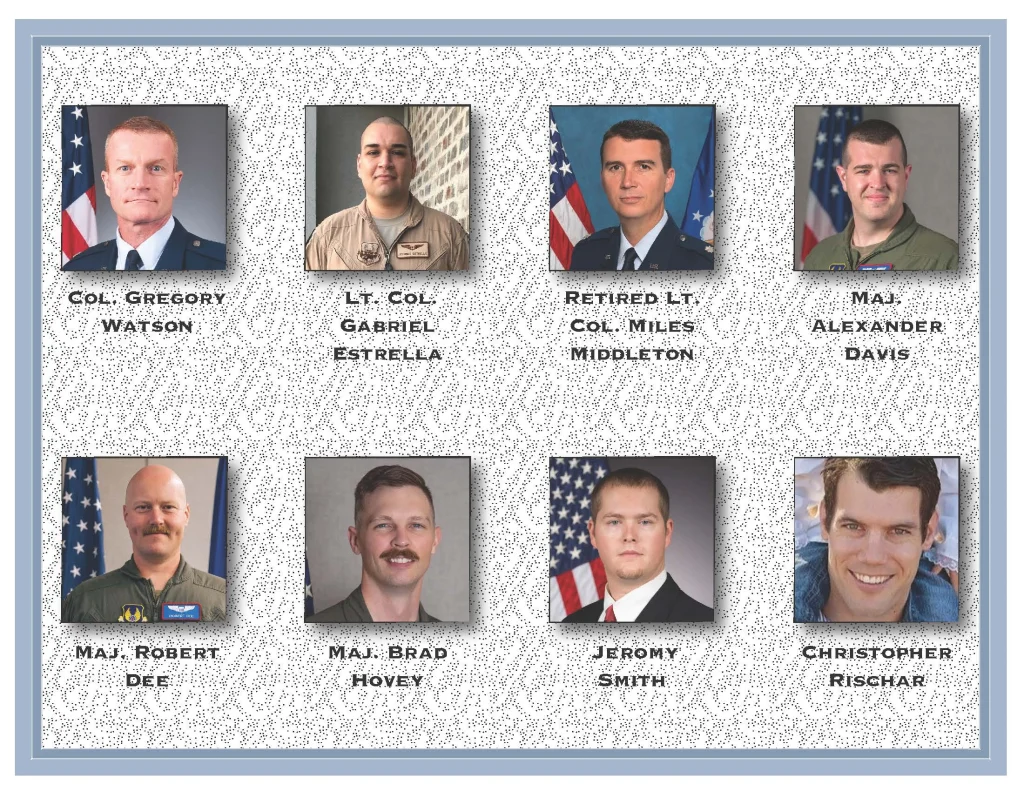
On Monday, another major tragedy unfolded when a B-52 Stratofortress bomber crashed during a test mission near Edwards Air Force Base in California. All eight crew members were killed.
BREAKING: A U.S. Air Force B-52 bomber crashed shortly after takeoff at Edwards Air Force Base, triggering an emergency response.
— Fox News (@FoxNews) June 15, 2026
Emergency crews rushed to the scene as thick black smoke billowed from the wreckage scattered across the desert airfield.
More details, including… pic.twitter.com/JRx3R4ElJW
The fourth accident occurred Tuesday night when a Cessna Citation Latitude business jet traveling from San José del Cabo, Mexico, to Austin, Texas, crashed on a roadway near Laredo International Airport. One person died and several others were injured.
BREAKING: A NetJets Cessna 680 Citation Latitude (N523QS) crashed on a highway while attempting an emergency landing near Laredo International Airport, Texas.
— Turbine Traveller (@Turbinetraveler) June 17, 2026
The aircraft had diverted to Laredo after declaring an emergency while en route from Los Cabos, Mexico, to Austin,… pic.twitter.com/BGDqZqdz9w
Different Accidents, Same Public Concern
Aviation safety experts emphasize that the four crashes appear to be unrelated.
Preliminary investigations indicate that each accident occurred under very different operational circumstances, including military training, skydiving operations, aircraft testing, and executive aviation.
Importantly, none of the flights involved scheduled commercial passenger airlines.
That distinction matters because commercial aviation remains one of the safest forms of transportation in the world and operates under far stricter regulatory standards than most segments of general aviation.
What Do the Statistics Show?

Although the concentration of accidents has raised public concern, historical data suggests that aviation accidents remain relatively common within the massive volume of flight activity across the United States.
Each year, the country records approximately 1,100 to 1,300 aviation accidents.
Of those, roughly 180 to 250 are classified as fatal accidents.
More than 90% occur within general aviation, a category that includes private aircraft, recreational flying, flight schools, aerial work operations, and other non-commercial activities.
By comparison, commercial airlines conduct millions of flights annually while maintaining exceptionally high safety standards and extremely low accident rates.
Is 2026 Becoming a More Dangerous Year for Aviation?
At this stage, the data does not suggest a significant deterioration in aviation safety.
Preliminary figures indicate that the total number of accidents recorded during 2026 remains broadly consistent with 2025 levels and within historical norms for the industry.
What has changed is the unusual concentration of highly publicized accidents involving multiple fatalities over a short period of time. Such events naturally create a stronger perception of risk among the public.
Investigators from the National Transportation Safety Board (NTSB), the U.S. Air Force, and other federal agencies are now working to determine the specific causes of each crash.
For now, industry experts stress that there is no evidence of a systemic aviation safety crisis.
The preliminary conclusion is clear: while June has been marked by an exceptionally dramatic series of accidents, current statistics do not indicate a broad decline in aviation safety across the United States. What has changed is the scale of several recent incidents—and the intense public attention they have generated.
As with anything involving transportation and travel, route planning is essential. Click here to check current road conditions.
 Business hours: Monday to Friday from 8:00 AM to 5:00 PM. California time