 Hable con un agente al (888) 572-7520
  Enviar mensaje a un agente

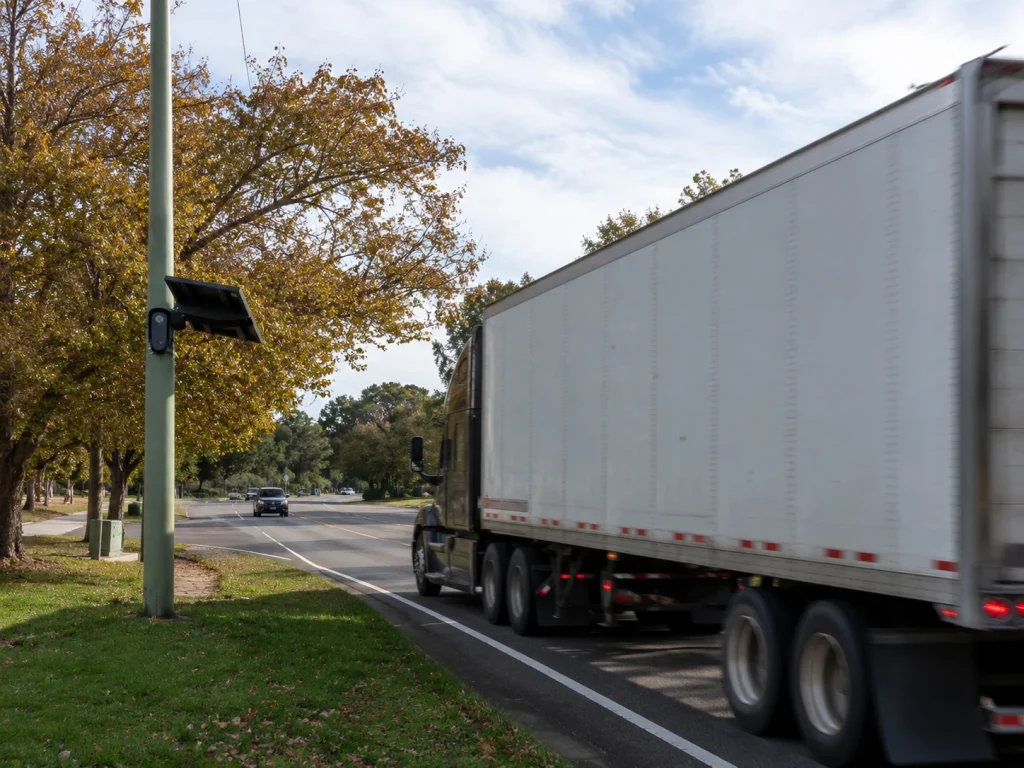

When a commercial truck travels along a U.S. highway, there’s a good chance its license plate is automatically captured by a Flock camera.
For trucking companies and law enforcement agencies, that technology can mean the difference between recovering a stolen tractor-trailer within hours or losing track of it entirely. For privacy advocates, however, the same system represents a vast surveillance network capable of tracking the movements of millions of people.
That debate now surrounds Flock Safety, the company behind one of the largest Automatic License Plate Recognition (ALPR) networks in the United States. In recent months, several cases involving police officers who allegedly used the platform to monitor spouses, family members, or acquaintances for personal reasons have renewed concerns about how the system is being used.
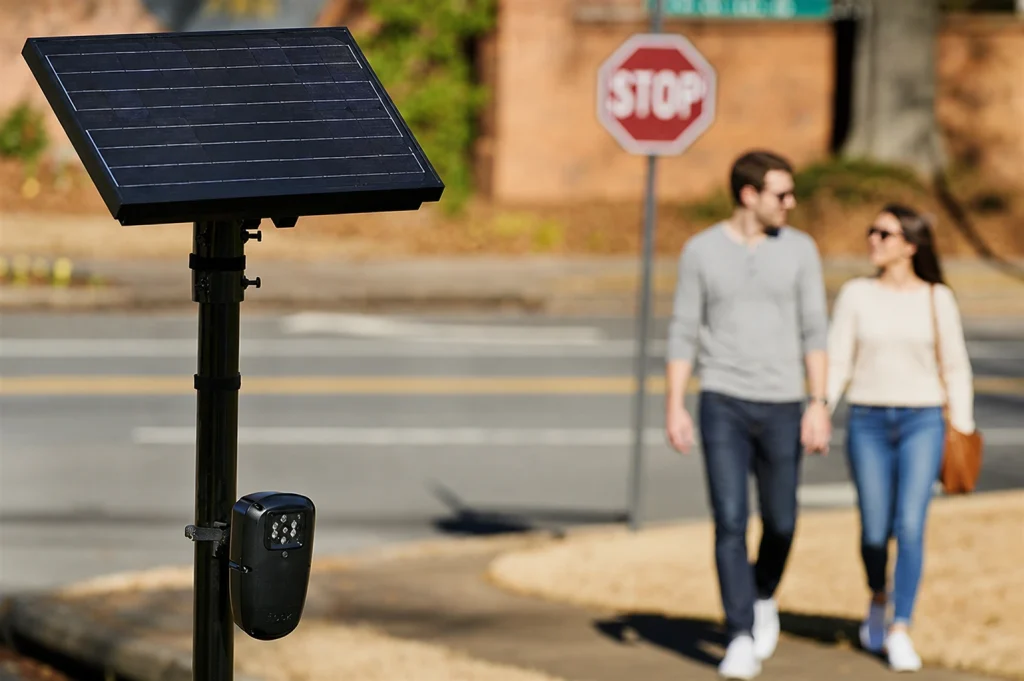
What Are Flock Cameras?
Flock cameras are installed on utility poles, neighborhood entrances, highways, industrial areas, and parking lots. Their primary purpose is to automatically capture the license plate of every passing vehicle.
Beyond the plate number, the system records:
- Date and time
- Exact location
- Direction of travel
- Vehicle make, model, and color
- Vehicle type, including passenger cars, pickups, vans, and commercial trucks
This information is stored in a database accessible to authorized law enforcement agencies.
Today, Flock Safety works with more than 5,000 law enforcement agencies, operates over 120,000 cameras, and is active in 49 states, making it one of the country’s largest vehicle-tracking networks.
How Does It Benefit the Trucking Industry?
Although Flock is often associated with police investigations, the system also offers significant advantages for the trucking industry.
When a stolen tractor or trailer passes one of the network’s cameras, the system can automatically recognize the license plate and immediately alert authorities.
The technology can help:
- Recover stolen trucks and trailers
- Locate stolen cargo
- Reconstruct a vehicle’s travel route
- Quickly identify vehicles connected to criminal investigations
- Coordinate multi-jurisdictional law enforcement operations
For carriers operating in a country where cargo theft costs the industry billions of dollars every year, a network capable of tracking a vehicle’s movements can dramatically speed up recovery efforts.
At the same time, it also means that nearly every commercial truck traveling through areas covered by Flock cameras leaves behind a digital record of its journey.
The Controversy Over Misuse
The controversy isn’t centered on the technology itself—but on who has access to it and how it’s is used.
According to a CNN investigation cited by multiple U.S. news outlets, at least two dozen cases have been documented in recent years involving police officers who allegedly used the system for personal reasons.
One of the most widely reported cases involves Officer Josue Ayala, who, according to a lawsuit filed this year, allegedly searched the system 124 times to track his romantic partner and another 55 times to monitor her former boyfriend.
Internal investigations in cities including Milwaukee, Albany, and Greer have also resulted in officers being suspended, fired, or even arrested for improperly accessing vehicle location data.
These incidents have intensified concerns about how easily someone’s travel history can be reconstructed through the platform.
Is It Mass Surveillance?
Privacy organizations such as the American Civil Liberties Union (ACLU) argue that the rapid expansion of license plate reader networks raises serious civil liberties concerns.
Critics say many searches can be conducted without a specific court warrant and that massive databases store information about people who are not suspected of any crime.
They also question the sharing of data among different agencies and warn that the technology could be used to monitor individuals over extended periods.
In response, Flock Safety says it has strengthened internal safeguards by adding auditing tools designed to detect suspicious searches, improve accountability, and help agencies monitor how the platform is used.
A Debate That Isn’t Going Away
For law enforcement, Flock cameras have become an increasingly valuable investigative tool, helping recover stolen vehicles, locate suspects, and solve crimes more quickly.
For critics, however, the continued expansion of these networks highlights the need for stronger oversight, independent audits, and stricter rules governing who can access the data—and under what circumstances.
Meanwhile, millions of passenger vehicles and thousands of commercial trucks continue to be recorded every day by Flock cameras across the United States.
For the trucking industry, the technology can be a critical ally when a truck or trailer disappears. For many Americans, however, it also represents the latest chapter in the ongoing debate over where to draw the line between public safety and personal privacy.
 Business hours: Monday to Friday from 8:00 AM to 5:00 PM. California time