 Hable con un agente al (888) 572-7520
  Enviar mensaje a un agente

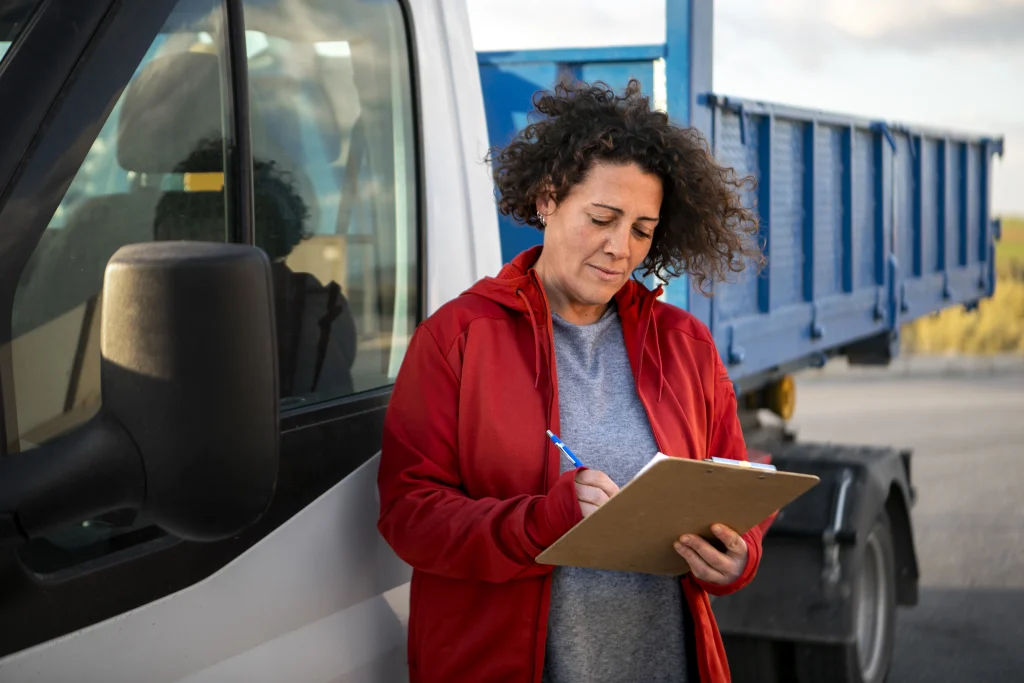

Registering a truck in the state of Washington may seem complicated, especially when dealing with a commercial vehicle, a heavy truck, or a unit that operates across different states. However, the process becomes much easier when you understand the registration requirements, documentation, declared weight, plates, fees, and obligations related to commercial transportation.
This guide explains the main steps for registering a truck in Washington, what documents may be required, how the vehicle’s weight and use affect registration fees, and when a USDOT number, commercial registration, or additional requirements may be necessary.
Guide to Registering a Truck in Washington
Registering a truck in Washington is the process through which the vehicle is legally registered with the Washington State Department of Licensing (DOL) to operate on public roads in the state. To register a vehicle in Washington for the first time, the appropriate vehicle title and registration application must be completed.
One of the most important aspects is correctly determining the vehicle’s weight. The application may require the vehicle’s empty weight, as well as information related to its declared gross weight. If the empty weight does not appear on the title or previous registration, it may be necessary to take the vehicle to a scale and provide documentation confirming its weight.
What Documents Are Needed to Register a Truck?
Although requirements may vary depending on the vehicle’s specific circumstances, it is generally recommended to have the following documents and information ready:
- Current vehicle title or proof of ownership.
- Vehicle Identification Number (VIN).
- Odometer reading, when applicable.
- Make, model, and year information.
- Empty weight (scale weight).
- Declared gross weight, when applicable.
- Identification of the registered owners.
- Purchase or transfer documentation if the truck was recently acquired.
- Proof of applicable federal requirements for heavy commercial vehicles.
Registered owners must complete and sign the appropriate application. When the transaction is completed at a licensing office, registered owners must present the required identification and sign in the presence of the licensing agent.
If the truck is coming from another state, it may also be necessary to transfer the title and obtain Washington plates. People who move to the state generally have 30 days to obtain a Washington driver’s license and register their vehicles.

How Much Does It Cost to Register a Truck in Washington?
There is no single fee that applies to all trucks. The final cost depends on several factors, including the type of vehicle, weight, location, taxes, and other applicable charges.
The Washington DOL indicates that all vehicles start with a basic registration fee of $43.25, but the final amount may increase depending on the vehicle’s weight, location, and applicable taxes. For vehicles subject to weight-based fees, there is also a gross weight fee, with the amount varying according to the declared weight.
Trucks may also be subject to an additional $10 weight-related fee for certain vehicles, including trucks with a declared gross weight of 12,000 pounds or less.
For this reason, it is recommended to use the official Washington DOL fee calculator or contact a licensing office before budgeting for the total registration cost.
Do I Need a USDOT Number for My Truck?
This is one of the most important questions for commercial truck owners in Washington. If the vehicle is involved in interstate commerce, meaning it transports people or goods between states or countries, Washington requires a USDOT number in applicable cases. The DOL notes that interstate operations may include trips that begin and end within Washington when part of the trip involves crossing a state or international border.
For certain interstate operations conducted exclusively within Washington, obtaining and displaying a USDOT number may also be mandatory. Vehicles that may be subject to this requirement include certain commercial vehicles with a GVWR of 10,001 pounds or more, certain combinations of vehicles, and vehicles transporting hazardous materials that require placarding, among others.
The USDOT number is obtained through the Federal Motor Carrier Safety Administration (FMCSA), and the DOL indicates that applying for a USDOT number is free.
Truck Registration for Interstate Operations
Owners who use their trucks in multiple states may need to complete additional requirements beyond standard state registration. One of the main systems that may apply to certain operations is the International Registration Plan (IRP).
To add vehicles to a Washington IRP account, the DOL may require information such as the VIN, empty weight, gross weight, number of axles, purchase date, and purchase price. For certain vehicles with a combined gross weight of 55,000 pounds or more, proof of payment of the Federal Heavy Vehicle Use Tax may also be required.
This means that a truck owner who regularly operates outside Washington should review their interstate registration obligations before beginning operations.

Washington Truck Registration: Quick Checklist
Before starting the registration process, it is helpful to verify the following:
- Have the title or proof of ownership.
- Confirm the VIN and vehicle information.
- Determine the empty weight and applicable gross weight.
- Identify whether the truck is for personal or commercial use.
- Determine whether the operation is intrastate or interstate.
- Check whether a USDOT number is required.
- Verify whether there are FHVUT or IRP requirements.
- Review the fees applicable to the vehicle.
- Obtain the appropriate plates and tabs.
- Keep the registration current and renew it on time.
The key to completing the registration correctly is to first identify the type of vehicle and how it will be used. A truck used solely for personal purposes may have a relatively simple registration process, while a heavy commercial vehicle, a fleet, or a truck that crosses state borders may be subject to additional requirements such as USDOT, FHVUT, IRP, and weight-related licensing requirements.
Before paying the fees, it is advisable to confirm the GVWR, gross weight, title documentation, commercial use, and geographic scope of the operation. It is also important to review the current rules directly from the Washington State Department of Licensing, as fees and regulatory requirements may change.
For official information about commercial vehicle registration, fees, renewals, and specific procedures, the primary resource is the Washington State Department of Licensing (DOL).
 Business hours: Monday to Friday from 8:00 AM to 5:00 PM. California time