 Hable con un agente al (888) 572-7520
  Enviar mensaje a un agente

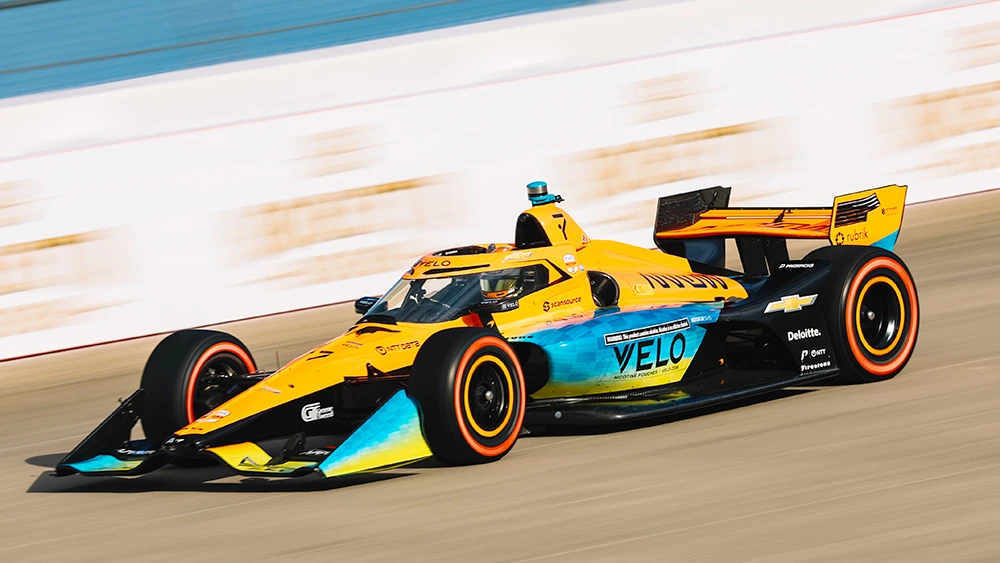

For those who live and breathe engines, horsepower, and thousands of miles on the road, August is bringing an event that will be hard to ignore. Washington, D.C. is preparing to host an unprecedented IndyCar race in the heart of the nation’s capital, with a street circuit running along some of the city’s most recognizable avenues.
The Freedom 250 Grand Prix will take place August 22 and 23 as part of the events commemorating the 250th anniversary of American independence.
The arrival of IndyCar in Washington was promoted by President Donald Trump, with Penske Corporation playing a role in organizing the event. The race will combine motorsports, speed, and an extraordinary setting: race cars speeding just blocks from the U.S. Capitol, the National Mall, and some of the nation’s most iconic buildings and monuments.
For truck drivers and transportation professionals who are also motorsports fans, it will be a rare opportunity to see one of America’s premier racing series compete on streets normally filled with cars, buses, delivery vehicles, and everyday traffic.
Nearly 200 mph on Pennsylvania Avenue
One number puts the scale of this event into perspective: speed.
Organizers estimate that the cars could approach 200 mph, or about 322 km/h, on certain sections of the course. Experts have noted, however, that the layout of the street circuit, with frequent turns and heavy braking zones, could make it difficult for drivers to maintain those speeds for long.
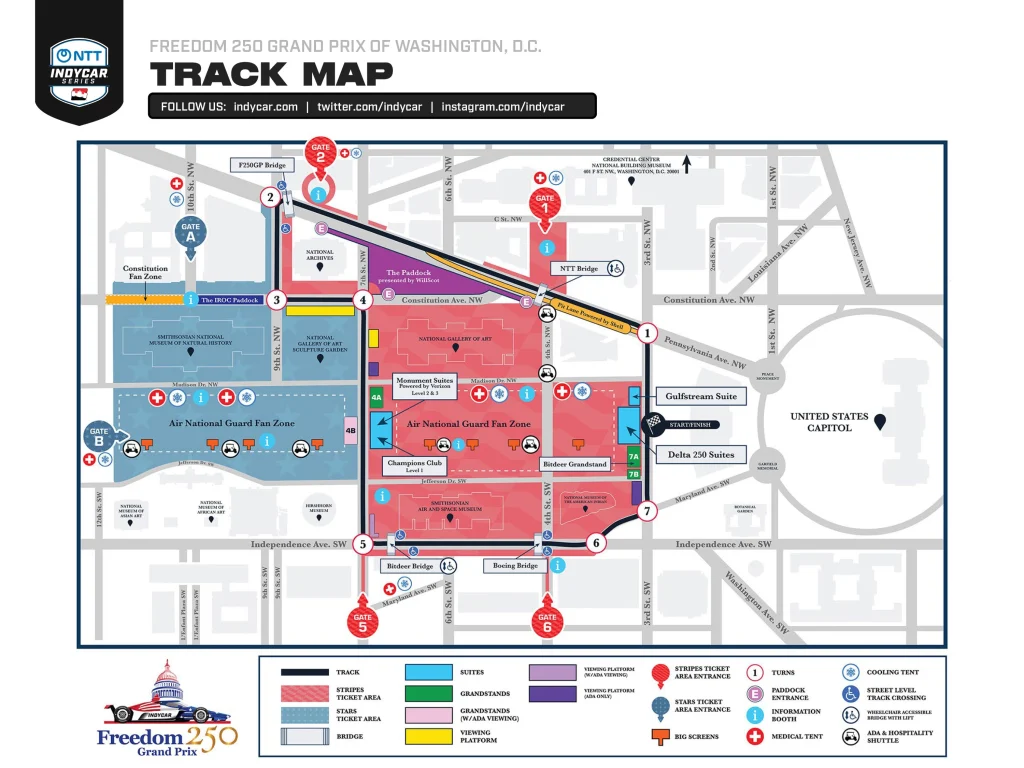
The circuit will be approximately 1.66 miles long, feature seven turns, and host a 147-lap race.
Part of the course will run along Pennsylvania Avenue before continuing toward Independence Avenue near the National Mall. In other words, streets normally used by Washington traffic will temporarily become a professional racetrack.
For perspective, parts of Pennsylvania Avenue normally have speed limits of around 25 mph. During the race, IndyCar drivers could travel several times faster.
Street Closures and IndyCar Traffic Restrictions
For truck drivers, carriers, and logistics companies operating in Washington, D.C., the impact of the Freedom 250 Grand Prix will begin before race weekend. Authorities will implement phased street closures, parking restrictions, and access controls throughout downtown.
The most disruptive period is expected to run from August 18 through August 26, when several streets will be closed to vehicle traffic. Affected areas will include sections of Pennsylvania Avenue, Constitution Avenue, Independence Avenue, 3rd Street, 7th Street, 9th Street, Louisiana Avenue, and Virginia Avenue, as well as access to the 9th Street Tunnel from Constitution Avenue.
Restrictions will increase during race weekend. From 3:00 a.m. Friday, August 21, through 11:59 p.m. Sunday, August 23, numerous streets surrounding the circuit will have parking restrictions, while others will be limited to local traffic only.
That distinction is particularly important for carriers and delivery operations. Vehicles may be allowed onto some restricted streets when drivers have a specific reason to enter the area, such as making a delivery, accessing a parking facility, or reaching a residence. However, those streets cannot be used as through routes.
The circuit will occupy sections of Pennsylvania Avenue between 3rd and 9th Streets, continue along 7th Street, and reach Independence Avenue near the National Mall. Carriers with scheduled deliveries in downtown Washington during this period should review routes in advance, allow additional travel time, and avoid relying on the National Mall area as a through corridor.
Some restrictions will also remain in place after the race while barriers and other temporary infrastructure are removed. The overall schedule includes impacts into early September, meaning traffic conditions may not immediately return to normal once the race is over.
More Than 220 Manhole Covers Had to Be Secured
Turning city streets into a circuit capable of handling IndyCar speeds takes much more than closing a few roads.
According to ABC News, organizers had to secure and weld more than 220 manhole covers to prevent them from being displaced by the aerodynamic forces generated as the race cars pass over them at high speeds.
Another roughly 50 covers require additional work because they sit below the road surface and could create potentially dangerous uneven areas on the track.
Preparations also include pavement work and other modifications necessary to bring the streets up to racing standards.
Bud Denker, president of Penske Corporation and one of the event organizers, told ABC News that approximately one-third of the circuit requires resurfacing or other improvements.
The cost of the road work is expected to remain below $3 million, and according to Denker, Penske will cover the vast majority of the expenses associated with preparing the course.
1,800 Barriers to Turn Downtown Streets Into a Racetrack
Safety is another major challenge.
Organizers will install approximately 1,800 concrete barriers, each weighing about 10,000 pounds. The barriers will separate the racing surface from spectator areas and protect key sections of the course.
Special security measures and metal detectors will also be deployed under the supervision of the U.S. Secret Service, given the race’s location and proximity to federal buildings.
The massive operation will temporarily transform part of downtown Washington into a professional street racing circuit.
Trump and a Race Celebrating 250 Years of American Independence
The Freedom 250 Grand Prix is part of the celebrations promoted by the Trump administration to commemorate the 250th anniversary of American independence.
During the race announcement, Trump joked about the huge difference between Washington’s normal speed limits and the speeds the IndyCar drivers will reach during the event.
Roger Penske, owner of IndyCar, played a central role in bringing the race to the capital and even presented the president with a racing helmet during the announcement.
There is also a possibility that The Beast, the presidential limousine, could take part in a ceremonial lap before the race begins.
Nearly 300,000 People Requested Tickets
Interest in the event is already high.
Organizers reported receiving approximately 288,000 requests for free tickets through a lottery system, exceeding the planned capacity of around 130,000 spectators per day.
The race is expected to go forward even in the rain. Only lightning or severe standing water on the circuit could significantly affect the event.
For truck drivers who regularly operate in the region or expect to travel into Washington that weekend, the Freedom 250 is also a reason to pay close attention to street closures, detours, parking restrictions, and downtown access changes associated with the construction and operation of the circuit.
And for drivers who spend their time off following racing, engines, and just about anything on wheels, the Freedom 250 will offer something unusual: some of America’s fastest race cars competing on streets that are part of everyday Washington traffic the rest of the year.
For one weekend, downtown Washington will trade its usual traffic patterns and city noise for the unmistakable sound of IndyCar engines.
What Is IndyCar?
For those more familiar with NASCAR or truck racing, IndyCar represents a different side of American motorsports.
It is the premier open-wheel racing series in the United States and one of the fastest racing categories in the world. Its cars compete on permanent road courses, oval tracks, and temporary street circuits.
Its most famous event is the Indianapolis 500, better known as the Indy 500, held each year at Indianapolis Motor Speedway.
IndyCar machines can exceed 200 mph depending on the circuit. The combination of speed, horsepower, strategy, extreme braking, and precision has made the series one of the biggest spectacles in American motorsports.
This time, however, the setting will be unlike any traditional racetrack: the streets of Washington, D.C., just blocks from some of the most recognizable landmarks in the United States.
 Business hours: Monday to Friday from 8:00 AM to 5:00 PM. California time