 Hable con un agente al (888) 572-7520
  Enviar mensaje a un agente

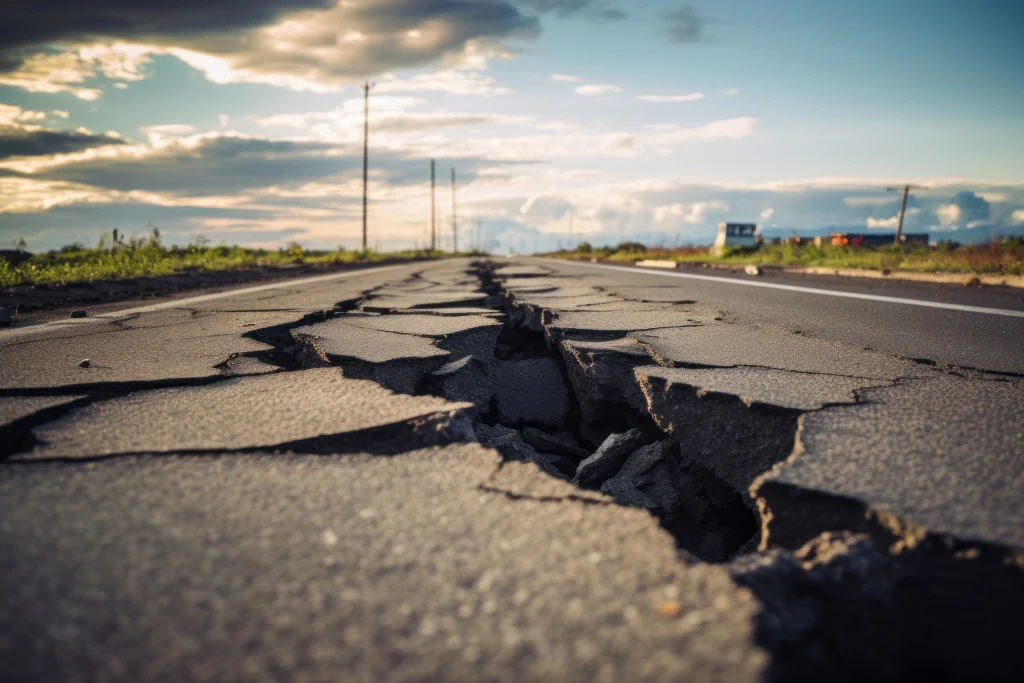

Major earthquakes recorded in Venezuela, the Philippines, Mexico, Japan, and Colombia have left thousands of victims in 2026. The 7.4-magnitude earthquake that struck Colombia on August 10 continues to drive rescue efforts, while experts and authorities remind the public that preparedness can make the difference between a major earthquake and a humanitarian catastrophe.
Major seismic activity has once again put various regions around the world on alert. Between June and August 2026, several earthquakes of magnitude 7 or greater struck areas of Latin America and Asia. The most serious case involved the 7.2- and 7.5-magnitude earthquakes that struck Venezuela on June 24, with the death toll surpassing 6,300 according to recent reports cited by international media.
This disaster was followed by the 7.4-magnitude earthquake that struck western Colombia on August 10, with its epicenter near San José del Palmar, in the department of Chocó. The death toll continues to rise as rescue teams search for trapped people and assess damage in Cali, Pereira, Quibdó, Manizales, and other communities.
Including the Venezuelan death toll, the victims of the Colombian earthquake, and those recorded in other major seismic events during the period, 2026 has already surpassed 6,500 deaths associated with these major earthquakes, although the exact number remains subject to updates.
The Major Earthquakes That Have Defined 2026
Venezuela: The Earthquakes That Accounted for Most of the Victims
On June 24, Venezuela was struck by two consecutive earthquakes measuring 7.2 and 7.5 in magnitude. The tremors primarily affected the northern and north-central parts of the country and caused damage in areas such as La Guaira, Yaracuy, Miranda, Carabobo, and the Capital District.
A preliminary assessment by the United Nations Development Programme estimated direct physical damage at approximately $6.7 billion and estimated that around 1.7 million structures were located within the affected areas.
The human toll continued to rise in the weeks that followed. By mid-July, Venezuelan authorities were reporting more than 5,000 deaths; later, international media placed the death toll above 6,300.
Colombia: The Most Recent Earthquake Continues to Drive Rescue Efforts
On August 10, 2026, a 7.4-magnitude earthquake struck western Colombia. The U.S. Geological Survey (USGS) placed the epicenter approximately 5 kilometers from San José del Palmar, in Chocó.
The earthquake caused damage to homes and buildings in Cali, Pereira, Quibdó, and Manizales, as well as in rural communities. Initial assessments counted more than 1,600 affected buildings and dozens of structures that had completely collapsed.
The death toll continues to change. Reports published on August 11 placed the number of fatalities between more than 180 and approximately 240, while thousands of people remained reported missing.
The situation is particularly challenging in Chocó because of its geography, difficult access, and disruptions to communications. Therefore, the figures should be considered provisional as search, rescue, and damage-assessment operations continue.
Philippines: The Strongest Earthquake of the Period
On June 7, a 7.8-magnitude earthquake struck the Mindanao region of the southern Philippines. The earthquake caused structural collapses, landslides, and a tsunami alert. Initial reports counted dozens of fatalities and hundreds of injuries.
The event was particularly significant because of its magnitude: 7.8, higher than the earthquakes subsequently recorded in Venezuela, Mexico, Japan, and Colombia. However, its death toll was much lower than that of the Venezuelan earthquakes.
Mexico: Magnitude 7.3 Off the Coast of Chiapas
On July 17, a 7.3-magnitude earthquake occurred off the coast of Chiapas, near the border with Guatemala. The earthquake was felt hundreds of kilometers away, including in Mexico City, while authorities activated emergency protocols and issued warnings related to the possibility of a tsunami.
There was no catastrophe comparable to those in Venezuela or Colombia. Available reports indicated two people were injured and no widespread severe damage was recorded.
Japan: A 7.1-Magnitude Earthquake and a Prepared Response
On July 28, Kumamoto Prefecture, on the Japanese island of Kyushu, was affected by a 7.1-magnitude earthquake. The earthquake reached Japan’s highest seismic intensity level, Shindo 7, and caused structural damage, service disruptions, and a tsunami alert for coastal areas.
Unlike Venezuela and Colombia, the death toll was considerably lower. The Japanese case once again highlights the importance of building codes, warning systems, a culture of preparedness, and the ability to respond immediately.
Why Do Some Earthquakes Kill Thousands While Others Do Not?
Comparing these events reveals an important conclusion: magnitude is not synonymous with mortality. A 7.8-magnitude earthquake can cause fewer deaths than a 7.4-magnitude earthquake if it occurs in a less vulnerable area or if buildings are better able to withstand the shaking.
Factors that can determine the number of victims include:
- The distance between the epicenter and populated areas.
- The depth of the earthquake.
- The quality and age of buildings.
- Population density.
- The time of day when the earthquake occurs.
- The availability of early warning systems.
- The preparedness of hospitals, rescue teams, and authorities.
- The possibility of tsunamis, fires, landslides, or aftershocks.
- The ease of access to affected communities.
For this reason, comparing magnitudes alone can provide an incomplete picture of the true scale of a disaster.

2025 vs. 2026: Fewer Earthquakes, but a Greater Concentration of Victims
Records from 2025 show that the year had 15 earthquakes between magnitude 7.0 and 7.9 and one magnitude 8.8 earthquake, while the 7.7-magnitude earthquake in Myanmar was the seismic event with the highest number of victims, with more than 5,400 fatalities. The annual death toll from earthquakes was around 8,000. In 2026, by contrast, the tragedy has been concentrated particularly in Venezuela.
This does not necessarily mean that there has been a higher global frequency of destructive earthquakes. Rather, some of the most severe events of 2026 have directly affected densely populated and vulnerable areas.
The distinction is fundamental: seismic risk depends not only on the natural hazard but also on the population’s exposure and vulnerability.
How Prepared Are Mexico and the United States for a Major Earthquake?
Mexico has one of the most developed earthquake preparedness systems in Latin America. One of its main tools is the Mexican Seismic Alert System (SASMEX), which uses a network of sensors to detect strong earthquakes and send alerts to cities with coverage. The amount of warning time available before strong shaking arrives depends on the location of the epicenter and the distance from the areas receiving the alert.
Preparedness also includes nationwide drills, Civil Protection protocols, and campaigns to help people identify lower-risk areas, evacuation routes, and assembly points. However, having an alert system does not mean Mexico is protected against every earthquake. The system has specific geographic coverage, and warning time may be only a matter of seconds. Preparedness at homes, schools, businesses, and government agencies remains essential.
The United States, for its part, has considerable scientific and technological infrastructure for dealing with earthquakes, although preparedness is not uniform throughout the country. The most advanced early warning system is ShakeAlert, developed and operated with participation from the USGS. It currently provides earthquake alerts to residents and visitors in California, Oregon, and Washington.
ShakeAlert does not predict earthquakes. Instead, it detects that an earthquake has already begun, quickly calculates its location, magnitude, and expected level of shaking, and makes it possible to send alerts before the most destructive waves reach certain areas. The system can also trigger automatic measures, such as slowing trains, closing valves, or issuing warnings at critical facilities.
This does not eliminate the risk. Nearly half of the U.S. population lives in areas where potentially damaging earthquakes are possible, making structural and household preparedness essential.
The Lesson Behind the 2026 Seismic Wave
The earthquakes in Venezuela, the Philippines, Mexico, Japan, and Colombia lead to a conclusion that goes beyond the numbers: no country is completely protected from earthquakes, but some societies are better prepared to reduce their consequences.
Mexico has decades of experience in earthquake prevention and early warning. The United States has developed systems such as ShakeAlert to gain critical seconds. Japan combines technology, infrastructure, and a deeply rooted culture of preparedness.
As Colombia deals with the consequences of its most recent earthquake, the disaster once again demonstrates the importance of having rescue, communication, and emergency assistance systems capable of responding quickly when roads, hospitals, and communication networks may be damaged.
Update Note: The casualty figures from the August 10, 2026 earthquake in Colombia are still developing. Figures published by authorities and media outlets may change as search, rescue, and victim-identification efforts continue.
 Business hours: Monday to Friday from 8:00 AM to 5:00 PM. California time