 Hable con un agente al (888) 572-7520
  Enviar mensaje a un agente

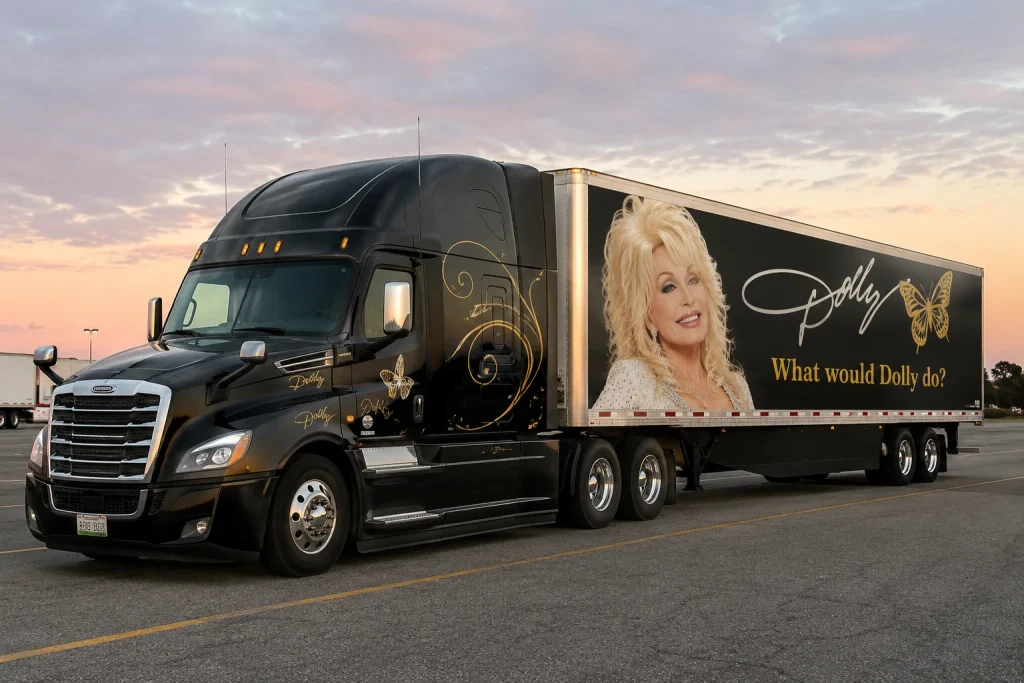

With the passing of Dolly Parton, America also loses an icon of the road — a companion on countless journeys, a friend to truckers, and something of a fairy godmother to a culture shaped by long distances, hard work, and life away from home.
For decades, her voice traveled alongside drivers through endless miles and overnight runs. But her connection to trucking went far beyond music. She knew the road, understood the people who made their living on it, and turned that connection into an affection that truckers returned for generations.
That bond helps explain why her death has hit the transportation community particularly hard. Dolly spent much of her life traveling America’s highways aboard tour buses, stopping at roadside diners, gas stations and truck stops alongside professional drivers.
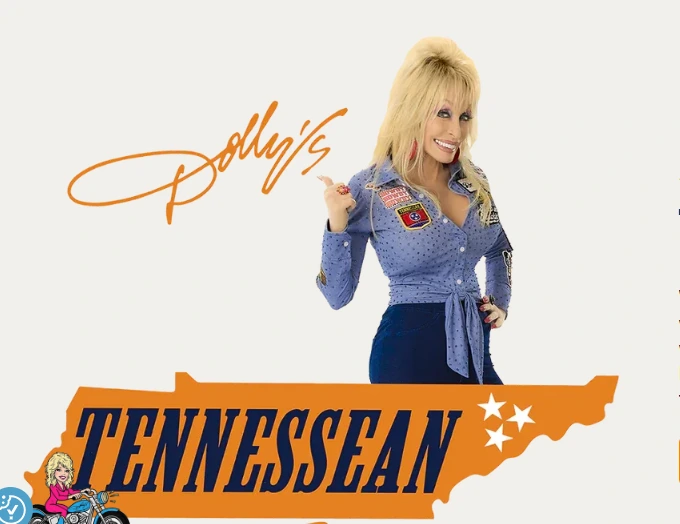
And near the end of her life, she took that relationship one step further by creating Dolly’s Tennessean Travel Stop, an I-65 destination designed to give truckers and travelers something that felt a little like home while they were on the road.
The depth of that connection became even more visible following her passing. As fans, artists and public figures across the country began paying tribute, President Donald Trump ordered U.S. flags to be flown at half-staff for one week, an extraordinary recognition for an artist whose influence extended far beyond country music.
Trump described her as “one of the greatest country music singers, and far beyond, of all time,” and said her death was a profound loss for millions of people. The order applies to public buildings, military installations and U.S. facilities overseas.
But for those who make their living on the highway, Dolly was something more personal than a music superstar.
A Companion for Thousands of Miles
Long before she became involved in the travel-stop business, Dolly Parton was already part of everyday life for generations of truck drivers.
Her songs played inside truck cabs for decades — first on AM and FM radio, then on cassette tapes and CDs, and eventually through satellite radio and streaming platforms.
Her voice was familiar company during overnight drives, seemingly endless stretches of interstate and weeks spent away from home.
Although she was not specifically part of the genre often known as trucking country, Dolly sang about a world drivers understood well: hard work, sacrifice, financial struggles, family, distance and the determination to keep moving forward.
“9 to 5,” which became one of America’s best-known anthems about working life, was perhaps the most universal example.
There was another experience that brought her especially close to truckers: Dolly knew what it meant to live on the road.
For decades, she traveled across the United States aboard tour buses. She ate at roadside restaurants, stopped at gas stations and rested at many of the same truck stops used by professional drivers.
Years later, she acknowledged that life on the road had helped her understand what people need when they spend much of their lives away from home.
From Songs to a Truck Stop
Eventually, that relationship took a surprisingly tangible form.
In June 2026, just two months before her death, Dolly opened Dolly’s Tennessean Travel Stop in Cornersville, Tennessee, at Exit 22 along Interstate 65, about 60 miles south of Nashville.
It was more than simply putting her name on a gas station.
The project drew on her own experience traveling America’s highways and included services specifically aimed at professional drivers, including truck parking, diesel fueling lanes, showers, laundry facilities and a truckers’ lounge where drivers could rest before getting back behind the wheel.
During the opening, Dolly made it clear that the stop was meant for everyone traveling the highway — whether they were hauling freight, taking a family road trip or simply passing through.
It was exactly the kind of place she had encountered throughout a lifetime of touring.
And it was also a way of giving something back to the community that had carried her songs inside their trucks for decades.
How Dolly Parton Will Be Remembered
For now, the family has decided that the funeral will be private and limited to close relatives, with no large public funeral announced.
Instead, those wishing to honor her have been encouraged to share messages or make donations to Dolly Parton’s Imagination Library, the childhood literacy program that became one of the defining achievements of her philanthropic work.
In Tennessee, Dollywood will remain open. The decision reflects Dolly’s own wish that the park continue to be a place of joy, music and togetherness — and that even after her death, the show should go on.
Fans can also visit Dolly Parton: Journey of a Seeker, the Country Music Hall of Fame and Museum exhibition in Nashville exploring her life and career, which is scheduled to remain open through September 2026.
And the tributes will continue beyond the coming days.
Dolly: A True Original Musical, the stage production inspired by her life and music, is still scheduled for Broadway. Previews are planned for December 2026, with the official opening set for January 19, 2027 — the day Parton would have turned 81.
From Reba McEntire to Paul McCartney: The Tributes Pour In
News of Dolly’s death prompted an extraordinary wave of tributes from across American music and entertainment.
Reba McEntire, Kacey Musgraves, Shania Twain, Beyoncé, Taylor Swift, Cyndi Lauper, Jane Fonda, Paul McCartney, Joan Jett, Jack White and Carol Burnett, among many others, shared messages honoring her life and legacy.
Shania Twain remembered her as a hero, teacher and mentor. Kacey Musgraves wrote that the world suddenly felt much less bright, while Lily Tomlin, Dolly’s co-star in 9 to 5, summed up the shock of the news in just two words: “No words.”
Tributes also came from outside the music industry and from around the world. Political leaders, actors, nonprofit organizations and cultural figures remembered not only the singer and songwriter, but also the philanthropist who transformed her Imagination Library into an international program distributing free books to children.
On America’s highways, however, another kind of tribute remains.
At Exit 22 on I-65 in Cornersville, Dolly’s Tennessean Travel Stop is still there. Truckers can pull in for diesel, grab something to eat, rest for a while or simply take a break before returning to the highway.
It is difficult to imagine a more fitting monument for someone who spent so much of her life in motion.
Dolly Parton made the road part of her story. And almost until the very end, she wanted to give something back to the people who, like her, knew exactly what it meant to spend days and nights away from home, counting the miles until the next stop.
 Business hours: Monday to Friday from 8:00 AM to 5:00 PM. California time