 Hable con un agente al (888) 572-7520
  Enviar mensaje a un agente

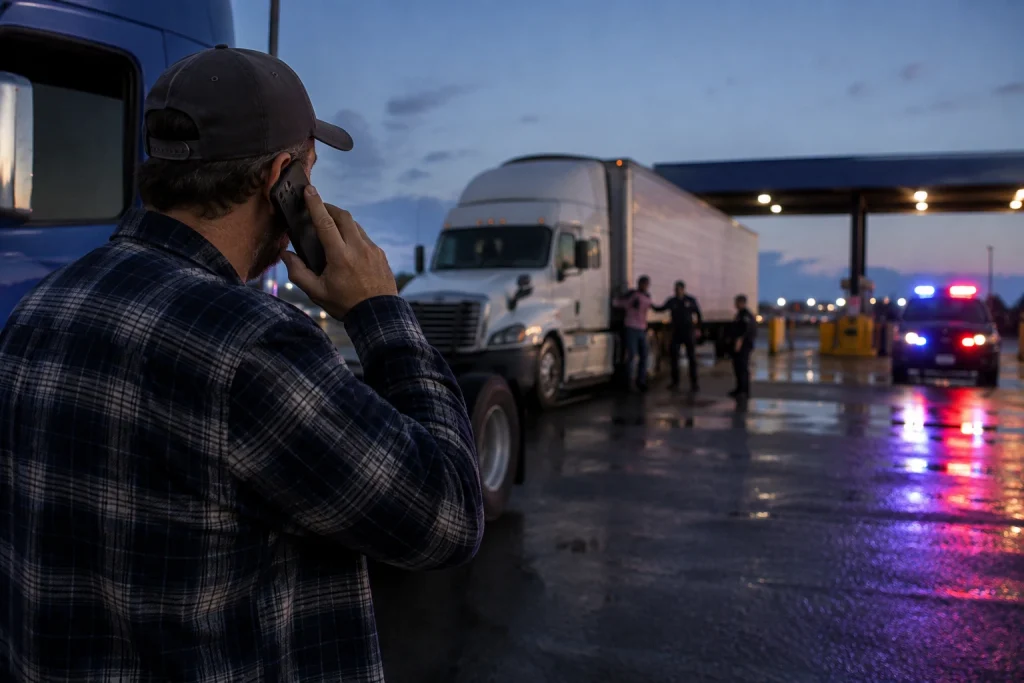

Florida authorities announced the recovery of 163 missing or endangered children ranging in age from 2 months to 17 years old during Operation Statewide Shield, a five-day operation focused on locating missing children and teens. The investigation extended across Florida and led to children being located in other states, a U.S. territory and 12 countries. Many of the children had experienced abuse, neglect, exploitation or exposure to other criminal activity.
The operation was not specifically connected to the transportation industry, and authorities did not identify trucking as part of the case. Still, its scale brings renewed attention to an issue where America’s truck drivers can play an important role.
Professional drivers spend their days moving through truck stops, rest areas, fuel stations, parking lots, hotels and other high-traffic locations. That constant presence on America’s highways means they may notice situations that others never see.
The U.S. Department of Transportation (DOT) itself recognizes that members of the trucking industry can play an important role in preventing, identifying and reporting suspected human trafficking at truck stops and rest areas.
FLORIDA RESCUES 163 CHILDREN ACROSS 5 DAYS IN OPERATION STATEWIDE SHIELD; MANY ABUSED AND BEING SEXUALLY TRAFFICKED
— Zach Jones – Secretary of Psyops (@ZachJones1994) August 27, 2026
FOX NEWS: “In the midst of all of this, a multi-agency effort in Florida rescues 163 missing children during Operation Statewide Shield. Florida law enforcement… https://t.co/o16UrAK0Zh pic.twitter.com/XB6xB9GCGt
What truck drivers can watch for on the road
Recognizing a potential trafficking situation does not mean trying to determine on your own whether a crime is taking place. Authorities emphasize that no single warning sign proves that someone is a victim of human trafficking. Instead, drivers should be aware of behaviors and circumstances that, particularly when several appear together, may warrant closer attention and a report to the appropriate authorities.
The Department of Transportation identifies several indicators that can be particularly relevant in trucking environments. These may include people moving from truck to truck, individuals spending unusually long periods near truck stop showers or restrooms, vans or RVs that appear out of place among commercial trucks, or situations in which someone drops a person off near a truck and returns to pick them up a short time later.
CB radio communications involving commercial sexual activity may also raise concerns, as can certain light signals used to indicate the location of potential buyers.
There are also broader warning signs that can appear in many different settings. A person may seem excessively controlled by someone accompanying them, lack access to their own identification, phone, money or documents, appear fearful or unusually submissive, or seem unable to move around or communicate freely with others.
Context matters. The goal is not to turn truck drivers into investigators. It is to give them enough information to recognize when something does not look right and know what to do next.
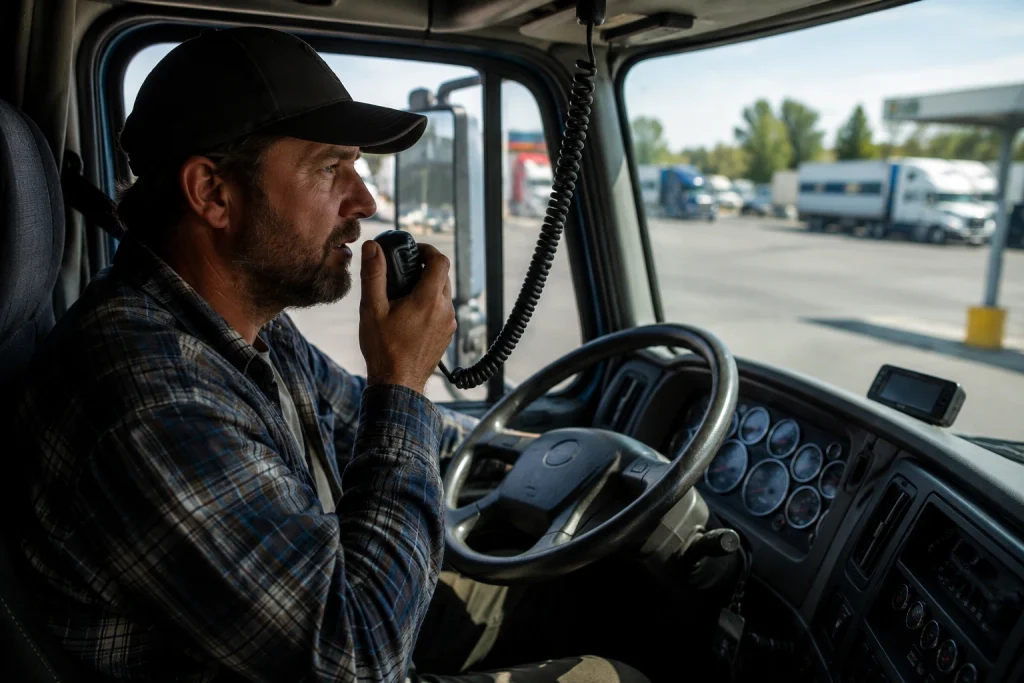
What should a truck driver do if something looks suspicious?
The most important recommendation is not to physically intervene or confront a suspected trafficker. Confrontation can put the driver at risk and, more importantly, could increase the danger to a potential victim.
If someone appears to be in immediate danger or there is an emergency, drivers should call 911.
Drivers can also contact the National Human Trafficking Hotline, which is available 24/7 to receive tips, provide guidance and connect people with assistance. The hotline can be reached at 1-888-373-7888, or by texting 233733 (BEFREE).
When it is possible to do so safely, drivers should pay attention to details that could help authorities, including the exact location, descriptions of people and vehicles, license plate information, direction of travel and other specific facts they observed.
The key is to report what was actually seen or heard rather than make assumptions about what may be happening.
Resources designed specifically for truck drivers
Truck drivers and fleets do not have to develop their own training programs from scratch. Several resources already exist in the United States specifically for the transportation industry.
One of the most established is TAT, formerly known as Truckers Against Trafficking, a nonprofit that works with the trucking, bus and energy industries to teach professionals how to recognize and report possible cases of human trafficking.
TAT provides free resources developed specifically for the trucking industry, including training videos, wallet cards drivers can keep in their trucks, company materials, posters, decals and an app. Resources are available in multiple languages, with materials designed for over-the-road drivers, local drivers, movers, truck stop employees and other transportation professionals.
TAT also offers a course specifically for OTR drivers, “How Over-the-Road Truckers Can Combat Human Trafficking.” The self-paced training takes approximately 35 minutes to complete and provides a certificate. It includes survivor perspectives, expert information and scenarios designed to help drivers understand how trafficking may appear in transportation-related environments.
The Federal Motor Carrier Safety Administration (FMCSA) also provides human trafficking prevention resources and connects motor carriers and drivers with training materials, awareness campaigns and specialized organizations.
For a driver who spends thousands of miles a month on the road, learning how to recognize these signs can be a relatively small investment of time with potentially significant consequences.
Fleets can play a role, too
Prevention does not fall solely on individual drivers. Trucking companies can incorporate existing human trafficking resources into their regular safety programs without having to build complicated new systems.
A fleet can include TAT training during new-driver onboarding, distribute wallet cards with reporting information, display educational materials at terminals and driver facilities, address the subject during safety meetings, and make sure dispatchers, managers and other employees understand what to do when a driver reports suspicious activity.
TAT also encourages companies to establish internal anti-trafficking policies and provide training throughout their organizations.
For owner-operators, getting started can be even simpler. Completing a training course, saving the appropriate emergency and hotline numbers, and learning the warning signs that could appear during an ordinary workday can help a driver be prepared before a suspicious situation ever occurs.
Staying alert is part of safety on the road
Operation Statewide Shield underscored the vulnerability that children and teens can face. When necessary, the 163 children recovered during the operation were connected with services that included child welfare professionals, medical providers, social services and victim advocates.
The Florida case does not make trucking part of the operation, and it would be inaccurate to suggest a connection that authorities themselves have not established.
What the case does provide is an important reminder of something federal agencies and anti-trafficking organizations have emphasized for years: transportation professionals spend significant amounts of time in places where signs of exploitation may become visible.
A truck driver does not need to investigate a situation or put themselves in danger. Their role can be much more straightforward: know the warning signs, stay alert, remember which details may be useful to authorities and know who to call.
Safety has always been part of the job in trucking. Being prepared to recognize a possible trafficking situation adds another dimension to that responsibility. A detail that seems unusual at a truck stop or rest area may turn out to be nothing — but when something is truly wrong, one alert driver and one phone call can make a very real difference.
 Business hours: Monday to Friday from 8:00 AM to 5:00 PM. California time