 Hable con un agente al (888) 572-7520
  Enviar mensaje a un agente



Winter driving in Washington can quickly become a challenge for truck drivers. Snow, ice, heavy snowfall, reduced visibility, and road closures can affect trucking routes, especially through the Cascade mountain passes. For a commercial driver, knowing when to carry chains, when to install them, and what restrictions are in place not only helps avoid fines but can also make the difference between completing a trip safely and becoming stranded on the road.
In Washington, chain requirements can change depending on weather conditions and the specific section of highway. For this reason, truck drivers should check route conditions before and during their trip.
Chain Requirements in Washington
During the winter season, commercial vehicles traveling on certain Washington highways must be prepared to use tire chains when conditions require them. Authorities may impose chain requirements based on road conditions, and certain mountain passes may have special restrictions.
The Washington State Department of Transportation (WSDOT) publishes information about road conditions and chain restrictions. Before starting a trip, a truck driver should check the status of their route, especially if they plan to travel through mountain passes such as Snoqualmie Pass, Stevens Pass, or White Pass.
WSDOT does not establish one exact requirement for the number and configuration of chains. This depends on the type of vehicle, its configuration, and the conditions established for the specific section of highway. For heavy commercial vehicles, it is important to know in advance which axles must be chained and what specific requirements apply to the vehicle. Tractor-trailer configurations may be subject to different requirements than straight trucks.
In addition, Washington has specific requirements for certain commercial vehicles when snow or icy conditions exist. Truck drivers should check the current WSDOT instructions and posted roadside signs.
Carrying chains is not the same as being prepared to install them. A professional driver should check before the winter season that the chains:
- Are the correct size for the tires.
- Are in good condition.
- Do not have broken or excessively worn links.
- Can be installed properly.
- Are stored in an accessible location.
- Are sufficient for the vehicle’s specific configuration.
When authorities establish chain requirements, there are generally designated areas where drivers can pull over and install them. Truck drivers should use these areas and follow the instructions provided by road workers and posted signs.
It is especially important to reduce speed before entering areas with snow or ice. A road that appears clear may have ice on curves, bridges, ramps, shaded areas, and other locations where the pavement temperature is lower than the air temperature.
If signs indicate that chains are required, the driver must comply with the restriction before continuing.

What Happens If I Don’t Carry Chains?
Failing to carry the required chains may prevent a truck driver from continuing on the highway. It can also result in a violation when conditions or posted signs require their use.
But the issue is not only legal. A heavy truck without adequate traction can lose braking and steering capability on snow or ice. If the truck becomes stuck or jackknifed across the roadway, it can block lanes and cause delays for hundreds of vehicles.
Regarding restrictions, during heavy snow events or extreme conditions, WSDOT may impose restrictions affecting commercial vehicles. For example, temporary restrictions may be implemented at certain mountain passes for specific vehicle configurations. Complete closures may also occur when travel conditions become unsafe.
For this reason, official WSDOT information should be the primary reference for road conditions on state highways and mountain passes.
Snoqualmie Pass and Other Mountain Passes
Snoqualmie Pass is one of the most important commercial transportation routes in Washington, connecting the Seattle and Puget Sound areas with central and eastern Washington. However, during winter, the pass can experience heavy snowfall, ice, avalanches, and vehicle restrictions. Conditions can change quickly.
Other major passes, such as Stevens Pass and White Pass, can also experience difficult winter conditions. For truck drivers, it is recommended to check conditions shortly before departure and continue monitoring them throughout the trip.
Good preparation begins before starting the engine. First, check the weather forecast and conditions along the entire route, and then determine whether there are any chain requirements or commercial vehicle restrictions.
It is also a good idea to check:
- Tire condition and pressure.
- Tread depth.
- Brakes.
- Lights and reflectors.
- Windshield wipers.
- Heating and defroster systems.
- Windshield washer fluid suitable for low temperatures.
- Sufficient fuel.
- Chains and the tools needed to install them.
- Emergency equipment.
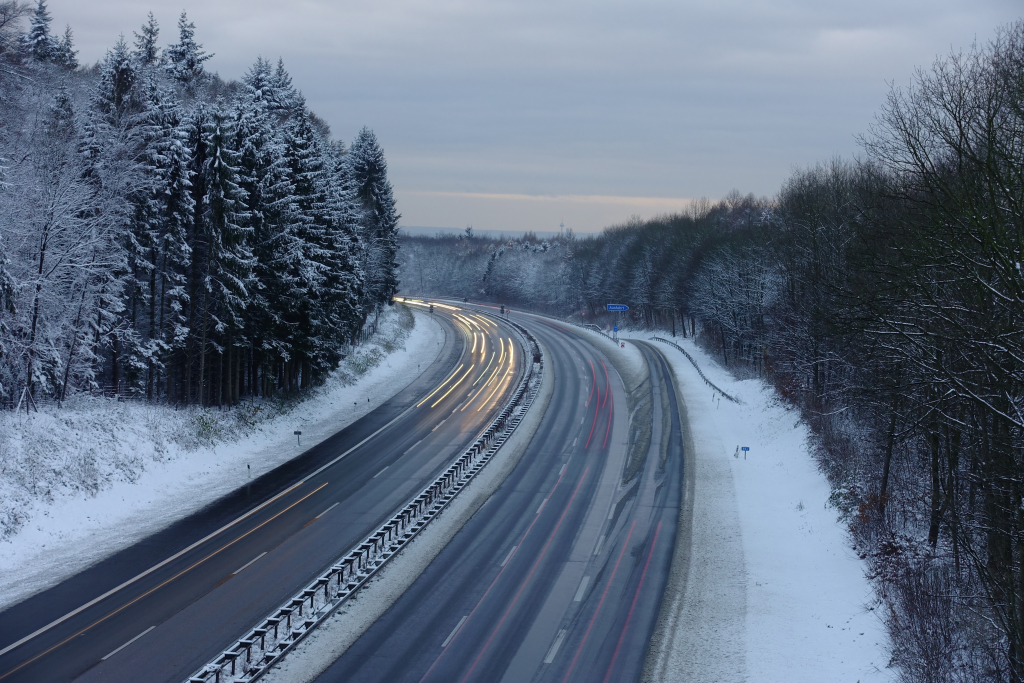
Tips for Driving a Truck on Snow and Ice
Chains improve traction, but they do not turn a dangerous road into a normal road.
When driving on snow or ice:
- Reduce your speed.
- Increase your following distance considerably.
- Avoid sudden braking and abrupt maneuvers.
- Accelerate smoothly.
- Use the appropriate gears to control your speed.
- Exercise extra caution on downhill sections.
- Avoid aggressive use of the brakes.
- Keep both hands available to control the steering wheel.
- Pay attention to the behavior of traffic ahead of you.
- Be prepared to stop if conditions deteriorate.
Bridges and overpasses can freeze before other parts of the roadway. Shaded areas may also remain icy even when the pavement appears dry.
Before traveling, truck drivers can consult official WSDOT resources for information about traffic, closures, mountain pass conditions, cameras, and restrictions. It is also recommended to check emergency information and alerts related to the route before beginning the trip.
Before crossing a mountain pass, verify that the chains are appropriate for your vehicle and make sure you know how to install them properly. If conditions worsen, do not put your safety or the safety of other drivers at risk just to meet a delivery schedule.
In winter, arriving late is better than not arriving at all.
 Business hours: Monday to Friday from 8:00 AM to 5:00 PM. California time