 Hable con un agente al (888) 572-7520
  Enviar mensaje a un agente

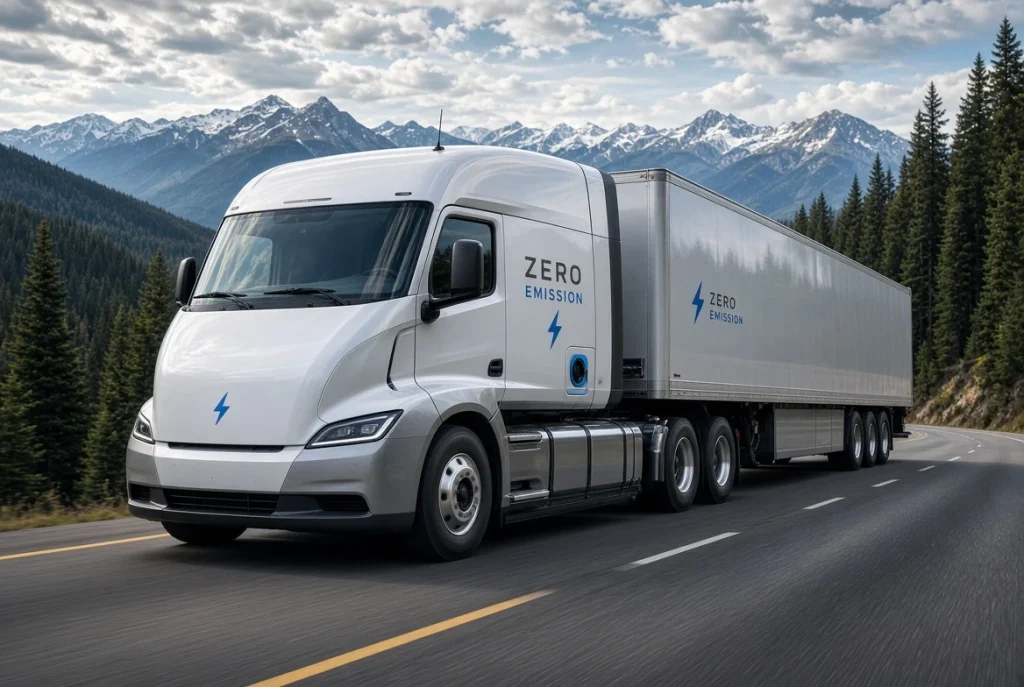

Washington already has more than 9,000 clean trucks on its roads, according to Casey Sixkiller, director of the state’s Department of Ecology, who confirmed the figure in May 2026.
The transition is advancing this year on three concrete fronts: the state is putting nearly $160 million from the Climate Commitment Act and the federal Volkswagen settlement toward helping businesses buy electric trucks and charging infrastructure; the new WAZIP (Washington Zero-Emission Incentive Program), launched in April 2026 with more than $110 million, is now up and running; and the Department of Ecology eased sales requirements for clean semi-trucks under the Advanced Clean Trucks rule in 2026, giving manufacturers three extra years to make up any shortfall.
All of this is happening alongside a temporary pause in enforcement of the regulations, in effect through June 2026, while a federal legal dispute plays out.
The State of the Transition: More Than 9,000 Clean Trucks Already on the Road
Washington adopted the Advanced Clean Trucks rule in 2021 and the Heavy-Duty Low NOx Omnibus rule in 2022, both applying to vehicles with a gross vehicle weight rating above 8,500 pounds. As Casey Sixkiller, director of the Department of Ecology, explained in May 2026, sales of medium- and heavy-duty zero-emission vehicles in Washington have been “far higher than the regulation requires in most cases,” and more than 9,000 clean trucks are already operating on the state’s roads.
The agency does acknowledge one exception, though: semi-trucks (Class 7-8) have lower sales requirements than smaller vehicles, but their growth has been slower. That’s why Ecology proposed in May 2026 to ease sales requirements specifically for semi-trucks during that year, giving manufacturers up to three years to make up any accumulated shortfall.
WAZIP: The New Incentive Program Is Already Active
The most recent, concrete development is the launch of the Washington Zero-Emission Incentive Program (WAZIP), which the Department of Ecology confirms has been available since April 2026. The program uses more than $110 million in Climate Commitment Act funding to help cover the upfront costs of medium- and heavy-duty electric trucks, along with the charging infrastructure needed to operate them — an obstacle that’s often the main barrier keeping a small trucking company from making the switch to a clean fleet.
This investment adds to the nearly $160 million Washington is putting toward this effort this year, drawn from the Climate Commitment Act and the federal Volkswagen settlement — an amount the state itself describes as the second-largest investment of its kind in the country.
ZEVergreen: Washington’s Response to Federal Uncertainty
Facing federal attempts to stall clean transportation policy, Governor Bob Ferguson and the Department of Ecology launched ZEVergreen, a statewide initiative to identify strategies that complement — or, if necessary, replace — Washington’s existing policies for encouraging adoption of zero-emission vehicles, including commercial trucks.
On July 21, 2026, Ecology released the first ZEVergreen report, gathering feedback collected throughout 2025 from a wide range of stakeholders: utilities, industry, Tribal governments, environmental organizations, labor groups, and community advocates. Among the proposed solutions are rebates, low-interest financing, expanding public charging, and ensuring businesses can access the electrical power needed to install their own charging infrastructure.
The Regulatory Pause Remains in Effect, But With a Review Date
One key point for understanding the current moment: enforcement of the Advanced Clean Cars II, Advanced Clean Trucks, and Heavy-Duty Low NOx Omnibus rules is paused through June 2026, while a federal legal dispute over the waivers that allowed states to adopt California’s emissions standards makes its way through the courts. As the Department of Ecology itself has confirmed, this pause doesn’t mean the policies have been repealed: Ecology continues its clean vehicles rulemaking process and continues exploring new strategies through ZEVergreen while the pause is in effect.
Ecology also extended, in late 2025, a specific exception for snowplows, snow removal equipment, and street sweepers purchased by state and local agencies, published in the regulatory guidance currently in effect as of June 2026.
Why This Transition Matters for Washington
Transportation is, according to the Department of Ecology itself, the state’s largest source of carbon pollution, and heavy-duty vehicles like semi-trucks are the biggest contributor to diesel emissions — one of the most harmful forms of air pollution, linked to health issues ranging from asthma to cancer.
There’s also a practical point worth noting for any trucker: the Department of Ecology makes clear that these rules don’t require any individual or business to buy a specific type of vehicle, don’t apply to used or off-road vehicles, and don’t prohibit anyone from continuing to operate a gas- or diesel-powered vehicle in Washington. What they do require is that manufacturers gradually sell a growing share of new zero-emission vehicles in the state, a process that runs through 2035.
Frequently Asked Questions
How many zero-emission trucks are already on the road in Washington? More than 9,000, according to Department of Ecology Director Casey Sixkiller, who confirmed the figure in May 2026.
What is the WAZIP program? The Washington Zero-Emission Incentive Program, active since April 2026, which uses more than $110 million in Climate Commitment Act funding to help cover the cost of electric trucks and charging infrastructure.
Is the Advanced Clean Trucks rule currently in effect in Washington? Enforcement is paused through June 2026 due to a federal legal dispute, but the policy itself hasn’t been repealed: the state continues its rulemaking process and continues exploring new strategies through ZEVergreen.
Do these rules require buying an electric truck? No. According to the Department of Ecology, the rules don’t impose purchasing requirements on individuals or businesses and don’t prohibit continuing to operate diesel vehicles; they require manufacturers to sell a growing share of new zero-emission vehicles.
 Business hours: Monday to Friday from 8:00 AM to 5:00 PM. California time