 Hable con un agente al (888) 572-7520
  Enviar mensaje a un agente



Over the years, Washington has changed its regulatory system for commercial vehicles, and some permits, categories, and procedures that carriers previously used have been eliminated, replaced, or integrated into more modern systems.
This can sometimes create confusion for truck drivers, especially owner-operators who have been working in the industry for many years or drivers who receive information from other truckers about documents that were previously required.
One of the keys to understanding the current system is distinguishing between a permit that is no longer used and a permit that has simply changed its name, format, or issuance procedure.
Old Permits and Categories That Were Eliminated
An important example can be found in the former regulations of the Washington Utilities and Transportation Commission (UTC). For decades, Washington had a state economic regulatory system for carriers that included different categories of operators and permits. However, following changes resulting from federal legislation, much of that state economic regulation was replaced.
The current rules under WAC Chapter 480-14 explain that federal regulation changed the system applicable to many intrastate carriers and that Chapter 480-14 replaced the former Chapter 480-12 for certain carriers.
For this reason, some terms found in older documents, manuals, or conversations among truck drivers may refer to permits or categories that no longer function in the same way.
Historical provisions that were repealed include, for example, former sections of the Washington Administrative Code (WAC) related to categories of registered exempt carriers and certain equipment identification requirements. Washington regulations maintain a record of these provisions under the section titled “Disposition of sections formerly codified in this title.”
The Former Carrier Permit System
One of the most important changes was the transition from a system based on broader state economic regulation to a system that distinguishes between intrastate and interstate operations and uses different authorities and registration systems.
Currently, for certain intrastate operations as a common carrier, Washington still requires operating authority. WAC 480-14 establishes that a person may not operate as a common carrier in intrastate commerce in Washington without first obtaining the appropriate permit from the commission.
This means that a truck driver should not interpret historical changes as meaning that all operating authority permits have disappeared. In reality, the current system depends on the type of operation performed by the carrier.

What Happened to the Old Operating Authority Permits?
Older documents may show categories, terms, or procedures that no longer correspond exactly to the current system. For example, historical regulations show that Washington previously used categories such as “registered exempt carriers.” That section was later repealed. Other provisions related to equipment identification and equipment operations were also repealed.
The recommendation is to always verify the carrier’s current operating authority and not rely solely on old permits or forms.
Trip and Fuel Permits: Be Careful About the Confusion
Another issue that raises questions among truck drivers involves temporary permits. Washington still has a temporary vehicle license and fuel use permit, commonly known as a three-day temporary permit. The Washington State Department of Transportation (WSDOT) states that this permit can be used for certain vehicles that need a temporary Washington license or in certain situations involving legal weight.
There is also a three-day Temporary Fuel Use Permit for certain vehicles that use special fuel and do not have IFTA. WSDOT states that this permit costs $25 for three days and that specific IFTA-related requirements apply.
Therefore, truck drivers should not assume that all temporary permits have disappeared. Some are still available and must be used when the operation meets the applicable requirements.
Which Permits Are Still Important for Truck Drivers?
Currently, one of the most important groups consists of oversize and overweight permits, meaning permits for vehicles or loads that exceed legal weight or dimensional limits.
These permits can be issued through different methods. WSDOT states that there are three main ways to obtain them: self-issuance, through an agent, or through a WSDOT office. Many routine permits can be processed online 24 hours a day.
This represents an important change from older procedures that relied on physical documents and in-person transactions.
The Electronic System Also Changed How Permits Are Obtained
For owner-operators, one of the most important changes is the move toward digital systems. WSDOT currently allows its permit program to be used to issue certain permits electronically. The agency also states that permits are not issued at Ports of Entry and that, depending on the type of permit, carriers must use the appropriate system or visit an agent or WSDOT office.
This means that carrying an old form in the cab does not necessarily replace a valid electronic permit.
What Should a Truck Driver Do If They Find an Old Permit?
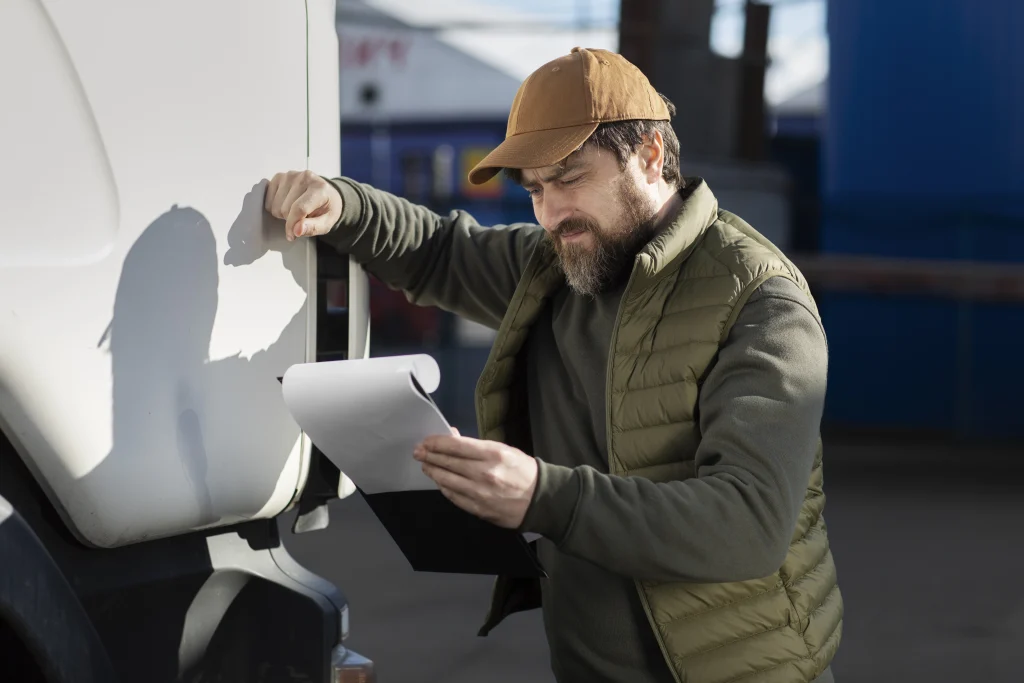
If you have old Washington documents inside your truck or in your company’s files, do not assume that they are still valid.
First, identify what type of document it is, which authority issued it, and what type of operation it was created for. Then, verify whether that category is still in effect.
It is also important to distinguish between:
- A permit that was eliminated.
- A permit that was replaced by another permit.
- A permit that is still valid but is now processed electronically.
- A document that only serves as a historical record.
- An authorization that depends on the carrier’s specific operation.
- Making this distinction can help prevent problems during an inspection.
What Documents Should a Washington Truck Driver Check Today?
In addition to permits specific to the load or vehicle, truck drivers should pay attention to their general operating credentials. Washington maintains requirements related to CDL classes, endorsements, and restrictions. For example, Classes A, B, and C determine what types of commercial vehicles a driver may operate, while certain loads or vehicles require specific endorsements.
Operators who work across state lines must also consider requirements related to IRP and IFTA, as well as mileage and fuel records. Washington’s Commercial Driver Guide explains that vehicles registered under IRP and carriers subject to IFTA must maintain certain mileage and fuel records.
The rules for truck drivers in Washington have changed considerably over time. Some permits and categories that appear in older documents were eliminated, their provisions were repealed, or they were replaced by different systems. However, this does not mean that Washington has eliminated all commercial permits.
In summary: a permit that was valid years ago is not necessarily still valid today, but you should also not assume that all permits have been eliminated. For Washington truck drivers, the key is to identify exactly what type of operation they perform and verify the current requirements before hitting the road.
 Business hours: Monday to Friday from 8:00 AM to 5:00 PM. California time