 Hable con un agente al (888) 572-7520
  Enviar mensaje a un agente



The trucking and freight market in the United States is showing clear signs of moderation and discipline in heavy equipment production. After years of extreme supply chain fluctuations, assembly plants are now operating at a controlled pace. Industrial production of heavy commercial vehicles and their components is on a stabilizing trajectory, without oversupply but also without the critical shortages of the past.
For the independent trucker and the owner of a small fleet, this situation demands a shift from simple diagnosis to strategic action. Factories are not flooding dealerships with excess inventory, which means list prices will remain firm throughout the year. Given this outlook, the priority should not be waiting for drastic price drops that aren’t going to happen, but rather precisely managing the timing of purchases.
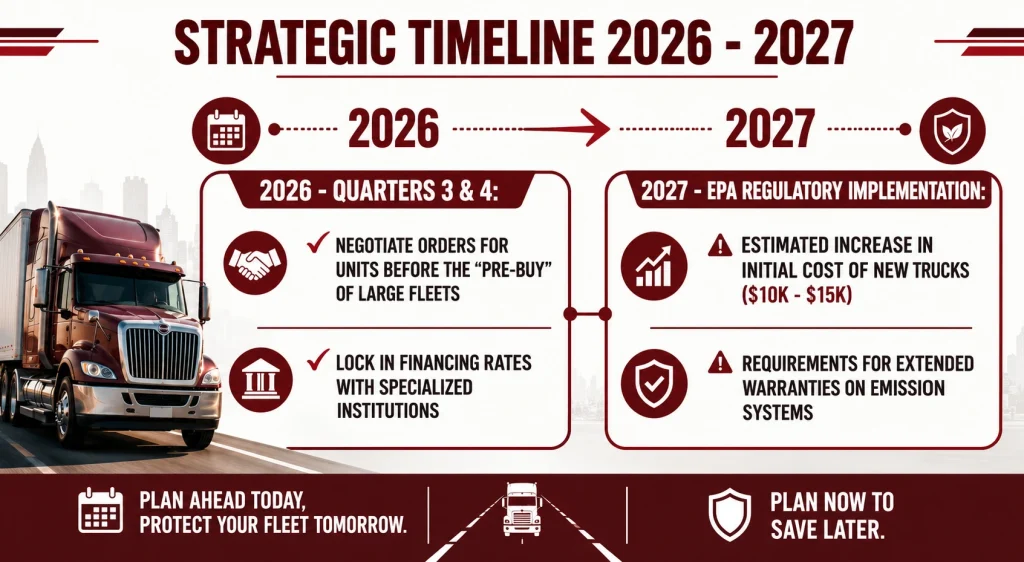
If you’re planning to upgrade your Class 8 truck, now is the time to place your order. The implementation of stricter emissions regulations from the Environmental Protection Agency (EPA), scheduled for 2027, is already generating a phenomenon known as pre-buying. Large corporate fleets are reserving available 2026 build slots to acquire proven diesel technology before the units become more expensive due to the new exhaust gas treatment requirements.
To compete in this scenario, the following concrete actions are essential:
Secure your slot early: Don’t wait until the last quarter to contact your local dealer. Reach out today and negotiate a reservation for early 2026 or 2027 units.
Evaluate the trade-in value of your used truck: Sustained demand in the secondary market allows you to obtain a competitive trade-in value. Use that capital to reduce the total amount you need to finance.
Analyze the Total Cost of Ownership (TCO): Compare the fuel consumption and service intervals of current engines against the expenses generated by the current unit in recurring repairs.
Key Point 1: Smart Maintenance
The truck component manufacturing sector—from engines and transmissions to brake and aftertreatment systems—continues to operate under high raw material and input costs. Official producer price index data reflects that spare parts and key components maintain a higher price level than in previous years. Waiting for a part to fail on the road is now the perfect recipe for eroding any profit margin.
The operational response to the scarcity of original equipment manufacturer (OEM) parts must be strict prevention and analytical workshop control.
“A truck stopped on the side of the road generates a double loss: the inflated cost of the emergency replacement part and the penalty for non-delivery to the customer.”
To maximize the performance of each unit and control maintenance costs, it is recommended to implement a three-step roadmap:
Audit the preventive maintenance program: Modify fluid and filter change intervals according to the manufacturer’s specifications under severe operating conditions. Replacing a fuel filter on time costs a fraction of what it costs to repair a damaged injection system.
Establish partnerships with parts suppliers: Negotiate volume discounts or service level agreements with authorized auto parts distributors. Maintaining a small inventory of high-turnover parts (such as belts, hoses, sensors, and brake pads) prevents prolonged downtime in the shop.
Monitor telemetry in real time: Use the truck’s diagnostic data to identify fault codes early. Addressing a thermal or oil pressure problem before it causes major damage safeguards the engine and avoids thousands of dollars in overhaul costs.
Key Point 2: Maximize Margin Per Mile
The 2026 economic environment presents a combination of stabilizing freight rates and high operating costs. To maintain profitability, it is not enough to adjust equipment manufacturing or maintenance expenses; it is essential to address daily operational management and commercial negotiations.
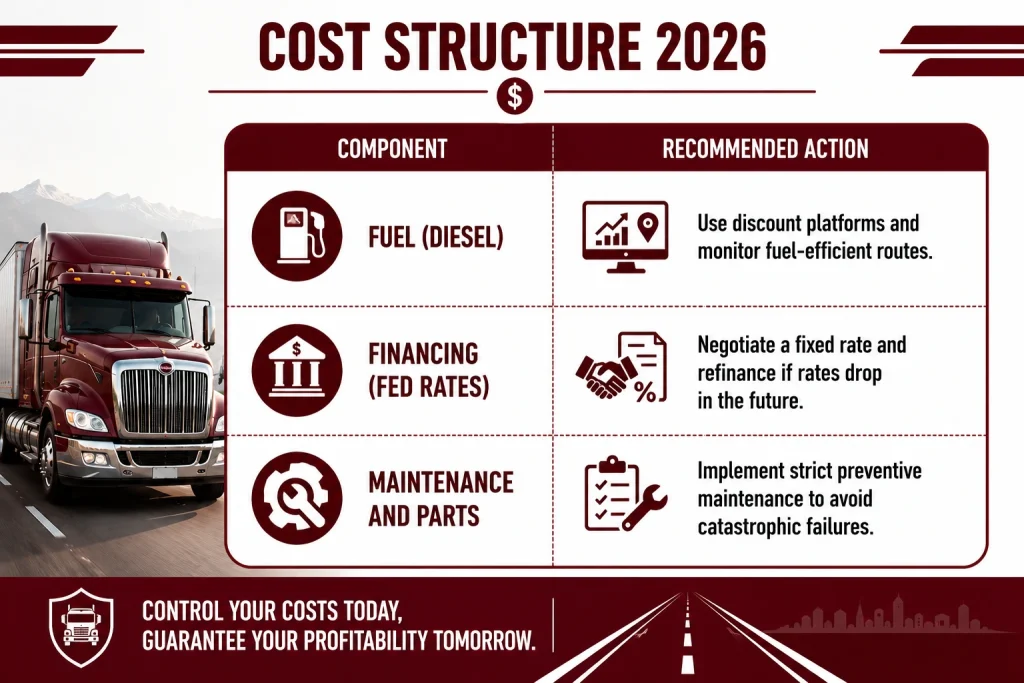
Freight market rates are showing signs of recovery following the industry readjustment. However, with interest rates still high for equipment financing and diesel prices subject to the volatility of the international oil market, operating margins depend directly on cab efficiency.
Priority actions to protect net income:
- Transfer diesel volatility to the contract.
Ensure that every commercial agreement or negotiated load includes a clear fuel surcharge clause. If operating in the spot market, accurately calculate your break-even point per mile by adding updated 2026 variable costs before accepting any rate. - Refinance debt when the opportunity arises.
If trucks were acquired at high interest rates during peak periods of monetary policy tightening, maintain constant contact with financial institutions. As soon as credit market conditions show flexibility, evaluate consolidating or refinancing secured loans to reduce the monthly payment per unit. - Optimize routes and idling time
A truck consuming diesel while idling directly reduces profit margins. Install auxiliary power units (APUs) for cab air conditioning and heating. Reducing idling time by two hours per day per unit represents significant annual savings per truck in fuel and engine wear.
Key Point 3: The Fleet Roadmap
The U.S. truck and component manufacturing market has entered a phase of maturity and operational rigor. Manufacturers are producing with precision, spare parts maintain their value, and environmental regulations are poised to transform the available vehicle lineup once again.
Standing still and waiting for costs to return to past levels is not a viable option. The carrier and owner-operator who thrives in 2026 will be the one who plans equipment purchases months in advance, protects their current investment through rigorous, data-driven maintenance, and demands freight rates that reflect the true cost of moving the nation’s economy. Trucks are our primary work tool and most important business asset: it is our duty to manage them with strategic vision and technical expertise.
 Business hours: Monday to Friday from 8:00 AM to 5:00 PM. California time