 Hable con un agente al (888) 572-7520
  Enviar mensaje a un agente

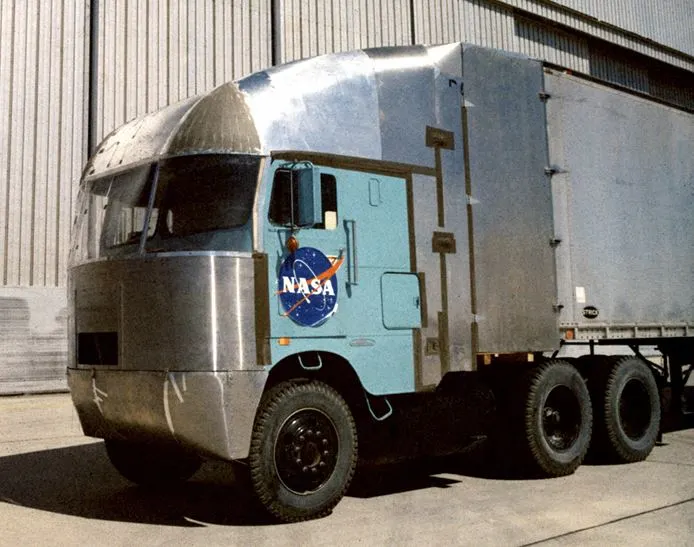

“Almost every truck on the road has been designed by NASA — literally.”
Truck design has evolved throughout history in response to technological advances and the transportation needs of each era. During the 1970s, as emissions regulations became increasingly stringent, trucks had to adapt to improve efficiency. However, during that same period, NASA engineers took things a step further, working to make trucks not only more efficient but also more aerodynamic without compromising their cargo-carrying capacity.
In 1973, aerospace engineer Edwin J. Saltzman was riding his bicycle when he noticed that large trucks on the road would push and pull him as they passed by. According to NASA’s account, following this unsettling experience, Saltzman set out to find a way to make trucks “slip through the air” in order to reduce aerodynamic drag and fuel consumption.
For a decade spanning the 1970s and 1980s, researchers at NASA’s Dryden Flight Research Center, now known as NASA’s Armstrong Flight Research Center, conducted tests to determine how modifications to truck shapes could reduce aerodynamic drag and improve efficiency.
Redesigning Truck Drag and Aerodynamics
The techniques refined through truck aerodynamics research proved highly applicable. By redesigning a Ford pickup truck, researchers placed felt tufts, or threads, along the vehicle’s sides to visualize airflow. By rounding the corners and sealing the underside of the vehicle, they found that drag could be reduced by 54 percent, with only a 3 percent loss in interior volume.
The team continued testing and modifying the truck’s shape to further reduce drag, including closing the gap between the cab and trailer and adding a boat tail. At that point, they found that a truck driver traveling 100,000 miles per year could save as much as 6,829 gallons of fuel annually with these modifications.
Decades of NASA research transformed the design of semi-trailers, with many manufacturers adopting various elements from NASA engineers’ experiments to create more aerodynamic cabs with rounded corners and edges.
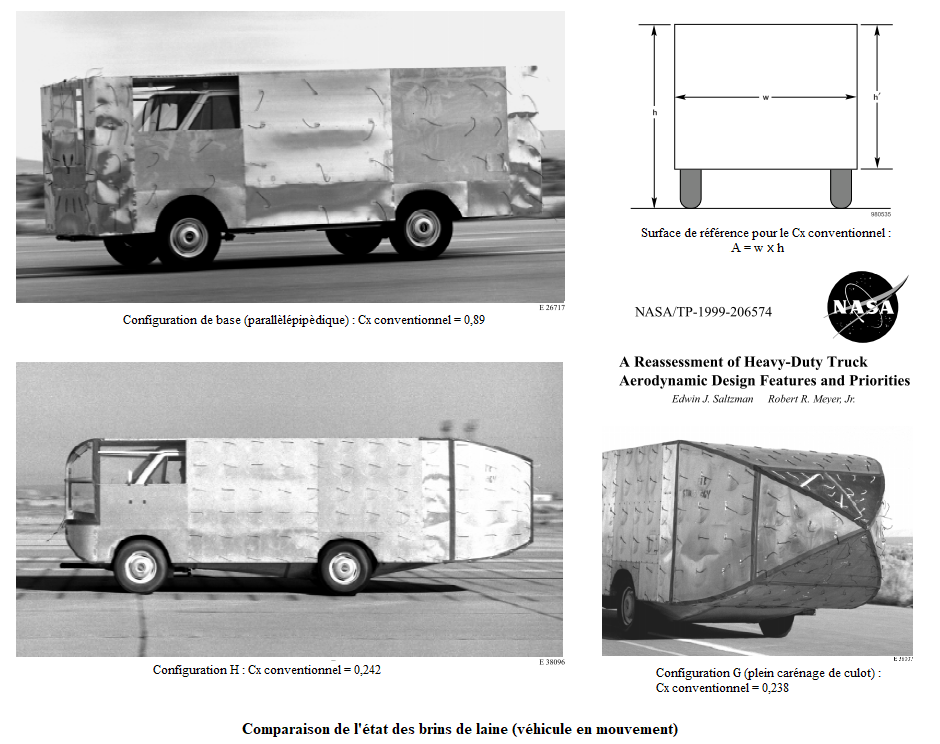
NASA: The Basics of Aerodynamic Drag
Because of the limitations imposed by the rigid design of cargo trailers, NASA also developed Airtabs, devices designed to generate airflow similar to that produced by a boat tail. Their triangular shape alters the conventional airflow around large vehicles, allowing it to narrow toward the rear. According to NASA, Airtabs not only help reduce aerodynamic drag but can also improve vehicle stability and decrease trailer sway in trucks pulling trailers.
Some companies have attempted to replicate advances stemming from the research. Today, it is more common to see trucks equipped with side skirts, which seek to replicate the effect of the aerodynamically sealed underside used in NASA’s early designs by reducing wind resistance.
 Business hours: Monday to Friday from 8:00 AM to 5:00 PM. California time