 Hable con un agente al (888) 572-7520
  Enviar mensaje a un agente

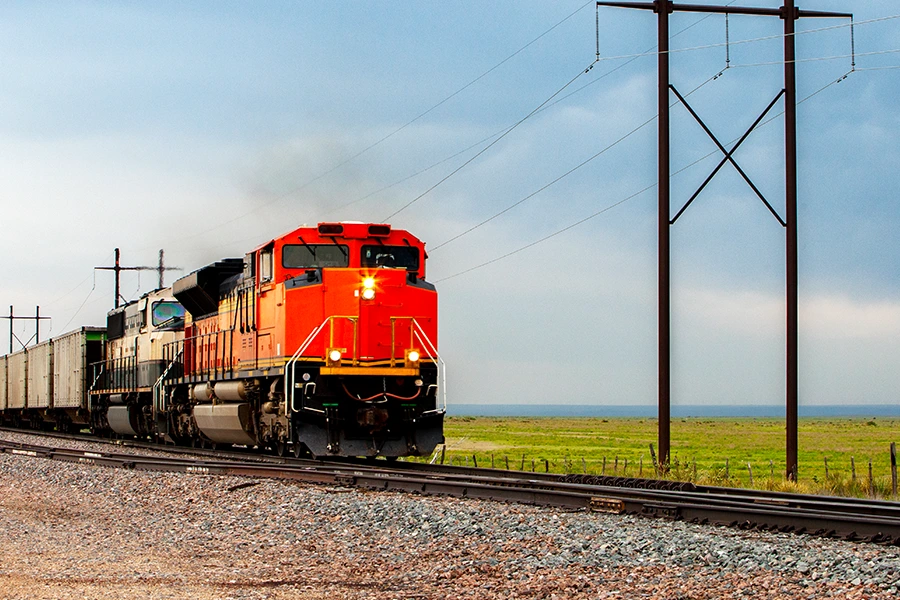

Texas is preparing one of its largest recent investments to eliminate conflicts between trains and vehicles on roads and streets used daily by freight traffic. The Texas Department of Transportation (TxDOT) announced that it will move forward with a program of 17 rail grade separation projects representing a total investment of approximately $1.3 billion.
The goal is simple but important for truck drivers: replace at-grade railroad crossings — where roads and railroad tracks intersect at the same level — with bridges, overpasses, underpasses, or other structures that allow trains and vehicles to move without directly crossing each other’s paths.
In September, the Texas Transportation Commission approved an additional $85.4 million in state funding through the program created by Senate Bill 1555. That funding is part of the strategy Texas used to secure more than $756 million in federal funding from the Federal Railroad Administration (FRA).
Why do these projects matter to trucking?
For truckers, a railroad crossing is not only a safety issue. A freight train crossing a road can stop traffic for several minutes, create long backups, and disrupt delivery schedules, particularly in industrial and logistics areas with heavy truck traffic.
TxDOT says eliminating these crossings can reduce congestion, improve safety, facilitate emergency response, and make freight movement more efficient.
The state program was created specifically with those goals in mind. The Texas Legislature originally allocated $250 million to the Off-System Rail Grade Separation State Fund Program, which provides financial assistance to local governments for projects designed to eliminate existing at-grade railroad crossings.
Texas used part of those resources as matching funds to secure a much larger amount of federal funding.
According to TxDOT, $77.6 million in state funding helped local governments meet federal matching requirements, a strategy that ultimately helped secure more than $756 million from the FRA for 12 projects. Together, those 12 projects represent more than $953 million in state, local, and federal investment.
Dallas, Houston, El Paso and San Antonio among the areas receiving projects

The list shows that the improvements are not concentrated in a single region. They include projects in some of Texas’ largest urban, industrial, and logistics centers.
In the Dallas-Fort Worth area, planned projects include the Las Lomas Parkway crossing with Union Pacific in Kaufman County; the separation of Union Pacific Railroad and Dallas, Garland & Northeastern Railroad tracks at Westmoreland in Dallas County; and the NE 23rd Street/Decatur Avenue project in Tarrant County.
In El Paso County, another project will eliminate the Union Pacific Railroad crossing at Rick Francis Street, north of State Highway 20.
The Houston area accounts for several projects. In Fort Bend County, projects include Union Pacific crossings at US 90 and South Gessner Road, as well as Dairy Ashford Road and Eldridge Road, both north of US 90A. Harris County will also receive funding for a rail safety and mobility project along the Sunset Limited route.
Projects are also planned in Guadalupe County, including the Cibolo railroad crossing at FM 78 and Country Lane and the separation of FM 3009 from the route used by Amtrak’s Sunset Limited.
In Bexar County, home to San Antonio, funding will support projects at Rittiman Road and Walzem Road involving Union Pacific tracks.
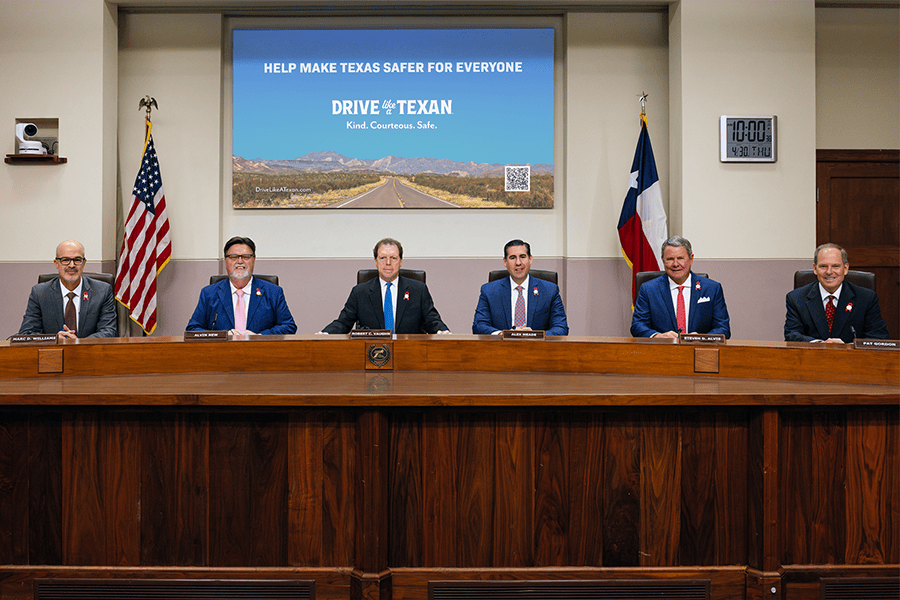
Laredo is also part of the investment
Those projects come in addition to work Texas had already funded in March.
The Transportation Commission approved $160.4 million at the time for five projects in Amarillo, Houston, Laredo and San Antonio. Among them is a project of particular importance to freight transportation: the CPKC rail grade separation at Santa Maria Boulevard in Laredo, with an estimated cost of $61.6 million and a state allocation of $58.5 million.
Laredo is one of the most important gateways for overland trade between the United States and Mexico, making improvements to the interaction between roads and railroads directly relevant to cross-border supply chains.
Rail projects were also selected in Amarillo and for the Griggs–Long–Mykawa Grade Separation in Houston, with an estimated cost of $165.2 million. Texas allocated $40 million in state funding to the Houston project.
One San Antonio project was removed
The September update included one change. The Commission removed a previously approved $5 million allocation for the Zarzamora Street/Frio City Road project in San Antonio.
According to TxDOT, the city and the district jointly decided not to move forward with the project under this program. The $5 million will return to the SB 1555 fund for future reallocation.
Despite that change, TxDOT continues to describe the investments approved during 2026 as a program of 17 rail grade separation projects totaling approximately $1.3 billion.
Fewer conflicts between trucks and trains
The scale of the investment shows that Texas is addressing a problem that affects both cities and the freight transportation network.
Instead of managing traffic every time a train passes, grade separations physically eliminate the conflict: the road travels over or under the railroad tracks.
For truck drivers and motor carriers, that can mean fewer interruptions, more predictable travel times, and less exposure to incidents at railroad crossings.
“By eliminating at-grade railroad crossings, we can improve safety, reduce congestion and keep people and goods moving more efficiently,” TxDOT Executive Director Marc Williams said when the federal funding was announced.
With projects stretching from Dallas-Fort Worth to Houston, El Paso, Laredo and San Antonio, the investment will affect multiple regions where trucks and freight move every day.
For carriers operating in Texas, the projects will also make it important to monitor construction schedules and temporary traffic changes as individual projects move forward.
Before starting a trip, drivers and carriers should check current road conditions and restrictions through official TxDOT channels and make sure their insurance coverage is appropriate for their operation, cargo, and routes.
 Business hours: Monday to Friday from 8:00 AM to 5:00 PM. California time