 Hable con un agente al (888) 572-7520
 Enviar mensaje a un agente




The climate phenomenon known as El Niño can dramatically change winter weather patterns across the United States, with consequences that go far beyond temperatures and rainfall. For truck drivers, trucking companies, and logistics operators, its effects can include flooded highways, landslides, travel restrictions, delivery delays, and higher operating costs.
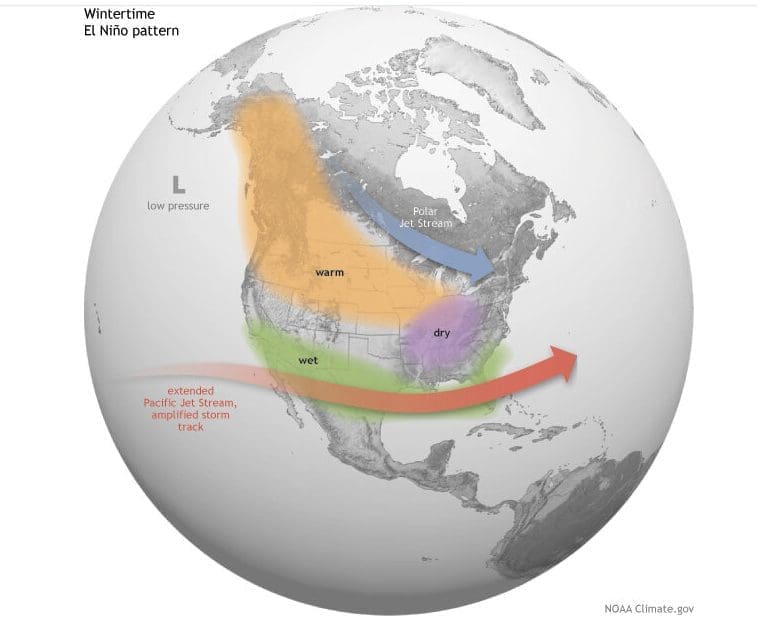
California, Texas, Florida, and other southern states are often among the regions most exposed to changes in precipitation associated with El Niño. Meanwhile, northern states and parts of the Midwest may experience relatively warmer and drier winters, although that does not eliminate the risk of snowstorms or severe weather.
Understanding how this phenomenon works can help trucking companies anticipate potential disruptions and improve route planning during the winter months.
Why Is It Called That?
El Niño is a natural climate phenomenon that occurs when sea surface temperatures in the central and eastern equatorial Pacific Ocean rise above their usual levels.
According to the National Oceanic and Atmospheric Administration (NOAA), this warming changes atmospheric circulation, affects wind patterns, and shifts rainfall and temperatures across different regions of the world.
El Niño is part of the El Niño–Southern Oscillation (ENSO), a recurring climate pattern with three phases: El Niño, La Niña, and ENSO-neutral conditions.
The name has historical roots. Fishermen along the coasts of Peru and Ecuador noticed that Pacific Ocean waters sometimes became unusually warm around Christmas. They began calling the phenomenon El Niño, referring to the Christ Child.
According to the U.S. Geological Survey (USGS), this phenomenon can influence weather conditions in different parts of the world.
El Niño occurs irregularly, typically every two to seven years, and its effects can last for several months.
How Does El Niño Affect the Weather?
One of the main ways El Niño influences weather is by altering the jet stream, a band of strong winds high in the atmosphere that helps steer storm systems.
During many El Niño events, the subtropical jet stream strengthens, increasing the likelihood of storms moving across the southern United States.
These changes can produce very different conditions depending on the region:
- California and the Southwest: Greater potential for heavy rainfall, flooding, and landslides.
- Texas and the Gulf Coast: Wetter winter conditions, with storms and flash flooding.
- Florida and the Southeast: Increased chances of above-average rainfall.
- Midwest and northern states: A tendency toward milder winter temperatures and lower precipitation in certain areas.
- Alaska: Potential changes in temperatures and freezing conditions that affect roads used for transportation in remote areas.
These patterns do not occur in exactly the same way during every El Niño event. Its strength, interactions with other atmospheric factors, and regional weather conditions determine how each winter unfolds.
California: Flooding and Landslides Could Disrupt Trucking
California is one of the states where El Niño can have particularly significant consequences for highway transportation.
During wet winters, storm systems moving in from the Pacific Ocean can bring substantial rainfall to urban areas, mountainous regions, and major freight corridors.
Flooding is not the only concern. When heavy rainfall reaches unstable hillsides or areas previously affected by wildfires, the risk of landslides and debris flows increases.
These conditions can lead to precautionary highway closures, infrastructure damage, and restrictions on commercial vehicles.
Major routes requiring particular attention include:
- I-5: Connects Southern California with the Central Valley and Northern California. It is essential for transporting agricultural products, food, and freight between major logistics hubs.
- I-10: Links the Los Angeles area with inland markets and serves as a major interstate freight corridor.
- I-80: Crosses the Sierra Nevada and connects California with Nevada and other markets. During winter, it can experience heavy snowfall, icy roads, and truck restrictions, even during El Niño winters.
- US-101 and the Pacific Coast Highway: Can be affected by landslides, flooding, and storm-related damage along coastal areas.
The California Department of Transportation (Caltrans) provides updates on highway closures, construction, and road conditions. Truck drivers can also use QuickMap for real-time traffic information.
For freight carriers, prolonged disruptions along these routes can force detours, increase fuel consumption, and interfere with delivery schedules.
Texas: Storms and Flooding Along Major Freight Corridors
Texas is home to some of the nation’s most important freight corridors, supported by its industrial, energy, commercial, and cross-border activity.
During El Niño events, the state may experience wetter-than-normal winter conditions, particularly in parts of Central, East, and South Texas.
Persistent rainfall and severe storms can cause flash flooding, especially in urban areas and locations with inadequate drainage.
For commercial transportation, disruptions may affect major highways such as I-10, I-35, I-45, and I-20.
I-35 is particularly important because it connects major freight markets with border crossings into Mexico, while I-10 serves as a critical east-west transportation corridor.
When flooding affects access roads to warehouses, industrial facilities, or border crossings, delays can continue even after major highways reopen.
The Texas Department of Transportation (TxDOT) provides information about road infrastructure and travel conditions. Drivers can check reported incidents and closures through DriveTexas.
Florida and the Southeast: More Rain and Distribution Challenges
Florida can also experience wetter winters during El Niño.
Increased rainfall and storm activity may disrupt transportation operations in cities such as Miami, Orlando, Tampa, and Jacksonville.
Highways including I-75, I-95, I-4, and I-10 are essential for distributing food, consumer goods, imported merchandise, and port-related freight.
Urban flooding can make it difficult for trucks to reach distribution centers and logistics terminals, while severe storms may reduce visibility and force changes to driving schedules.
El Niño is also generally associated with reduced Atlantic hurricane activity because of increased vertical wind shear. However, this does not mean the risk of tropical cyclones disappears.
NOAA explains that El Niño’s influence on hurricanes represents a broad climate tendency, not a guarantee that a hurricane season will be free of dangerous storms.
Truck drivers can check Florida road conditions through FL511, the state’s official traffic information service.
Does El Niño Mean Less Snow in Northern States?
During many El Niño events, northern regions experience above-average temperatures and lower winter precipitation.
These conditions may temporarily benefit certain freight corridors by reducing some periods of snow and ice accumulation.
However, a warmer-than-average winter does not mean highways will remain free of winter storms.
States such as Illinois, Indiana, Michigan, Wisconsin, Minnesota, and New York can still experience heavy snowfall, icy roads, and hazardous conditions for large commercial vehicles.
In mountainous areas of the West, including the Sierra Nevada and Rocky Mountains, moisture combined with freezing temperatures can also produce major snowstorms.
For this reason, trucking companies should continue following their standard winter safety procedures, regardless of seasonal weather trends associated with El Niño.
How El Niño Can Affect Logistics and Supply Chains
The consequences of El Niño for the trucking industry extend beyond highway closures.
A major storm can trigger a series of operational problems affecting multiple parts of the supply chain.
Some of the most significant risks include:
- Delivery delays: Highway closures and detours can increase transit times and make it harder to meet delivery commitments.
- Higher operating costs: Alternative routes can increase fuel consumption, driving hours, and other transportation expenses.
- Disruptions at logistics facilities: Flooding can prevent trucks from entering or leaving warehouses, ports, and freight terminals.
- Cargo damage: Water intrusion, crashes, and hazardous driving conditions can damage transported goods.
- Scheduling disruptions: Carriers may need to change routes, reschedule loading and unloading appointments, or reassign trucks.
- Increased crash risks: Heavy rain, poor visibility, strong winds, and slippery roads can create dangerous driving conditions.
For long-haul trucking operations, these problems can become even more complicated when several states experience severe weather during the same week.
What Truck Drivers Should Do During El Niño-Related Storms
Preparation is essential for reducing risks during a potentially wetter winter.
The Federal Motor Carrier Safety Administration (FMCSA) requires commercial drivers, under 49 CFR 392.14, to exercise extreme caution when hazardous weather affects visibility or traction.
Drivers must reduce their speed when conditions become dangerous and discontinue operations when conditions are sufficiently hazardous.
Before starting a trip, truck drivers should check alerts from the National Weather Service (NWS), review highway conditions, and identify possible detours.
Maintaining regular communication with dispatchers, allowing additional time for deliveries, and avoiding flooded roads are also important precautions.
Even a seemingly small amount of water covering a roadway can pose a serious danger. Floodwaters can conceal pavement damage and compromise vehicle stability.
The priority should always be the safety of the driver, the truck, and the cargo.
El Niño and Trucking: Why Planning Ahead Matters
El Niño does not affect every state in the same way, and its consequences vary from one season to another. However, its influence on rainfall, temperatures, and storm patterns can significantly change road transportation conditions.
For trucking companies, understanding these patterns can help anticipate potential disruptions, improve route planning, and reduce exposure to weather-related risks.
Monitoring NOAA forecasts, National Weather Service alerts, and updates from state transportation departments is essential for making informed operational decisions.
El Niño alone cannot predict when a particular highway will close, but understanding its potential effects can help carriers prepare for a more challenging winter.
Stay protected on the road. We’re here to help you with all your insurance needs.
 Business hours: Monday to Friday from 8:00 AM to 5:00 PM. California time