 Hable con un agente al (888) 572-7520
 Enviar mensaje a un agente


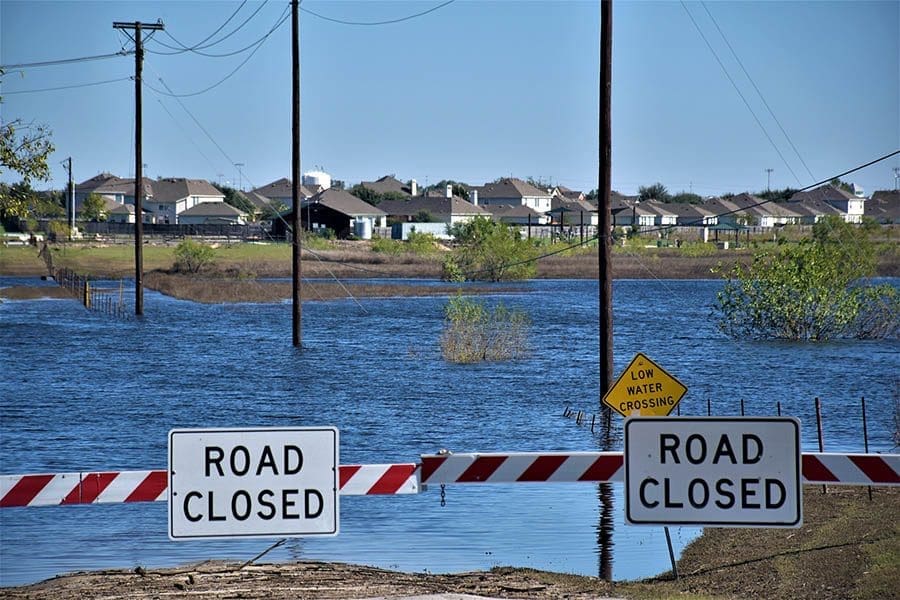

The Texas Department of Transportation (TxDOT) has issued a series of safety recommendations to help prevent crashes on flooded roads, a concern that could become increasingly important during the 2026–2027 winter. The potential influence of El Niño on Texas weather patterns could bring wetter conditions and increase the likelihood of heavy rainfall across parts of the state.
According to climate outlooks associated with El Niño in Texas, the upcoming winter could bring increased cloud cover, relatively cooler temperatures, and above-average precipitation, particularly across central and southern Texas.
For truck drivers and trucking companies operating in Texas, these conditions present additional challenges. Flash flooding can disrupt major freight corridors, force unexpected route changes, and turn seemingly passable roads into dangerous situations.
TxDOT Warns About Hidden Dangers Beneath Floodwaters
One of TxDOT’s main warnings is that a flooded roadway may appear safe from behind the wheel, even when the road itself has sustained significant structural damage.
Matthew Heinze, TxDOT’s emergency management coordinator, explained that barricades and road closure signs are installed for safety reasons and should never be ignored.
“If there’s a barricade blocking a road, there’s a reason it’s there. Don’t go around it,” Heinze warned.
He also emphasized that the absence of a barricade does not necessarily mean a road is safe. Maintenance crews may not have reached the affected area yet to assess conditions.
TxDOT identifies several hazards that can remain hidden beneath floodwaters:
- Damaged bridges and pavement: Strong currents can erode foundations, wash away pavement, or weaken structures that appear intact.
- Submerged debris: Branches, metal objects, and other materials carried by floodwaters can damage tires and vehicle components.
- Powerful currents: Even relatively shallow water can generate enough force to destabilize or sweep away a vehicle.
- Open drainage systems: Displaced manhole covers can leave dangerous openings hidden beneath the water.
- Downed power lines: Electrical lines in contact with floodwater can create potentially deadly electrocution hazards.
These risks are particularly significant for commercial vehicles because of their weight, longer stopping distances, and the challenges involved in maneuvering or backing up on narrow roads.
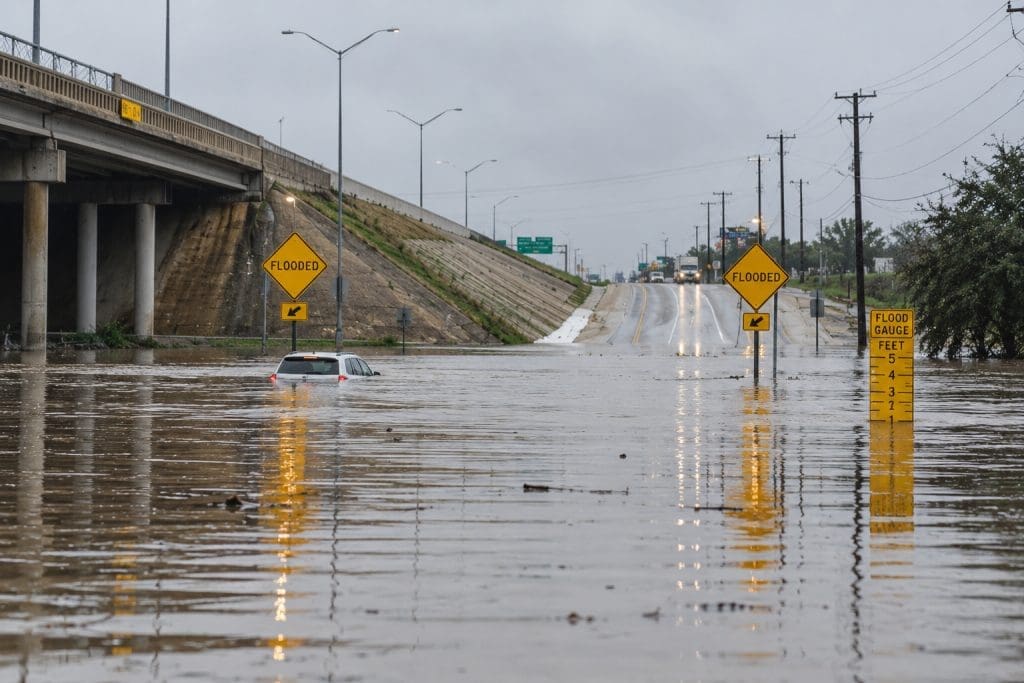
Why Truck Drivers Should Never Attempt to Cross Flooded Roads
Although commercial trucks have greater ground clearance than passenger vehicles, that does not make them safe to drive through floodwaters.
Water depth can be deceptive, and strong currents can compromise vehicle stability. Drivers also have no reliable way of determining from the cab whether the pavement beneath the water is still intact.
Floodwater can damage mechanical and electrical systems, reduce tire traction, and leave a truck stranded.
For tractor-trailers, emergency maneuvers can become especially difficult when moving water affects the vehicle’s direction or stability.
TxDOT reminds motorists that roads may require technical inspections after flooding, even when no visible damage is present.
“Water is very powerful and can cause damage that may not be easily visible,” Heinze explained, emphasizing the importance of inspecting roads and bridges after flooding events.
Fines of Up to $2,000 for Ignoring Road Barricades
Beyond the immediate physical danger, driving on an officially closed roadway can carry legal consequences.
According to TxDOT’s warning, Texas law provides for fines of up to $2,000 and jail sentences of up to 180 days for certain violations involving barricades blocking flooded crossings or roads closed because of high water.
Tampering with or removing warning signs and barricades can also result in penalties, including fines of up to $1,000 and potential imprisonment of up to two years, depending on the circumstances and applicable offense.
TxDOT also emphasizes that ignoring road closures can trigger emergency rescue operations, putting both vehicle occupants and first responders at risk.
That is why the agency reinforces a widely recognized flood safety message across the United States: Turn Around, Don’t Drown.
El Niño and the Risks to Texas Highways This Winter
The outlook for the 2026–2027 winter adds another important consideration to TxDOT’s road safety recommendations.
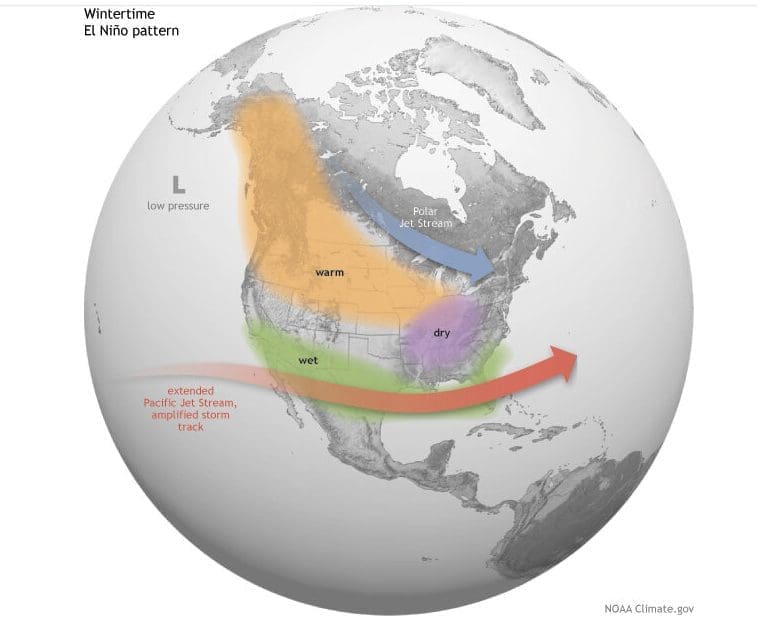
During El Niño events, changes in atmospheric circulation can favor storm systems moving across the southern United States. In Texas, this pattern is often associated with wetter-than-average winter conditions, although the effects vary depending on the region and the strength of the event.
Additional rainfall may benefit drought-affected areas, but it can also increase the risk of water accumulating on highways, overflowing creeks, and temporary closures at low-water crossings.
In northern and west-central Texas, winter precipitation can also bring snow, sleet, or ice when sufficiently cold temperatures coincide with storm systems.
However, El Niño does not mean every part of Texas will experience flooding, nor does it make it possible to predict exactly where the heaviest rainfall will occur.
For trucking companies, the key recommendation is to incorporate weather alerts and road closure information into trip planning, particularly during periods of increased storm activity.
El Niño
Safety Recommendations for Truck Drivers and Fleets
Before traveling through Texas, TxDOT recommends checking DriveTexas.org, the state’s official platform for road closures, traffic conditions, and alternative routes.
To reduce risks, professional drivers should avoid crossing any flooded roadway, obey all barricades, and never assume that a road is safe simply because warning signs are not present.
Truckers should also review weather alerts before departure, maintain communication with dispatchers, and adjust routes whenever conditions require it.
If a road is closed, the safest decision is to take an approved alternative route, even if doing so delays a delivery.
During a flood, protecting the lives of drivers and other road users must always take priority over completing a trip.
With the possibility of a wetter winter under the influence of El Niño, TxDOT’s warning is particularly relevant to the trucking industry: A road that appears passable may conceal serious damage, and no delivery is worth the risk of ignoring a flood-related closure.
 Business hours: Monday to Friday from 8:00 AM to 5:00 PM. California time