 Hable con un agente al (888) 572-7520
 Enviar mensaje a un agente


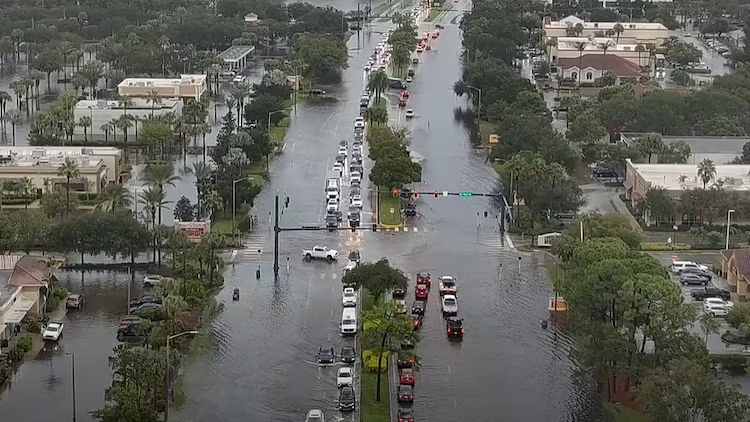

Florida is experiencing some of its worst flooding in recent years, with extraordinary rainfall leaving roads underwater, vehicles stranded, and communities cut off. The storm system, which developed in early November, has claimed at least two lives and disrupted passenger and commercial vehicle traffic, particularly along the state’s Atlantic coast.
Governor Ron DeSantis declared a state of emergency in seven counties under Executive Order 26-227. The declaration covers Brevard, DeSoto, Hardee, Highlands, Indian River, Martin, and St. Lucie counties, where flooding has affected roads, schools, airports, and other critical infrastructure.
Record Rainfall Leaves Roads Underwater
DRONE VIDEO SHOWS SEVERE FLOODING IN FLORIDA: Significant flooding was reported in Port St. Lucie, Florida, as heavy rain swamped the region. Officials said several roads have become difficult to navigate due to high water.#florida #flood #drone #rain https://t.co/CqiQh1WbdG
— FOX Weather (@foxweather) November 4, 2026
The National Weather Service (NWS) reported that some communities received more than 20 inches of rainfall during the storm.
Grant-Valkaria recorded approximately 24.69 inches, while Malabar received 24.52 inches. Palm Bay and Melbourne also experienced severe flooding, with streets submerged and numerous vehicles stranded.
Emergency crews carried out dozens of rescues and evacuations. The Florida Fish and Wildlife Conservation Commission participated in more than 60 rescue operations, using airboats to reach residents trapped in flooded neighborhoods.
The heavy rainfall also forced school closures and disrupted public services across affected communities.
Road Closures Disrupt Trucking and Freight Deliveries
The flooding has created significant challenges for the trucking industry, delaying shipments, forcing route changes, and restricting access to distribution centers and commercial facilities.
The National Weather Service reported numerous road closures in southern Brevard County and the Treasure Coast region, including parts of Indian River, Martin, and St. Lucie counties.
Among the hardest-hit communities are Palm Bay, Melbourne, Sebastian, Vero Beach, Fort Pierce, Port St. Lucie, and Stuart.
Transportation officials warn that floodwaters can conceal damaged pavement, washed-out roadways, and other dangerous obstacles. For commercial truck drivers, a vehicle’s size and weight do not make it safe to cross a flooded road.
Drivers are urged to avoid submerged roadways, obey barricades, and check current traffic conditions before beginning their trips.
Florida Eases Requirements for Emergency Commercial Vehicles
Florida’s emergency declaration also includes temporary provisions intended to facilitate the movement of commercial vehicles involved in disaster response and recovery operations.
Among the authorized measures is the suspension of certain registration requirements for out-of-state commercial vehicles entering Florida to provide emergency services.
The executive order also allows toll exemptions to support evacuations and emergency response activities.
However, these provisions do not represent a blanket exemption for all commercial carriers. They apply to qualifying emergency operations and remain subject to the conditions established by state authorities.
Trucking companies must distinguish between vehicles transporting emergency supplies or providing disaster assistance and those conducting routine commercial deliveries, which remain subject to applicable traffic restrictions.
DEERFIELD BEACH UNDERWATER📍Deerfield Beach, Florida 🇺🇸Heavy flooding has submerged loading docks at a commercial facility in Deerfield Beach, Florida.Rising waters stretching from Fort Lauderdale to Palm Beach are exposing the growing toll of severe weather across South Florida.
— 🥷🏽 (@Whi_rlz) November 4, 2026
Rising St. Johns River Keeps Flood Threat Alive
Although the heaviest rainfall has begun to ease, the flooding threat remains.
The National Weather Service continues to monitor the St. Johns River, particularly near Cocoa, where water levels are still rising.
Forecasts indicate that the river could approach major flood stage in the coming days, potentially affecting roads, homes, and low-lying areas throughout Brevard County.
Additionally, the South Florida Water Management District issued an emergency order on November 3 covering Glades, Hendry, Highlands, Okeechobee, Palm Beach, Martin, and St. Lucie counties in response to flooding and the potential for additional rainfall.
King Tides Add to Florida’s Flooding Problems
The National Weather Service warned on November 4 that unusually high tides, commonly known as king tides, could cause additional coastal flooding in low-lying areas of Miami-Dade, Broward, and Palm Beach counties.
The coastal flood advisory remains in effect until 7 p.m., with flooding possible approximately 90 minutes to two hours before and after each high tide.
Vulnerable locations include parts of Miami Beach, Fort Lauderdale, and West Palm Beach, where rising water levels may make local roads difficult or unsafe to navigate.
Authorities are urging motorists to avoid flooded streets, particularly those covered by saltwater, which can damage vehicles and conceal hazardous road conditions.
The unusually high tides are adding another transportation concern as other parts of Florida continue recovering from the extreme rainfall and widespread flooding.
What Truck Drivers and Freight Carriers Need to Know
Truck drivers traveling through Florida should monitor National Weather Service alerts, check road closures and traffic conditions through Florida 511, and follow instructions from local emergency management agencies.
Freight carriers should also anticipate possible delivery delays, detours, and limited access to businesses and distribution facilities in affected communities.
As of November 4, flooding continues to pose a transportation hazard across parts of central and eastern Florida. The pace of recovery will depend on falling water levels, roadway inspections, and the restoration of safe travel conditions.
For truck drivers and fleet operators, staying informed and avoiding flooded routes remain essential as Florida works to restore normal traffic and commercial transportation.
 Business hours: Monday to Friday from 8:00 AM to 5:00 PM. California time