 Hable con un agente al (888) 572-7520
 Enviar mensaje a un agente


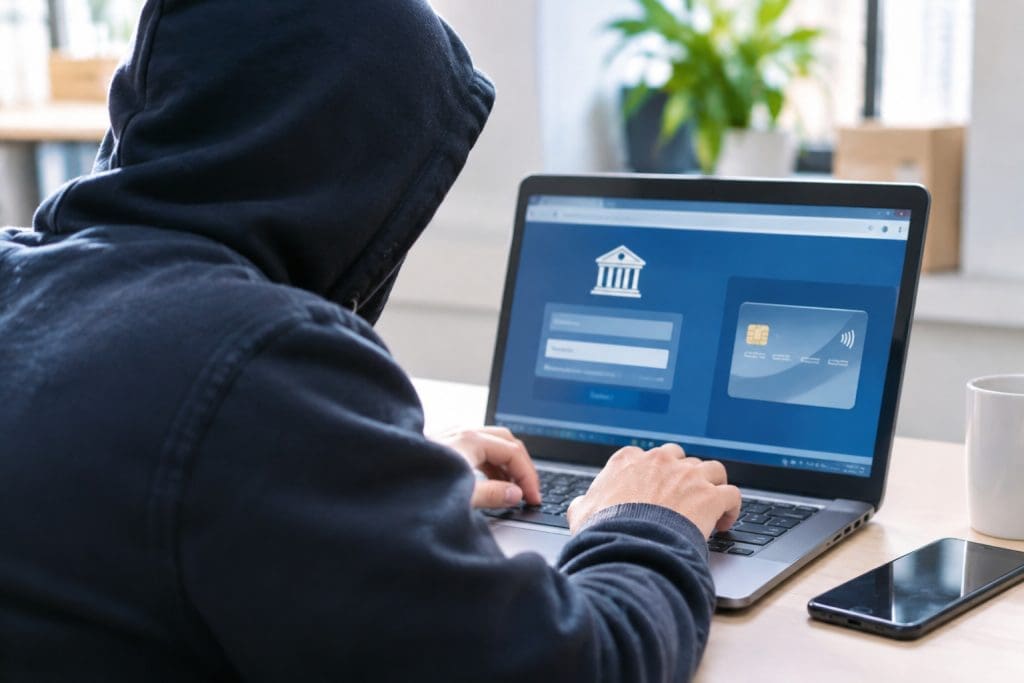

Identity theft and bank fraud pose serious threats to small and midsize businesses, including trucking and freight transportation companies. A federal investigation in Texas involving bank accounts with combined balances exceeding $373 million highlights how criminals can gain access to business funds without stealing a physical bank card or initially knowing an account password.
The investigation, which led to federal charges against 14 individuals, uncovered an alleged scheme involving stolen personal information, unauthorized access to banking records, and phone number hijacking. Although authorities have not confirmed whether trucking companies were among the victims, the methods involved could affect virtually any business that relies on electronic payments and bank transfers.
Federal grand jury indicts fourteen defendants in $370 million nationwide bank account takeover conspiracy@StateDeptDSS @SecretService @HSI_Dallas @USPIS_HQ @DEADALLASDiv @CBP @FBIDallas @TheSSAOIG @PlanoPoliceDept @CollinCoSO @usembassydakar Office of Overseas Criminal Investigations, National Insurance Crime Bureauhttps://t.co/cgfxakJc8J
— US Attorney NDTX (@NDTXnews) November 4, 2026
How Criminals Can Steal Business Funds Without a Bank Card
One of the techniques identified in the investigation was SIM swapping, a form of fraud in which criminals trick or persuade a mobile carrier into transferring a victim’s phone number to a SIM card they control.
Once the transfer is completed, criminals can intercept text messages, verification codes, and other communications intended for the legitimate account holder.
In the Texas case, prosecutors allege that members of the organization used stolen personal information and assistance from employees or intermediaries to bypass financial institutions’ security measures.
After gaining unauthorized access, the suspects allegedly attempted to move funds into other accounts, including accounts held at foreign banks.
For a trucking company, losing access to its business bank account can have immediate operational consequences. Fuel purchases, vehicle maintenance, insurance premiums, payroll, and other essential expenses all depend on reliable access to company funds.

Five Ways Businesses Can Protect Their Bank Accounts
1. Stop relying exclusively on SMS verification codes. Whenever possible, use authenticator apps or hardware security keys instead of text messages. These methods offer stronger protection against phone number hijacking.
2. Enable real-time banking alerts. Set up notifications for outgoing transfers, password changes, new payment recipients, and unusually large transactions. Early detection can help prevent additional losses.
3. Secure the company’s mobile phone numbers. Contact your wireless carrier to establish an account PIN and request additional safeguards against unauthorized SIM changes or phone number transfers.
4. Require additional approval for major transfers. Businesses with multiple employees should consider requiring two authorized individuals to approve high-value payments. Access to banking systems should also be restricted based on job responsibilities.
5. Review banking activity every day. Regularly monitoring transactions can help identify suspicious activity before additional funds are transferred. If an unauthorized payment is detected, immediately contact the financial institution to request assistance.
A Warning Sign Businesses Should Never Ignore
Suddenly losing cellular service on a phone linked to a business bank account could indicate that someone is attempting to take control of the associated phone number.
If a device unexpectedly stops receiving calls or text messages, contact the mobile carrier immediately to determine whether an unauthorized SIM change or number transfer has occurred.
Business owners should also review recent banking activity, check for unfamiliar account logins, and report suspicious transactions to their financial institution.
For freight transportation companies, where financial operations are frequently managed remotely through mobile devices, securing access to banking systems is particularly important.
A compromised phone number can quickly become a much larger financial problem if criminals use it to intercept authentication codes and gain access to business accounts.

What the Texas Bank Fraud Investigation Revealed
The U.S. Attorney’s Office for the Northern District of Texas charged 14 individuals in connection with an alleged identity theft and bank account takeover scheme that operated between July 2023 and November 2024.
According to federal prosecutors, investigators identified nearly 3,000 victims whose bank accounts held a combined balance of more than $373 million.
Importantly, the $373 million figure represents the total balances in the affected accounts, not the amount of money actually stolen.
Investigators also documented attempted fraudulent wire transfers of up to $2 million.
The case illustrates how even accounts protected by passwords and verification systems can become vulnerable when criminals gain control of an account holder’s digital identity or mobile phone number.
For small businesses and trucking companies, prevention comes down to three essential priorities: securing mobile devices, strengthening banking authentication, and establishing internal controls before authorizing financial transfers.
Maintaining adequate business protection and working with trusted insurance professionals are also important parts of a broader risk management strategy, although businesses should verify whether their policies specifically cover cybercrime or fraudulent fund transfers.
 Business hours: Monday to Friday from 8:00 AM to 5:00 PM. California time