 Hable con un agente al (888) 572-7520
 Enviar mensaje a un agente


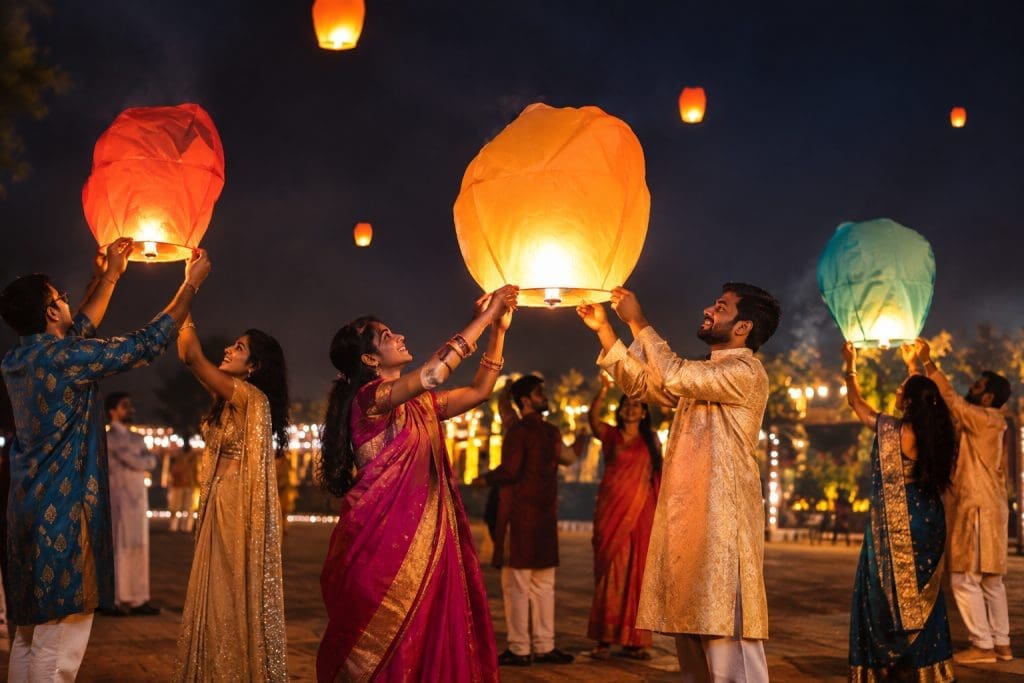

Diwali is one of the world’s most important religious and cultural celebrations, observed by millions of people in India and countries such as Nepal, the United Kingdom, Singapore, Malaysia, Mauritius, Trinidad and Tobago, Guyana, Canada, and the United States. Known as the Festival of Lights, it symbolizes the victory of light over darkness, knowledge over ignorance, and good over evil.
For families involved in commerce and business, Diwali also carries special economic significance: it represents an opportunity to close the books on the past and begin a new cycle of prosperity.
This tradition is particularly significant in Gujarat, one of India’s major commercial and industrial centers, where the New Year is known as Bestu Varas or Nutan Varsh.
In 2026, Diwali was celebrated on November 8, while the Gujarati New Year begins on Tuesday, November 10, marking the start of the year 2083 in the Vikram Samvat calendar. The two-day difference reflects the particularities of the Hindu lunar calendar.
Chopda Pujan: When Accounting Books Receive Blessings
One of the most representative traditions of this celebration is Chopda Pujan, a religious ceremony in which merchants and business owners bless their accounting books to welcome a new period of economic activity.
Historically, merchants used large ledgers bound in red cloth, known as chopdas, to record their transactions, debts, income, and expenses.
During Diwali, these records take on special significance. The previous business cycle’s books are symbolically closed, while new ledgers are presented during a ceremony dedicated to several Hindu deities.
These include Lakshmi, the goddess of wealth and prosperity; Ganesha, associated with overcoming obstacles and new beginnings; and Saraswati, linked to knowledge and wisdom.
On the first pages of the new ledgers, merchants write words such as Shubh, representing auspiciousness, and Labh, associated with profits and financial gains.
These symbols express the hope that business activities will be conducted successfully, honestly, and with sound judgment throughout the coming year.
An Ancient Tradition in the Digital Age
Although computerized systems have replaced much of traditional bookkeeping, Chopda Pujan remains an important part of life for many merchants and business owners.
Today, some families place laptops, tablets, and other devices used to manage their businesses alongside traditional accounting books during religious ceremonies.
In this way, a centuries-old practice adapts to the tools of the modern economy without losing its cultural significance.
The celebration reflects a distinctive aspect of Gujarat’s commercial tradition: economic activity is viewed not only as a source of income but also as a responsibility that should be carried out with prudence, integrity, and respect for others.

Bestu Varas: A Fresh Start for Families and Businesses
Following Diwali comes Bestu Varas, the Gujarati New Year, a day dedicated to family gatherings, greetings, and wishes for prosperity.
During this celebration, people traditionally wear new clothes, visit temples, share special meals, and exchange sweets with relatives, neighbors, and business partners.
One of the most common greetings is Saal Mubarak, an expression conveying good wishes for the year ahead.
Business relationships also play an important role. Entrepreneurs and merchants take the opportunity to strengthen connections, express gratitude to their employees, and wish success to their partners and customers.
For many businesses, the formal resumption of operations takes place during Labh Pancham, a date considered particularly auspicious for launching new activities and conducting business.
In 2026, this celebration falls on November 14.
From Businesses to Highways: Blessings for Those Who Keep the Economy Moving

The meaning of Diwali and the Business New Year also highlights the importance that different cultural traditions place on work tools, vehicles, and the people who sustain economic activity.
In India, vehicle blessing ceremonies, generally known as Vahana Puja, may be performed during various religious festivals or when a new vehicle is purchased.
These practices can include trucks, buses, cars, and other forms of transportation. Depending on family and regional customs, vehicles are cleaned, decorated with flowers, and presented with offerings or blessings intended to seek protection during their journeys.
Although these ceremonies are not a mandatory part of Chopda Pujan and are not observed in the same way across all communities, they share a common principle: expressing gratitude for the tools of one’s livelihood and wishing safety and prosperity to those who use them.
For families involved in freight transportation, these good wishes carry special meaning. A truck represents much more than a vehicle: it is a working asset, a financial investment, and, in many cases, the primary source of income for an entire household.
In the trucking industry, where thousands of drivers travel long distances to keep supply chains operating, protecting vehicles and ensuring people’s safety are ongoing priorities.
Cultural traditions may express these hopes through blessings and ceremonies, while daily operations require supporting them with preventive maintenance, responsible driving, careful planning, and appropriate insurance coverage.
From this perspective, Diwali’s message extends far beyond India’s borders and connects with values shared throughout the trucking and logistics communities: hard work, responsibility, asset protection, and hope for a better future.
Because, regardless of cultural differences, merchants, business owners, and truck drivers around the world share a common wish: may the new year bring opportunities, may businesses prosper, and may every driver return home safely after each journey.
 Business hours: Monday to Friday from 8:00 AM to 5:00 PM. California time