 Hable con un agente al (888) 572-7520
 Enviar mensaje a un agente




The United States could lose its measles elimination status for the first time since 2000. A sharp increase in infections over the past two years has raised concerns among public health officials, prompting the Pan American Health Organization (PAHO) to review whether the virus has resumed sustained transmission within the country.
The situation is particularly relevant to the trucking industry, where professional drivers travel thousands of miles, cross multiple state lines, and regularly interact with people at truck stops, distribution centers, warehouses, rest areas, and commercial facilities.
Although measles is not a disease specific to transportation workers, the mobility associated with long-haul trucking makes vaccination and early symptom recognition especially important.
Nearly 5,200 Cases and a Pending Public Health Decision

According to Centers for Disease Control and Prevention (CDC) figures cited as of November 5, the United States had recorded approximately 5,200 confirmed measles cases in 2026, more than double the 2,289 cases reported throughout 2025.
Since the beginning of 2025, 11 measles-related deaths have also been confirmed.
The increase represents a significant reversal from 2000, when the United States officially achieved measles elimination. That designation means the disease is no longer continuously transmitted within the country, although imported infections and isolated outbreaks may still occur.
Between November 10 and 13, 2026, an independent commission of experts convened by PAHO is reviewing whether measles transmission has continued for at least 12 consecutive months, a key criterion in determining whether the country should lose its elimination certification.
A decision is expected during the week of November 16. Outbreaks intensified in Texas during 2025 before spreading to other states, including Utah, Arizona, South Carolina, and Pennsylvania.
CDC Director Erica Schwartz has stated that the agency’s public health response will continue regardless of PAHO’s decision. Those efforts include disease surveillance, coordination with state health departments, and vaccination campaigns.
Why Measles Matters to the Trucking Industry
Measles is a highly contagious viral disease that spreads through the air when an infected person breathes, coughs, or sneezes.
According to the CDC, the virus can remain infectious in the air of an enclosed space for up to two hours after an infected person has left.
This means direct physical contact is not necessary for transmission.
For professional truck drivers, several routine working conditions may increase the likelihood of exposure:
- Truck stops and rest areas: Frequent stops at restaurants, convenience stores, and shared facilities.
- Distribution centers and warehouses: Waiting in enclosed rooms with drivers and logistics personnel.
- Ports and freight terminals: Interactions with workers arriving from different regions.
- Interstate travel: Routes passing through communities experiencing active outbreaks.
- Shared indoor facilities: Common areas such as cafeterias, offices, restrooms, and waiting rooms.
However, the risk depends primarily on a driver’s immunity and exposure to infected individuals, rather than the number of miles traveled.
For trucking companies, measles can also become an operational concern.
An infected driver may require isolation and medical care, while other exposed employees without evidence of immunity could face temporary work restrictions imposed by public health authorities.
In certain situations, quarantine measures may extend up to 21 days following the last exposure.
Measles Vaccination: How Many Doses Do Truck Drivers Need?
The primary protection against measles is the MMR vaccine, which protects against measles, mumps, and rubella.
According to the CDC, two doses of the MMR vaccine provide approximately 97% protection against measles.
For adult truck drivers, vaccination recommendations depend on age, vaccination history, and individual risk factors.
Most adults born in 1957 or later should have acceptable evidence of measles immunity.
For adults without additional risk factors, one documented MMR dose is generally sufficient. However, certain groups, including international travelers, may require two doses administered at least 28 days apart.
Adults born before 1957 are generally considered immune because measles circulated widely during their childhood, although exceptions may apply.
Truck drivers who regularly cross international borders, particularly between the United States, Canada, and Mexico, should review their vaccination records before traveling.
There is no measles vaccine specifically designed for commercial drivers, and federal regulations do not generally require proof of MMR vaccination to operate a commercial truck within the United States.
Nevertheless, maintaining appropriate immunization helps protect drivers and may reduce disruptions associated with workplace exposure.
States Reporting the Highest Numbers of Cases
CDC data identified Pennsylvania, South Carolina, Utah, Wisconsin, and New York among the states reporting the highest measles case totals during 2026.
As of November 5, the reported figures included:
| State | Reported cases |
|---|---|
| Pennsylvania | 1,476 |
| South Carolina | 670 |
| Utah | 536 |
| Wisconsin | 419 |
| New York | 210 |
New York figures exclude cases reported separately in New York City.
These figures do not mean that highways in these states are inherently dangerous, nor do they justify general restrictions on freight transportation.
However, they highlight areas where commercial drivers should pay particular attention to guidance issued by local and state health departments.
Drivers can consult the CDC’s official measles information at https://www.cdc.gov/measles/ for prevention recommendations and public health updates.
Other Vaccines Commercial Drivers Should Review
Beyond measles protection, professional drivers should periodically review their vaccination records with a healthcare provider.
Routine adult immunizations in the United States include protection against tetanus, diphtheria, hepatitis B, and influenza, as well as pneumococcal disease and other infections depending on age and individual risk factors.
Tetanus and diphtheria boosters are generally recommended every 10 years.
Influenza vaccination is recommended annually, while hepatitis B and pneumococcal vaccine recommendations depend on age, medical history, and current CDC guidance.
For truck drivers traveling internationally, checking destination-specific health recommendations is also important.
These recommendations follow U.S. public health guidelines. Commercial drivers are not generally required to receive yellow fever or Argentine hemorrhagic fever vaccines simply to operate trucks within the United States.
What Should Truck Drivers Do If Symptoms Develop on the Road?
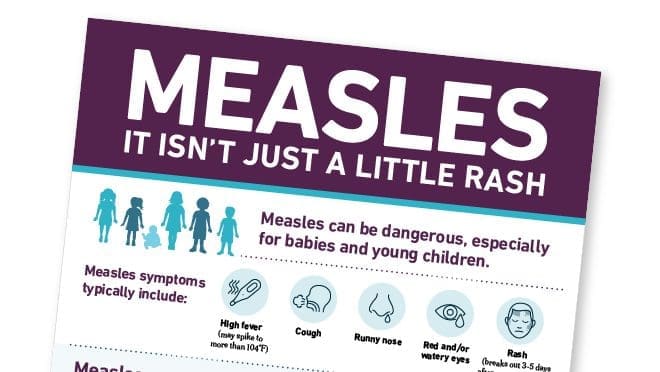
Early measles symptoms typically include high fever, cough, runny nose, and red or watery eyes.
A distinctive skin rash usually develops several days later, often beginning on the face before spreading to other parts of the body.
An infected person can spread the virus from approximately four days before until four days after the rash appears.
Because transmission may occur before the disease is recognized, drivers experiencing symptoms consistent with measles should avoid contact with others and seek medical advice promptly.
They should also call ahead before visiting a healthcare facility so medical personnel can take appropriate precautions to prevent additional exposures.
For trucking companies, preventive measures may include incorporating infectious disease awareness into workplace safety programs, sharing vaccination information, and establishing procedures for responding to potential exposures.
A Public Health Challenge With Consequences for Transportation
The potential loss of measles elimination status would represent a significant public health setback for the United States after 26 years.
The rise in infections also reflects declining vaccination coverage.
According to the CDC, the percentage of kindergarten students vaccinated with MMR declined from 95.2% during the 2019–2020 school year to 92.4% during the 2025–2026 school year.
For the trucking industry, the situation serves as a reminder that driver safety involves more than vehicle maintenance, compliance with transportation regulations, and accident prevention.
Driver health is also an essential part of business continuity.
Keeping vaccinations up to date, recognizing early symptoms, and seeking timely medical attention can help protect the professionals responsible for keeping America’s supply chains moving.
PAHO’s upcoming decision will determine whether the United States retains its measles elimination designation. Regardless of the outcome, prevention will remain essential to limiting infections and protecting millions of workers, including the truck drivers who keep the nation’s economy moving.
 Business hours: Monday to Friday from 8:00 AM to 5:00 PM. California time