 Llame al (888) 572-7520 para hablar con un agente
 Enviar mensaje a un agente
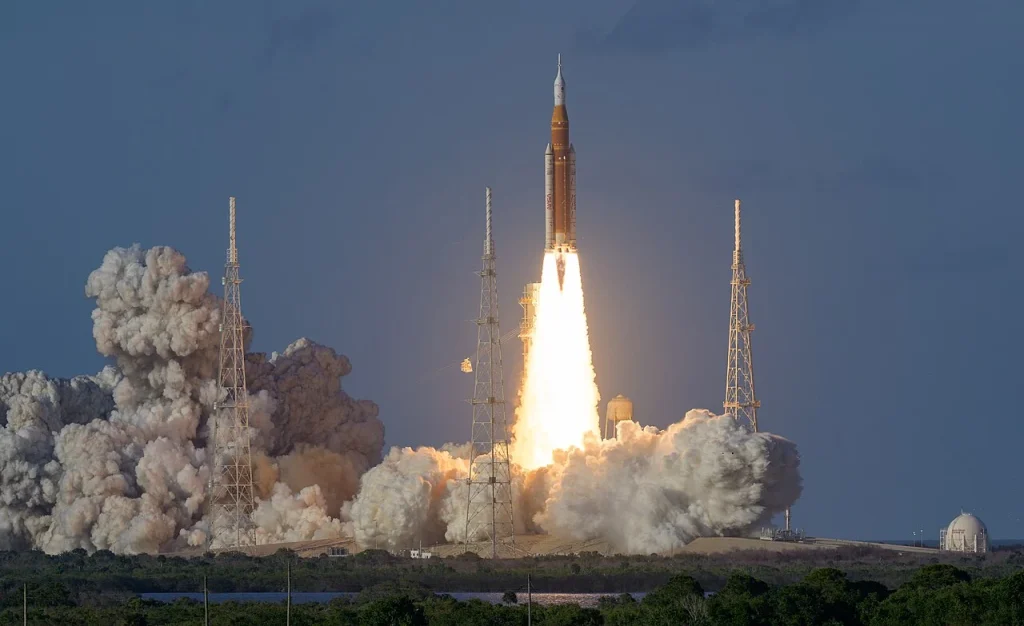

On Wednesday, April 1, 2026, the NASA (National Aeronautics and Space Administration) launched the Artemis II mission, preparing for the first crewed lunar flyby in more than 50 years.
NASA’s Space Launch System (SLS) rocket, carrying the Orion spacecraft, lifted off from Launch Complex 39B at the agency’s Kennedy Space Center in Florida, with four astronauts on board.
The successful launch marks the beginning of an approximately 10-day mission for NASA astronauts Reid Wiseman, Victor Glover, and Christina Koch, along with Jeremy Hansen of the Canadian Space Agency. According to NASA statements, the flight will test life support systems with a crew on board for the first time and lay the groundwork for a sustained human presence on the Moon.
The Orion spacecraft for the Artemis II mission is more than a test; it is an engineering feat. Considered the most advanced spacecraft for deep space, it will push NASA’s current capabilities in this type of operation.
Its development was made possible through the joint effort of major U.S. manufacturers such as Boeing, Northrop Grumman, and SpaceX, among others, with Lockheed Martin serving as the primary contractor responsible for design, testing, and production. The spacecraft is designed for long-duration missions in deep space, aiming to carry astronauts to the Moon and, in the future, to Mars.
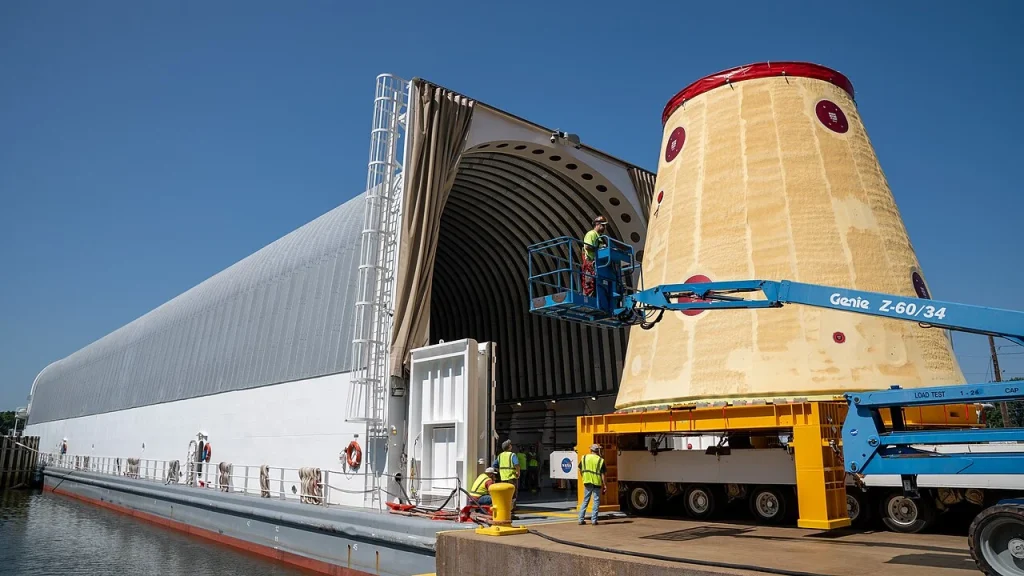
What do a truck and a spacecraft have in common? Orion’s flight and road transport
The development of the Orion spacecraft is a major step forward for NASA—and for what we can call space transportation. This has led us to question whether there are similarities between a journey into space and a road trip. Although comparing the Artemis II mission to a freight truck may seem exaggerated, both share the same operational logic: moving valuable “cargo” safely within strict limits.
Inspired by Orion, we developed a brief comparative analysis between space operations and freight transport, where the differences may not be as great as they seem. These are the similarities between spaceflight and road transport:
Hours of service
Beyond operational logistics, just as a driver must comply with hours-of-service regulations to avoid fatigue, astronauts operate under carefully designed schedules that balance work and rest. In both cases, the human factor remains key.
Route planning
Planning also reveals similarities. A truck does not simply hit the road—it follows optimized routes with defined timing, stops, and resources. Likewise, Artemis II relies on precisely calculated trajectories, where deviation is not a viable option. The difference, of course, is that on Earth, an error may mean delays or financial losses, whereas in space it could jeopardize the entire mission.
Resource management
Another key point is resource management. While a truck manages fuel and efficiency, a space mission depends on closed systems for energy, oxygen, and water. In both scenarios, autonomy is limited, and every decision impacts the final outcome.
Safety regulations
Even in safety and regulation, there are parallels. The road transport industry is overseen by agencies such as the Federal Motor Carrier Safety Administration, while missions like Artemis II operate under NASA’s strict standards. Although the risks are not comparable in magnitude, the philosophy is the same: minimize any possibility of failure.
In essence, the Artemis II mission can be understood as the most extreme version of a freight journey, an operation where everything is measured. In both sectors, every system is critical, and there is no margin for error, although far more is at stake in space.
 Business hours: Monday to Friday from 8:00 AM to 5:00 PM. California time