 Llame al (888) 572-7520 para hablar con un agente
 Enviar mensaje a un agente
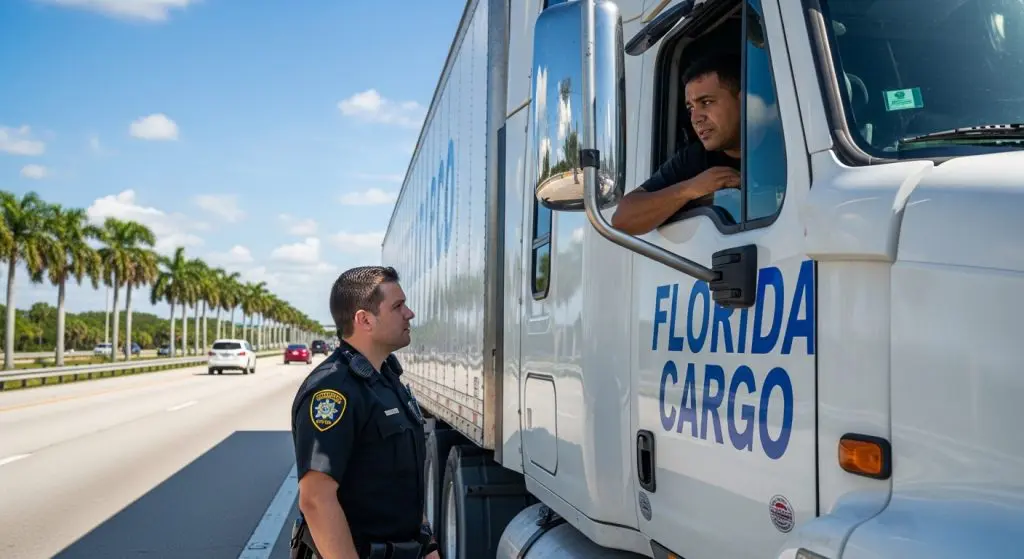

The trucking and logistics industry is closely watching the progress of Florida Senate Bill 86 (SB 86), a legislative proposal that could significantly change how commercial vehicle operations are regulated in the state.
The measure targets commercial trucks operated by drivers classified as “unauthorized migrants” under federal immigration law and introduces a framework of enforcement actions that would affect both drivers and the companies responsible for the vehicles.
The bill was approved by the Florida Senate Transportation Committee on January 27, 2026, and continues to move through the state’s legislative process. Although it has not yet become law, the proposal specifies that if fully enacted, it would take effect on July 1, 2026.
The proposal is part of a broader set of policy initiatives aimed at strengthening immigration enforcement in several economic sectors, including the trucking industry, which plays a central role in freight distribution and supply chains throughout Florida and the Southeast.
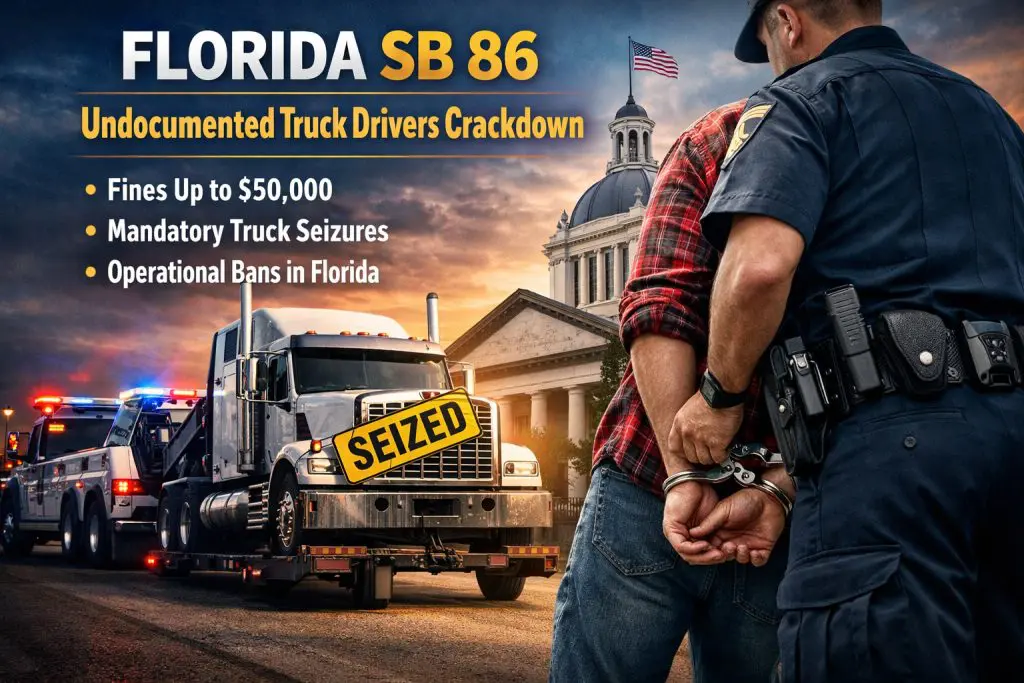
What Florida SB 86 proposes for commercial trucking
SB 86 would establish a new legal framework governing the operation of commercial motor vehicles in Florida when the driver is considered an unauthorized immigrant under state and federal law.
The proposal creates a new section within the Florida Statutes (Section 316.3021) outlining enforcement procedures for law enforcement agencies and penalties that could apply to trucking companies connected to the vehicle.
The bill adopts the federal definition of “unauthorized alien” under the Immigration and Nationality Act, meaning that immigration status determinations would align with federal law and regulatory standards.
In practice, the legislation aims to expand coordination between state law enforcement agencies and federal immigration authorities, particularly when commercial vehicles are involved.
Mandatory detention of drivers without legal status
One of the central provisions of the proposal focuses on law enforcement authority during traffic stops or inspections involving commercial vehicles.
If an officer determines that a person operating a commercial motor vehicle in Florida is an unauthorized immigrant, the legislation requires the officer to take the individual into custody and facilitate their transfer to federal immigration authorities.
This mechanism is consistent with existing cooperation agreements between Florida and federal agencies, including participation in the 287(g) program, which allows certain state and local law enforcement agencies to assist with federal immigration enforcement functions.
Mandatory seizure of commercial vehicles
Beyond the status of the driver, the bill also introduces a measure that could have significant operational consequences for trucking companies.
Under SB 86, any commercial vehicle operated by an unauthorized immigrant would be subject to mandatory seizure by law enforcement authorities.
Once the driver is detained under the provisions of the law, the vehicle would automatically be impounded, triggering administrative procedures and financial liabilities for the vehicle’s owner or operator.
Fines of up to $50,000 for vehicle owners
One of the most severe provisions of the proposal is the financial penalty associated with the seizure of a commercial vehicle.
According to the text of SB 86, the owner of the truck or commercial vehicle could face a civil penalty of up to $50,000, in addition to covering all costs related to the impoundment process.
These costs may include:
- towing fees
- vehicle storage charges
- administrative and notification costs
The vehicle would only be released once all applicable fines and fees have been paid.
Legislative analysts note that the size of the financial penalty is intended to create a strong deterrent effect for carriers and fleet operators, encouraging stricter verification of driver documentation and employment eligibility.
Potential operational restrictions for trucking companies
The bill’s impact would extend beyond financial penalties.
SB 86 also states that any carrier associated with a commercial vehicle detained under these provisions could be prohibited from operating within the state of Florida.
This restriction could apply to both Florida-based carriers and interstate trucking companies whose vehicles pass through the state as part of long-haul freight routes.
Legislative analysis indicates that additional clarification may be required regarding how such restrictions would interact with interstate regulatory systems, including:
- International Registration Plan (IRP)
- International Fuel Tax Agreement (IFTA)
These frameworks allow trucks to operate across multiple states, meaning that enforcement rules could have implications for interstate freight operations.
Possible impact on the trucking labor market
The legislative proposal comes at a time when the trucking industry continues to face a long-standing driver shortage.
Florida plays a major role in national supply chains due to its:
- large port infrastructure
- agricultural production
- consumer distribution networks
- tourism-driven freight demand
Industry analysts have suggested that stricter employment verification and enforcement policies could potentially reduce the pool of available drivers, particularly in regional and short-haul freight markets.
If enacted, the proposal could affect several aspects of the logistics sector, including:
- freight rates
- operational costs for carriers
- truck capacity availability within the state
Supporters of the measure argue that the legislation is designed primarily to enhance highway safety and ensure compliance with federal immigration and employment laws among commercial drivers.
A proposal being watched beyond Florida
Although SB 86 has not yet been enacted into law, the proposal is already drawing attention from policymakers and transportation stakeholders in other states.
In recent years, several states have considered or adopted stricter immigration-related enforcement policies affecting sectors such as construction, agriculture, and transportation.
If the measure ultimately becomes law, Florida could introduce one of the most stringent regulatory frameworks in the country regarding commercial vehicles operated by unauthorized immigrants.
For trucking companies and fleet operators, the debate surrounding SB 86 underscores a broader trend: employment verification, compliance procedures, and driver eligibility checks are becoming increasingly critical elements of operational risk management in the trucking industry.
 Business hours: Monday to Friday from 8:00 AM to 5:00 PM. California time