 Llame al (888) 572-7520 para hablar con un agente
 Enviar mensaje a un agente


For decades, cargo theft in the transportation industry was associated with physical methods: roadside hijackings, broken locks, or diversions in remote areas. That paradigm has shifted dramatically. Today, fraud in the logistics sector is driven by artificial intelligence, organized criminal networks, and structural vulnerabilities in registration and verification systems.
The result is no longer a series of isolated incidents, but a systemic threat to the entire supply chain.
According to recent industry data, cargo theft losses in the United States reached $725 million in 2025, marking a 60% year-over-year increase. At the same time, fraud can account for up to 19% of a trucking company’s annual budget .
From physical theft to digital fraud
The most significant shift is not just in scale, but in the nature of the crime. Criminal organizations no longer need to intercept trucks on highways. Instead, they operate behind screens, infiltrating digital platforms used by brokers and carriers.
The most widespread scheme is known as double brokering. In this setup, a fraudster impersonates a legitimate carrier, accepts a load through a load board, and then secretly subcontracts it to an unsuspecting real carrier—without any intention of paying. In many cases, the cargo is also redirected and stolen.
While this type of fraud is not new, artificial intelligence has dramatically expanded its reach. Criminal networks can now generate fully convincing fake carrier identities in minutes, including websites, official-looking documents, verified profiles, and professional communications that are nearly indistinguishable from legitimate ones.
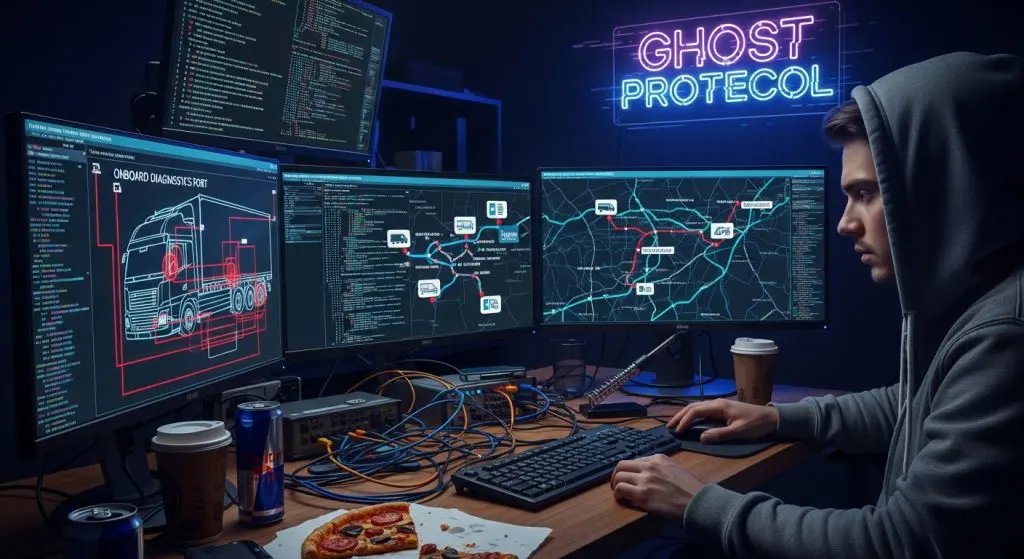
Deepfakes and real-time attacks
One of the most alarming developments is the use of deepfake technology and AI-powered voice attacks. Criminals can simulate phone calls from dispatchers, brokers, or even regulatory authorities, instructing drivers to change delivery locations or provide sensitive information.
Speed is also a critical factor. The average time between initial system access and active theft—known as “breakout time”—has dropped to just 18 minutes . This leaves companies with a very limited window to detect and respond before damage occurs.
A structural vulnerability
Beyond technology, the issue is rooted in institutional weaknesses. One of the key vulnerabilities lies in carrier registration systems, which lack robust identity verification mechanisms.
Fraudsters exploit these gaps by registering fake companies or reactivating dormant ones using stolen or fabricated credentials. This has led to the emergence of so-called “chameleon carriers”—operators that frequently change identities to evade detection.
Since 2021, strategic cargo theft—digitally orchestrated fraud—has increased by 1,500%, highlighting the scale of this transformation .
The main fraud schemes in 2026
The fraud ecosystem has become more diverse and sophisticated. The most common attack methods include:
- Double brokering: Accepting payment without delivering freight.
- Identity theft: Using legitimate carrier data to operate fraudulently.
- AI phishing and deepfakes: Impersonating brokers or dispatchers via emails and calls.
- Fictitious pickups: Fake drivers collecting cargo with forged documents.
- Fuel card fraud: Incidents have surged by more than 700% in recent years .
- Hostage loads: Extorting additional payments to release freight.
Policy and industry response
As the crisis escalates, it has begun to draw political attention. In February 2026, the SAFER Transport Act was introduced in the United States, aiming to modernize registration systems, increase penalties, and close loopholes exploited by organized fraud networks .
At the same time, the private sector is stepping in with technological solutions. Identity verification platforms and real-time monitoring systems are already blocking hundreds of thousands of fraud attempts and significantly reducing double brokering incidents.
These tools rely on artificial intelligence to detect suspicious behavior, validate digital identities, and cross-check data across multiple sources. Some platforms have even incorporated biometric verification with liveness detection to counter AI-generated identities.
A new paradigm: trust is no longer enough
Perhaps the most profound shift is cultural. Trust is no longer a default condition in freight operations.
In an environment where identities can be fabricated and communications can be convincingly faked, verification has become mandatory. Every load, every carrier, and every transaction must be systematically validated.
For smaller carriers—who make up more than 90% of the industry—the challenge is even greater. Many lack dedicated cybersecurity or fraud prevention resources, making them particularly vulnerable.
Artificial intelligence is not only transforming logistics—it is also reshaping the risks that come with it. Cargo theft has evolved into a fast, digital, and highly sophisticated form of fraud.
In this new landscape, competitiveness depends not only on operational efficiency but also on the ability to manage technological risk.
The message is clear: in today’s freight industry, verification is no longer optional. It is essential for survival.
 Business hours: Monday to Friday from 8:00 AM to 5:00 PM. California time