 Llame al (888) 572-7520 para hablar con un agente
 Enviar mensaje a un agente
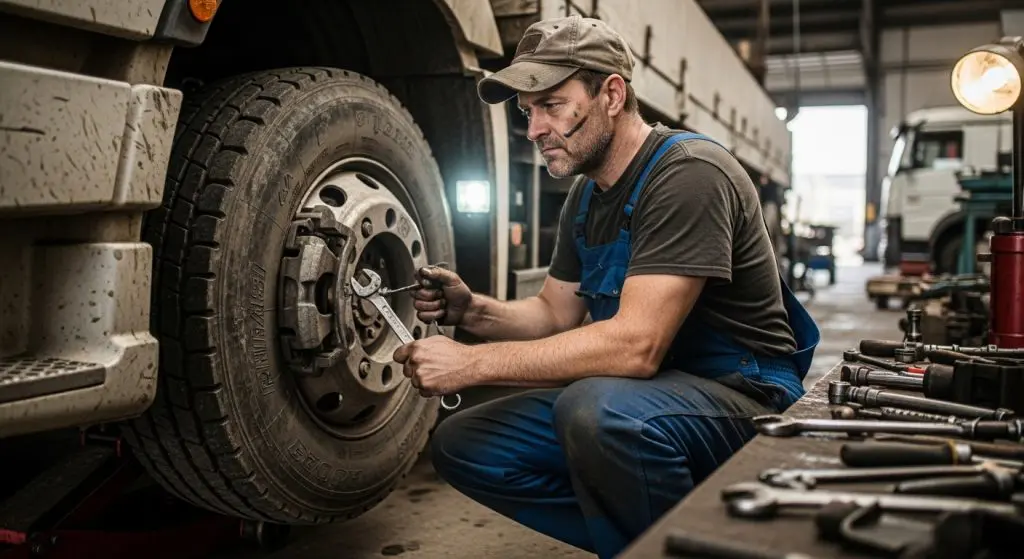

In a country that has spent the last two decades pushing young people toward college degrees and tech careers, the job no one chose has quietly become the one everyone urgently needs: truck mechanic.
The person crawling under an 18-wheeler with a flashlight and grease-covered hands is now one of the most in-demand professionals in the U.S. labor market—and there simply aren’t enough of them.
The numbers are clear. The Bureau of Labor Statistics projects about 28,500 annual openings for diesel technicians. Yet training programs across the country graduate only around 11,000 students each year.
That leaves a gap of more than 17,000 professionals annually, according to the Journal of Commerce. This is not a temporary shortage or a market fluctuation—it’s a structural gap that continues to widen with each generation.
How did we get here?
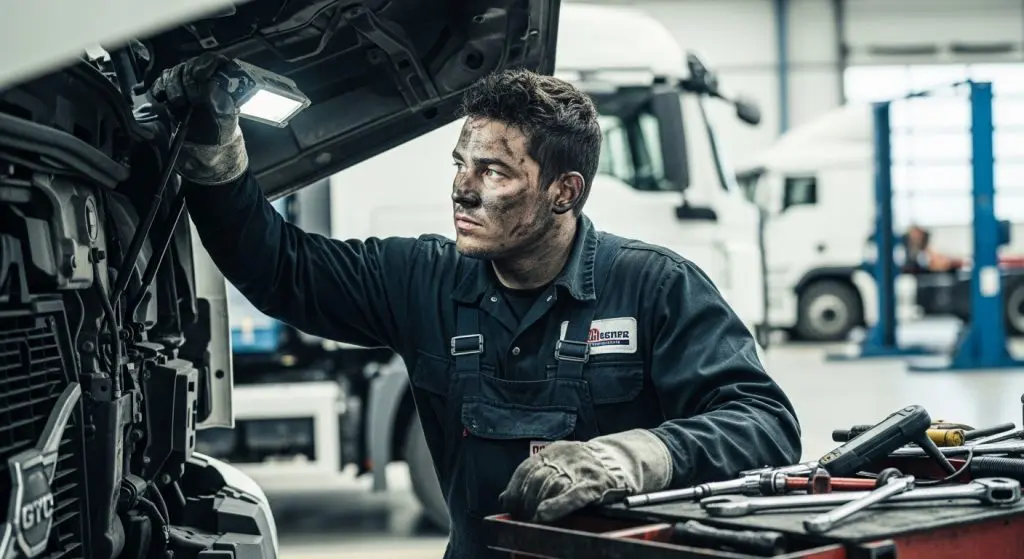
The answer is layered. First, demographics. A significant portion of today’s technicians is nearing retirement, creating what industry analysts describe as a “silver tsunami”—a wave of retirements that is taking decades of experience with it, with no clear replacement pipeline in sight.
Second, culture.
For years, society positioned technical careers as a fallback option rather than a first choice. Media, families, and the education system consistently sent the same message: college is the path to success.
Everything else became Plan B.
The result was predictable. Enrollment in diesel technician programs has dropped 12% since 2019, just as job openings surged nationwide, according to FreightWaves.
Better than a college degree
The irony is that this “Plan B” often pays better than many college careers.
Heavy-duty truck mechanics now earn between $75,000 and $85,000 annually—without student debt, without four years in school, and often with a job secured from day one.
In North Dakota alone, there are more than 300 unfilled diesel technician positions across the automotive, energy, and construction sectors, according to TheTrucker. When you scale that across all 50 states, the magnitude of the problem becomes impossible to ignore.
Companies are already feeling the financial impact. A single unfilled technician role can cost a shop between $5,000 and $10,000 per month in lost productivity. And every truck sitting idle can generate losses exceeding $850 per day.
Large fleets are now competing against each other—and against dealerships—in a wage war that still fails to solve the core issue: there simply aren’t enough trained workers.
A more complex job than ever
The situation is further complicated by technology.
Modern trucks are no longer purely mechanical machines. They are complex, computer-driven systems equipped with sensors, electrical components, and advanced diagnostic software.
Fleet electrification is raising the bar even higher, requiring technicians with knowledge of hybrid and electric systems. And if skilled diesel mechanics were already scarce, those who also understand advanced electronics are even harder to find.
What companies are doing
Some companies are beginning to respond.
Penske, one of the largest fleet operators in the country, has launched its own technical training programs in partnership with vocational schools. Others are offering to pay for education in exchange for a minimum employment commitment.
Demand for compensation benchmarking and salary studies for diesel technicians has doubled over the past two years—another clear signal that companies are scrambling to retain the talent they already have.
The real solution
But higher wages alone won’t fix the problem.
The real solution lies in changing perception—convincing the next generation that maintaining the trucks that keep an entire economy moving is a respected, well-paid, and future-proof career.
For now, that message still hasn’t fully landed.
 Business hours: Monday to Friday from 8:00 AM to 5:00 PM. California time