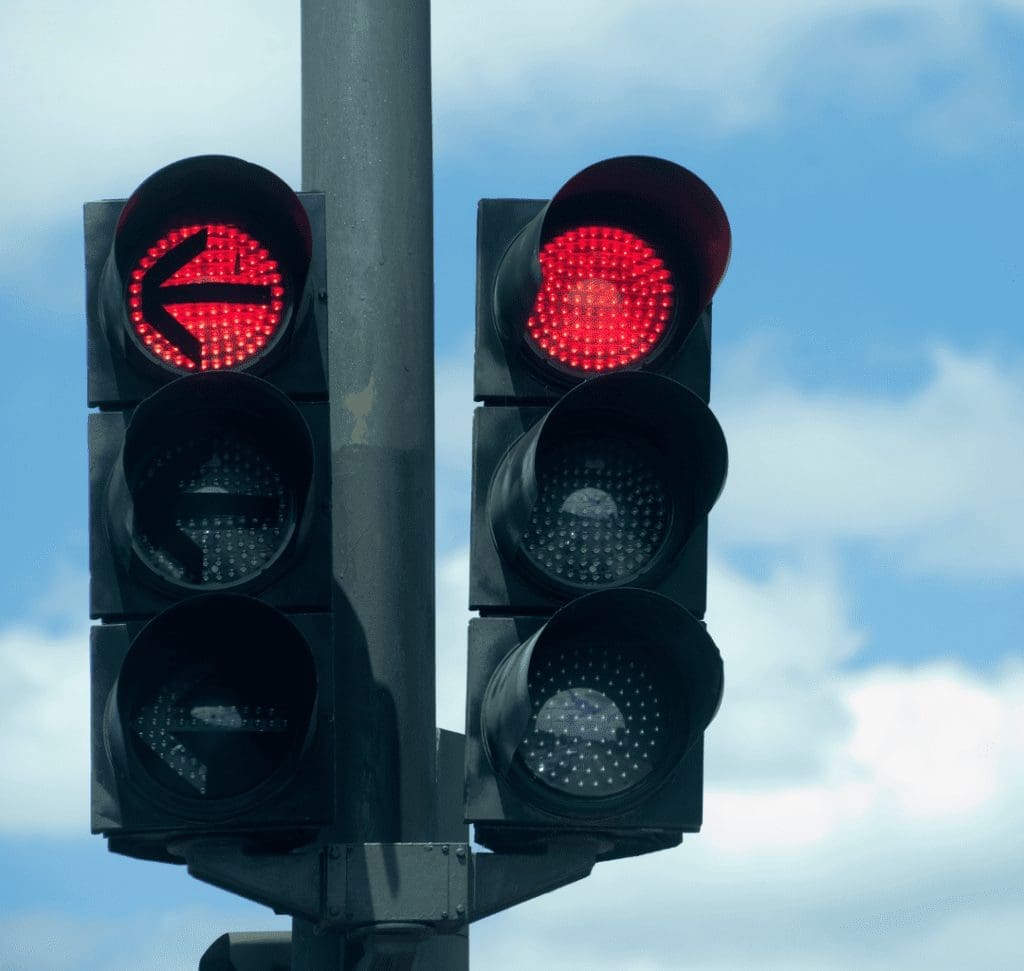
This educational campaign aims to reduce risks associated with running red lights
Red Light Running Week is held annually from August 4 to 10, highlighting the importance of obeying traffic signals to prevent fatal accidents. Initiated by the Federal Highway Administration in 1995 and promoted by the National Coalition for Safer Roads, this educational campaign aims to reduce risks associated with running red lights.
Through decades of technological evolution, from gas-powered signals to modern surveillance cameras, road safety has improved significantly, though challenges in enforcing rules persist.

History and facts about traffic lights: the most important traffic sign
The world’s first traffic light was installed on December 10, 1868, in Parliament Square, London, to manage increasing horse-drawn carriage congestion and protect pedestrians. However, it was quickly removed due to safety issues, and traffic lights were not used again until 1929, following the invention of the three-light traffic signal in Detroit in 1921.
African-American inventor Garrett Morgan developed the first electric traffic lights in 1923. Modern traffic lights, which include an amber “caution” light, were introduced in 1921 by William Potts in Detroit. This three-color system became standard in the United States by the mid-1930s.
This system provides excellent clarity, as it can be recognized from a great distance with ease. The yellow or amber light was chosen to serve as a transition between green and red, while the red light, being bright is associated with danger. But do you know these traffic light curiosities?
- In Japan, the green light is replaced by blue.
- In some places, the yellow light allows motorcyclists to continue if the road is clear.
- In Austria, Israel, Serbia, Russia, and some areas of Canada and Mexico, the green light shines for a few seconds before turning amber.
- China has the first traffic light for camels, indicating when vehicles must stop to allow camels to pass.
- In Akureyri, Iceland, local authorities replaced circles with hearts to capture drivers’ attention.
Although traffic lights may vary by country, one aspect remains constant and universal: red always indicates that vehicles must stop.

Importance of Red Light Running Week
Red Light Running Week emphasizes the need to respect traffic signals, highlighting how disregarding these rules leads to frequent accidents worldwide. The main goal is to educate about the importance of obeying traffic signals to prevent serious damage caused by reckless behavior and speeding.
It is crucial to remember that traffic rules protect not only drivers but also pedestrians, significantly reducing the risk of injuries and fatalities. Contributing to this awareness week is simple; here are some ways to help:
- Always stop at red lights: No matter how rushed you are, respecting the law is crucial. Obeying red lights helps prevent accidents and improves traffic flow.
- Promote respect for signals: Communicate the importance of Red Light Running Week to family and friends, emphasizing why traffic signals must be followed. Encourage safe driving among those you know, reminding them that it’s not only their life at risk.
- Advocate for safety: Support legislative and law enforcement measures to combat red light running. Adhering to traffic laws is essential for ensuring safety on our streets.

Volvo Pushes Beyond Diesel with New Hydrogen Combustion Truck Trials
Volvo Trucks is once again taking the lead, beginning road tests with heavy trucks equipped with hydrogen combustion engines.

Trucker Fashion: A Revolution Born on the Road That Still Sets the Trend
Trucker fashion remains relevant due to its authenticity, its seamless integration into streetwear, and its reinterpretation by luxury brands, consolidating itself as a revolution born on the road that evolved from a work uniform into a global cultural symbol

North Dakota among states regaining non-domiciled CDL authority
North Dakota will reissue approximately 150 of the 526 CDLs and CLPs for non-resident drivers that were active during the FMCSA audit.

The Growing Threat of Chameleon Fleets
A CBS ‘60 Minutes’ investigation exposes the rise of ‘Chameleon Fleets’ in the U.S. trucking industry.

US transportation begins to show signs of recovery
With tonnage at record levels and rates on the rise, carriers are leading the expansion of the logistics market. If the forecasts hold true, years of uncertainty could be over.

Trump Administration Restarts California Pipeline to Lower Gasoline Prices
Under Trump, the restart of the Santa Ynez Pipeline aims to boost local crude supply and impact gasoline prices amid persistently high energy costs in California.