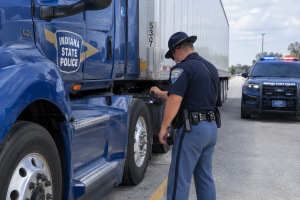
The U.S. trucking industry continues to undergo changes under the new administration.
Sean Duffy, new Secretary of the U.S. Department of Transportation
With 77 votes in favor and 22 against, the U.S. Senate approved the nomination of Sean Duffy as Secretary of the Department of Transportation. The former congressman from 2011 to 2019 was chosen due to his bipartisan popularity and support in the road transportation industry, despite lacking extensive experience in the sector. During his confirmation hearing, Duffy emphasized that he would focus on improving infrastructure, innovation, and safety, prioritizing efficiency in spending funds and reducing bureaucracy in critical infrastructure projects.
Despite his lack of direct experience in transportation, Duffy gained support from various organizations, such as the Owner-Operator Independent Drivers Association (OOIDA) and the American Trucking Associations (ATA), which highlighted his commitment to addressing the needs of truck drivers, particularly in fighting burdensome regulations and improving conditions for small businesses. His nomination was also unanimously approved by the Senate Committee on Commerce, Science, and Transportation.
In addition to his focus on infrastructure and safety, Duffy has earned the backing of key figures in the road transportation industry due to his record of supporting policies favorable to small businesses. His ability to work in a bipartisan manner and his commitment to reducing regulations have been key factors in his confirmation, which was seen as a positive sign for the future policies of the Department of Transportation.

Vehicle emissions legislation in California continues legal battle
The Trump administration has requested the Supreme Court to suspend a lawsuit challenging California’s exemption from stricter vehicle emissions standards. This case has attracted attention from those involved in similar litigation, such as challenges to the Advanced Clean Trucks regulations. The request was made by James Payne, Acting Administrator of the EPA, following an executive order from Trump aimed at eliminating the “electric vehicle mandate” and delaying lawsuits while agencies review which regulations to pursue. At the center of this case is California’s exemption for Advanced Clean Cars, which sets stricter standards for passenger vehicles from 2017 to 2025.
This case could have repercussions for other similar regulations, such as those for Advanced Clean Trucks, since both of California’s exemptions are interrelated. In December 2022, the Biden EPA granted exemptions to California for Advanced Clean Cars II and the Heavy-Duty Omnibus, which required that all new vehicles sold in the state by 2035 be zero-emissions. The exemptions also include stricter restrictions on truck emissions. These regulations could be overturned if Trump’s executive order is implemented. The uncertainty about the future of these exemptions remains a key issue, as the EPA has not yet announced decisions on the matter.

Transportation regulations on hold due to Trump’s mandate
President Donald Trump has implemented a “regulatory freeze” that delays the enforcement of several rules, including one requiring automatic emergency braking (AEB) systems in new light vehicles. According to a notice published by the National Highway Traffic Safety Administration (NHTSA) on January 27, the rule has been postponed until March 20. This measure follows a memorandum issued by Trump on January 20, which orders the suspension of new regulations, the withdrawal of those not yet published in the Federal Register, and the delay of already published ones.
The final NHTSA rule, which requires all new light vehicles to be equipped with AEB technology, was scheduled to take effect in September 2029. This rule also includes AEB systems for pedestrians and forward collision warning. The regulatory freeze will allow for an additional comment period or an extended delay. Additionally, a similar rule for heavy vehicles that would require AEB systems is under review, but this proposal was never published in the Federal Register, making its future under the new administration uncertain.
The delay also affects other regulations involving the transportation industry, such as minimum training requirements for commercial drivers, autonomous driving systems, and hair testing for drug detection. These rules, which were being reviewed by the White House Office of Management and Budget, were withdrawn on January 21. The freeze has raised concerns among some sectors, such as truck drivers, who have pointed out deficiencies in current AEB technologies, citing cases of false activations that could create additional risks on the roads.


Truck drivers are at high risk of developing diabetes
About 11% of the adult population meets the criteria for prediabetes, and there is a particular group at high risk: truck drivers. Diabetes rates in

Starting in trucking: required permits, registrations, and compliance
Are you a new carrier? This is what you need to know about permits, registration, and compliance. The trucking industry can be quite challenging for

Alberta Clipper Brings an Early Polar Blast: A Critical Alert for Drivers
The Alberta Clipper is sweeping across the country with fast-moving Arctic air, sharp temperature drops, and dangerous road conditions that demand heightened attention from all professional drivers.

American manufacturers trigger truck “dumping” investigation
Foreign trailer manufacturers under investigation for alleged “dumping” in the U.S. The U.S. truck market is at the center of a trade dispute. After domestic

ATRI Warns: Litigation Is Rising Across the U.S. Trucking Industry
A new report from the American Transportation Research Institute (ATRI) reveals how escalating litigation, higher legal costs, and mounting insurance pressures are reshaping the U.S. trucking industry. The findings mark a critical moment for motor carriers, insurers, and logistics stakeholders who must understand the changing legal environment — and the increasingly strategic role of strong insurance partnerships.

FMCSA says no to hours-of-service exemptions
FMCSA rejects two requests for exemptions to hours-of-service rules for commercial drivers. The Federal Motor Carrier Safety Administration (FMCSA) has denied two exemption requests related