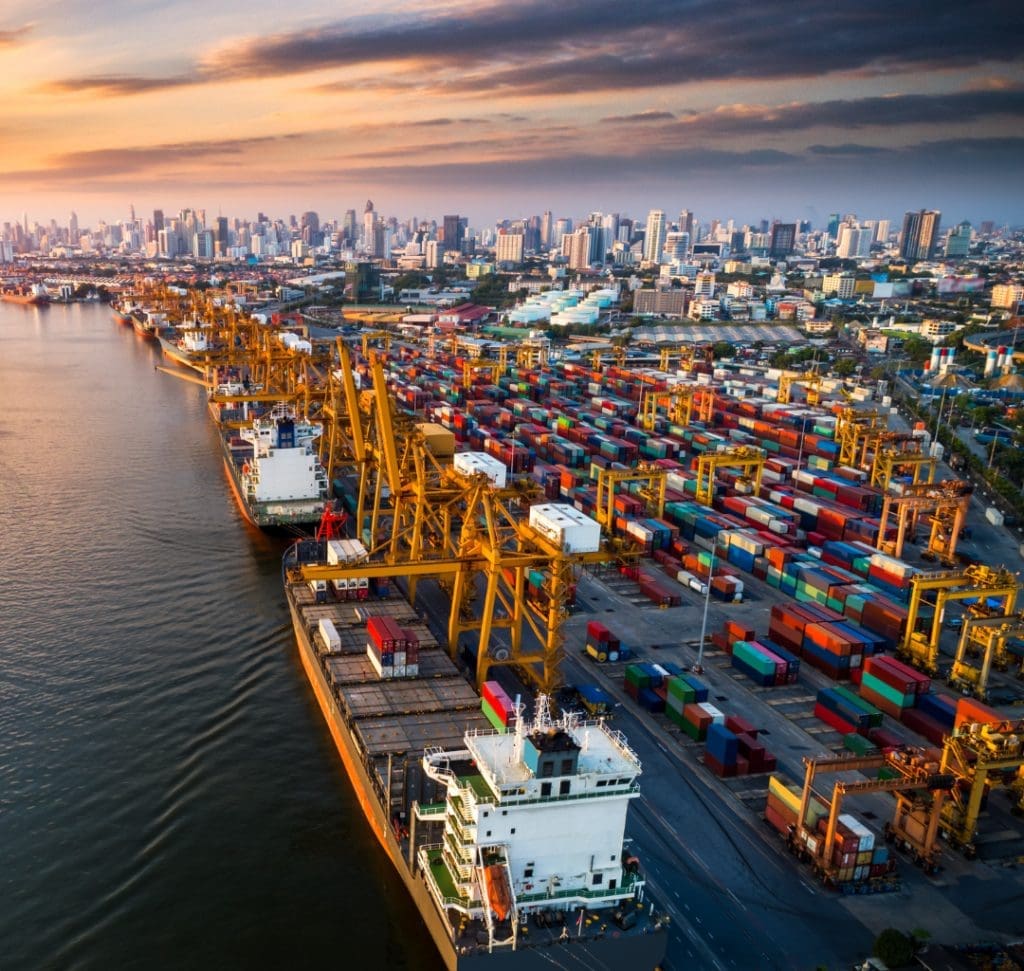
One of the reasons cited by President Trump for imposing tariffs on China, Canada, and Mexico was to pressure these nations into tightening controls on fentanyl distribution into the U.S.
China escalated its trade measures against the United States on Tuesday by implementing new restrictions. These actions include halting lumber imports from the U.S., revoking the export permits of three American companies that supply soybeans, and initiating an anti-dumping investigation into certain fiber optic products imported from the U.S.
One of the reasons cited by President Trump for imposing tariffs on China, Canada, and Mexico was to pressure these nations into tightening controls on fentanyl distribution into the U.S.
According to a statement from the White House: “While President Trump gave both Canada and Mexico ample opportunity to curb the dangerous cartel activity and influx of lethal drugs flowing into our country, they have failed to adequately address the situation.”

U.S. law enforcement officials suspect that several China-based companies supply precursor chemicals used in manufacturing fentanyl, which is then processed in laboratories run by drug cartels in both the U.S. and Mexico.
On Tuesday, China’s State Council Information Office released a report outlining measures taken by the government in recent years to regulate the production and distribution of fentanyl-related substances. According to China’s state-run news agency Xinhua, the document highlighted China’s stance on global drug control, emphasizing “mutual cooperation” while rejecting accusations and blame-shifting.
The White House also emphasized the severity of the issue, stating: “The flow of contraband drugs like fentanyl into the United States, through illicit distribution networks, has created a national emergency, including a public health crisis”.

Canada’s Retaliation
In Canada, Prime Minister Justin Trudeau announced hours before the tariffs took effect that his government would immediately impose countermeasures, placing tariffs on $30 billion worth of American goods. By March 25, he stated, Canada would introduce an additional $125 billion in tariffs targeting U.S. products.
“Canada will not stand by in the face of this unjustified decision,” Trudeau declared in a statement.
Doug Ford, the premier of Ontario, Canada’s most populous province, reaffirmed his previous warning to cut off energy supplies to the U.S. in retaliation for the tariffs.
“If they want to destroy Ontario’s economy, I will take every possible step, including cutting off their energy supply, without hesitation,” Ford told reporters on Monday. He also urged other provinces to follow suit, noting that the eastern U.S. is heavily dependent on Canadian energy.
Despite Trump’s previous claims that exporters bear the cost of tariffs, in reality, it is the importers who pay these fees upfront. Typically, businesses then transfer these additional costs to consumers by increasing prices. However, in some instances, companies may be forced to absorb the financial burden themselves.

Economic Implications
Although the U.S. economy has remained relatively strong, the introduction of tariffs comes at a time when economic warning signs are becoming more evident. A recent Bureau of Economic Analysis report revealed an unexpected drop in consumer spending in January, while inflation figures indicated that prices continue to rise at a persistently high rate.
Additionally, consumer confidence saw its sharpest drop at the start of a year since 2009, and another consumer sentiment report last month recorded its steepest decline since data collection began in 1978. Given that consumer spending constitutes more than two-thirds of the U.S. economy, this trend is concerning.
Friday’s employment report is expected to confirm that job growth is slowing. Initial unemployment claims rose more than anticipated last week, and the Trump administration’s decision to lay off thousands of federal employees could negatively impact local economies. Reduced government spending has further limited access to essential services and livelihoods for many Americans.
Trump’s strict immigration policies are also affecting industries such as homebuilding and agriculture, which rely on immigrant labor.
Tiffany Smith, vice president for global trade policy at the National Foreign Trade Council (NFTC), warned on Monday that imposing tariffs on Canada and Mexico could undermine cross-border cooperation and spark a trade conflict with key allies.
“While we support efforts to combat illicit activities at the border, these tariffs will increase costs for American businesses and consumers while also threatening economic growth,” Smith stated.

More Tariffs Ahead?
Trump and his administration have suggested that the latest round of tariffs is only the beginning.
New tariffs on steel and aluminum are scheduled to take effect on March 12, while retaliatory tariffs mirroring those imposed by other nations on American goods are expected to be implemented by April 2.
Trump has also hinted at additional tariffs. Last week, he signed an executive order directing an investigation into lumber tariffs. Although he has long argued that the U.S. does not need Canadian lumber, these tariffs could drive up housing costs, further fueling inflation.
On Monday, Trump suggested he might also impose tariffs on agricultural imports to promote domestic production. According to a post on Truth Social, these tariffs could take effect as early as April 2.

Cargo Theft Increases During Memorial Day Weekend
Warning issued to carriers over rising cargo theft risk during Memorial Day weekend

Trucking Compliance Checklist (2026): What Does a Truck Driver Need to Stay Compliant?
Based on the most common questions, we created the basic compliance checklist every road driver needs to know.

Fraud in Trucking: New Biometric System Targets Shell Companies
The new system aims to stop fraud in the trucking industry through biometric controls, identity verification, and stricter federal oversight of carriers and commercial operators.

Memorial Day Traffic Expected to Reach Record Levels Across the U.S.
The American Automobile Association (AAA) predicts that this year will see a historic record number of travelers during the Memorial Day holiday.

Average Weekly Salary for U.S. Truck Drivers Reaches $1,804 in Q1 2026
The average weekly salary for company truck drivers increased by 11% during the first quarter of 2026, reaching an average of $1,804 per week.

World Cup 2026: Economic Impact Under Pressure
While FIFA projects record-breaking economic impact for the 2026 World Cup, sectors linked to tourism, hospitality, and logistics warn that the real scenario could be far more complex, with rising costs, operational strain, and infrastructure challenges across several host cities.