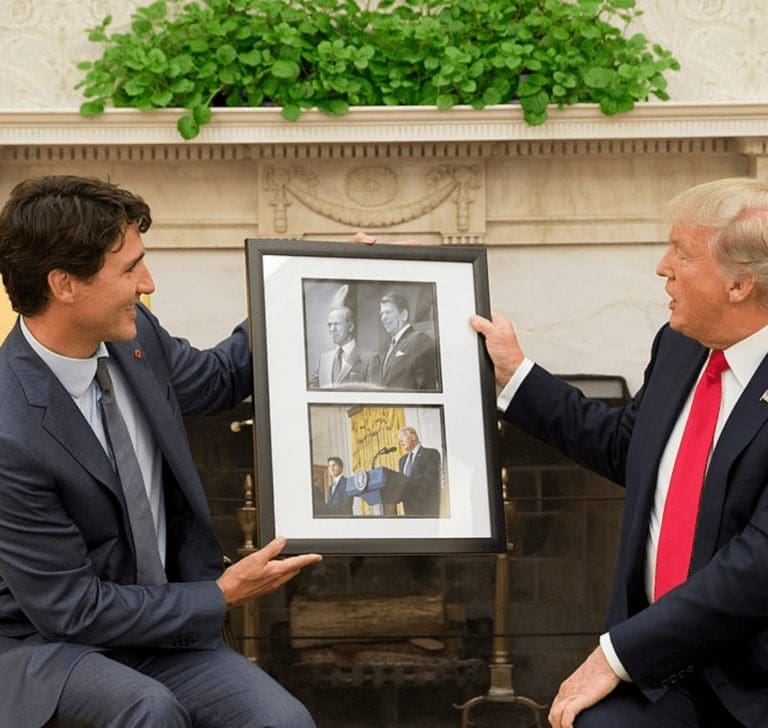
Trump clarified that most of the tariffs would begin to take effect on April 2.
Due to consumer concerns about a trade war and its potential economic consequences, President Donald Trump has decided to postpone the imposition of tariffs once again. On March 6, he announced that the 25% tariffs on certain imports from Mexico and Canada would be delayed once more.
Before signing the orders, Trump clarified that most of the tariffs would begin to take effect on April 2. He added that there are “some temporary and relatively small, though significant, tariffs related to Mexico and Canada.” Additionally, the president made it clear that he does not intend to extend the 25% tariff exemption for automobiles for another month.

A formal agreement between Mexico and the United States
After speaking with the President of Mexico, Claudia Sheinbaum, Trump announced that Mexico will not be required to pay tariffs on products covered by the USMCA (televisions, air conditioners, avocados, and beef), and this exemption will remain in effect until April 2.
Mexican imports that comply with the USMCA will be exempt from tariffs for one month, and Canadian cars that meet the agreement will also be exempt. However, potash imported from Canada will be subject to a 10% tariff.
Trump justified the delay in the tariffs due to the progress Mexico has made on immigration and combating drug smuggling. Sheinbaum, for her part, emphasized that the cooperation between the two countries has been positive, mentioning Mexico’s efforts against cartels and fentanyl trafficking. Mexico has seen a reduction in fentanyl seizures, which dropped more than 41% from January to February.
Sheinbaum announced that any retaliatory measures would be communicated on March 9, but both countries will continue cooperating on migration and security.

Canada’s response
On Thursday, U.S. Secretary of Commerce Howard Lutnick suggested that Canada would likely receive the same tariff exemption as Mexico, extending the one-month delay to all goods and services that comply with the USMCA. However, when Trump made his announcement, Canada was notably absent from the list of exempt nations, creating uncertainty about Canada’s trade situation under the USMCA.
Canadian Prime Minister Justin Trudeau responded to Lutnick’s statements with cautious optimism, suggesting that Canada may still face retaliatory tariffs unless the U.S. administration grants an official exemption.
It remains unclear whether Canada will receive the same exemption as Mexico. However, with Trudeau signaling ongoing responses to U.S. tariffs, Canada may push for an official exemption in the coming weeks.

Impact of tariffs on the U.S. market
The tariff plan has caused conflicts among the involved parties, leading to a drop in stock markets and increased concern among consumers. However, the White House maintains that these tariffs are intended to curb fentanyl smuggling at both the northern and southern U.S. borders.
The Budget Lab at Yale University estimates that tariffs on Canada, China, and Mexico could increase inflation, reduce growth, and cost U.S. households approximately $1,600 in disposable income.
Major U.S. stock indices briefly rebounded from their lows. However, significant declines that had already been observed during the week resumed within less than an hour. While Trump acknowledged that the tariffs could cause “a small disruption,” he assured it would not be significant.

The best roadside attractions for truckers in the U.S.
America’s highways hide unique places that break up the routine, don’t hesitate to check out these roadside attractions along the way. The road is much

The trucker style: comfort, function, and identity
Truckers’ style is much more than workwear; it’s an identity. These are the most commonly worn garments among truckers. Truckers’ style is much more than

Chaos on Highway 61: Viral Wrong-Way Truck Video Reignites the CDL Debate
An 80-ton tractor-trailer traveling miles in the wrong direction on Missouri’s Highway 61 has reignited a nationwide debate over Commercial Driver’s License (CDL) standards, training

How technology affects driver retention
Friend or foe? 52% of drivers say technology directly influences their decision to stay with or leave a fleet. Fleet telematics company Platform Science published

Dalilah Law seeks to remove non-english speaking commercial drivers
President Donald Trump proposed the “Dalilah Law,” an initiative aimed at prohibiting undocumented immigrants from obtaining commercial driver’s licenses. On February 24, President Donald Trump

FORMULA 1 and the AI That Could Transform Transportation in the U.S.
The artificial intelligence system that Formula 1 implemented to monitor every car on every turn is opening the door to new applications in trucking, logistics,