Llame al (888) 572-7520 para hablar con un agente

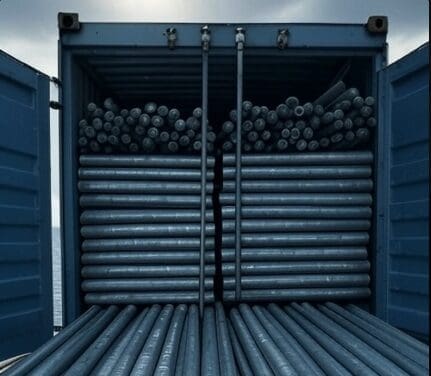
President Donald Trump has doubled tariffs on imported steel and aluminum to 50%, reigniting his hardline trade agenda and raising alarms across U.S. industries. Economists warn the move, effective Wednesday, could drive up manufacturing costs and hit key sectors like commercial trucking and freight.

President Donald Trump has doubled tariffs on imported steel and aluminum to 50%, reigniting his hardline trade agenda and raising alarms across U.S. industries. Economists warn the move, effective Wednesday, could drive up manufacturing costs and hit key sectors like commercial trucking and freight.

A Renewed Tariff Strategy, Deeper Industrial Impact

The tariff hike marks a return to Trump’s aggressive trade stance reminiscent of his 2018–2019 strategy. Economists have warned that while those tariffs were intended to protect domestic producers, they also drove up input costs across the manufacturing sector.


Diane Swonk, chief economist at KPMG U.S., cited a Federal Reserve study noting that the earlier tariffs saved some jobs in the steel industry but resulted in an overall net loss in manufacturing employment. “Now double steel tariffs & combine them with more tariffs,” she posted, warning that the 2025 impact could be even more severe.


Sal Guatieri, senior economist at BMO, emphasized that the move could be a precursor to broader trade restrictions. “This could set a precedent for possibly higher duties on motor vehicles and other sector-specific products, such as lumber and microchips,” Guatieri said.

A Freight Sector Already Under Strain

The U.S. trucking industry — which forms the backbone of national supply chains — is particularly vulnerable to the effects of rising steel and aluminum prices. These materials are critical for manufacturing trucks, trailers, containers, and parts such as axles, frames, and fuel tanks.

Industry analysts say that higher metal prices could lead to increased costs for truck manufacturing and maintenance, just as fleets across the country are trying to modernize and meet stricter emission standards.

“Truck makers will likely pass these costs along, resulting in higher prices for new vehicles and delayed fleet replacements,” said a logistics economist with ties to a national freight association. “Increased overhead could also reduce capacity and push up freight rates”.

Additionally, disruptions in the automotive supply chain — particularly if vehicle or chip tariffs follow — would further stress freight carriers that rely on just-in-time deliveries.

Policy Uncertainty Clouds Investment Decisions

The trucking sector is also watching closely for potential ripple effects on consumer demand and industrial output. Tariffs that increase the price of construction materials, appliances, and autos could slow down sectors that generate significant freight volume.


“Uncertainty over long-term trade policy could discourage capital investment in trucking equipment, warehousing, and infrastructure,” said a transport industry consultant. “That’s a risk multiplier for a sector already grappling with labor shortages and high fuel costs.”


Divided Opinions on Trade Protections

Despite widespread criticism from economists, some pro-tariff groups have welcomed the administration’s decision. The Coalition for a Prosperous America called the tariff increase “timely” and said it demonstrated a commitment to protecting domestic steel and aluminum producers from subsidized foreign competition.


However, most experts warn that these protections come at a cost.

Looking Ahead

While federal courts have recently blocked and then reinstated portions of Trump’s broader tariff framework, the latest steel and aluminum duties appear secure — and potentially just the beginning.


With investigations into other sectors underway, the trucking industry could soon face a wave of compounded costs and regulatory pressures. The true weight of the new tariff policy, analysts suggest, will be measured not only in steel prices, but in how far the shockwaves travel across the U.S. economy’s most essential supply chain: its highways.


Facebook
Twitter
LinkedIn
Severe Weather Warnings & Watches

Road Alert: 25 States Under Extreme Driving Conditions

Road Alert: 25 States Under Extreme Driving Conditions
Snow, ice, strong winds, and low visibility are keeping major highways under active travel advisories. The alert now affects 25 states and calls for extra caution, especially among truck drivers and freight carriers operating along key corridors.

Read More »

TAA Compliance: When Safety Complaints Turn Into Six-Figure Losses

STAA compliance is no longer a technical detail for fleet owners—it is a financial, legal, and insurance exposure. A recent enforcement action in Texas shows how mishandling safety complaints can lead to termination claims, retaliation findings, and six-figure penalties, and what carriers must do to avoid becoming the next case

Read More »
CDL

DOT finds half of North Carolina CDLs were issued illegally

The DOT warns that half of North Carolina’s CDL licenses are irregular after a federal audit uncovered serious compliance failures. The findings directly affect truckers, fleets, and transportation companies, raising urgent questions about road safety, legal operations, and the future of the trucking industry.

Read More »

Leave a Reply

Your email address will not be published. Required fields are marked *

Business hours: Monday to Friday from 8:00 AM to 5:00 PM. California time
Leave your number and a member of our company will contact you
Horario de atención: Lunes a viernes de 8.00 AM a 5.00 PM. Hora california

Deje su número y un miembro de nuestra empresa se pondrá en contacto con usted

Privacy summary

This website uses cookies so that we can offer you the best possible user experience. Cookie information is stored in your browser and performs functions such as recognizing you when you return to our website or helping our team understand which sections of the website you find most interesting and useful.

More information about the privacy policy: Privacy Policy

More information about the terms of use: Terms of use 

More information about the disclaimer: Disclaimer 

More information on acceptable use policies: Acceptable Use Policies