Trump administration approves privately funded elevated commercial crossing at U.S.–Mexico Border
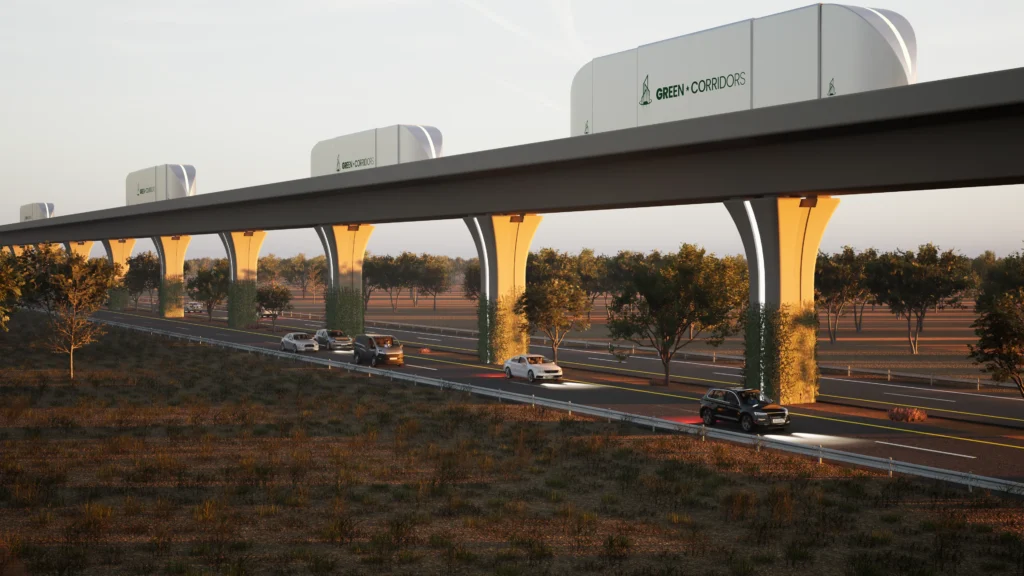
The Trump administration has approved a project that will allow a private investment group to build an elevated commercial crossing at the U.S.–Mexico international border in Laredo, Texas. Approved on June 9, the project involves the construction of an elevated, automated lane over the Rio Grande, connecting inland terminals in Nuevo León, Mexico, to Interstate 35 north of Laredo.
The project, named the Green Corridors International Bridge, will not require public funds or taxes, as it will be privately financed. According to information published by Transport Topics, Green Corridors aims to ease congestion caused by the high volume of truck traffic at the border, which leads to long wait times for cross-border transit.

Green Corridors Intelligent Freight Transportation System
Although this is a private investment, under the agreement, the investment group Green Corridors LLC must provide, at no cost to the Department of Homeland Security and other relevant agencies, inspection facilities, infrastructure upgrades, equipment, and maintenance, as specified. The permit will expire five years after issuance if construction has not begun by then, according to information released by the Trump administration.
According to the investors, the system will separate freight from regular traffic, fostering sustainable economic development, enabling urban expansion, and transforming bottlenecks into efficient corridors. It will also offer faster, safer, and more cost-effective transportation, reducing wait times and allowing drivers to focus on moving goods rather than idling at the border.
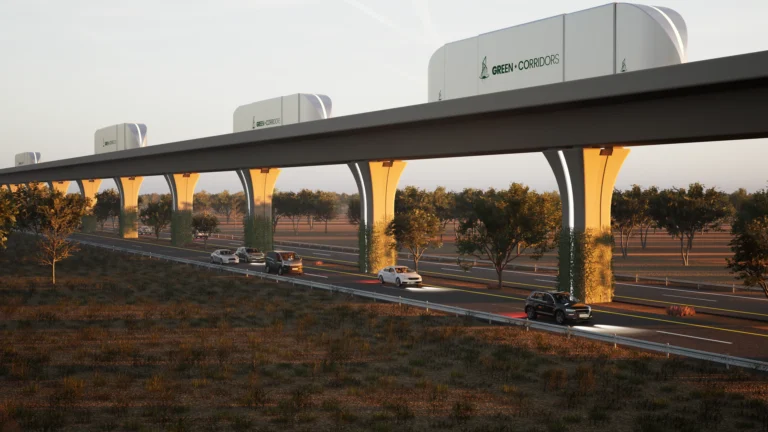
The Green Corridors system aims to benefit future generations by reducing congestion, avoiding traffic bottlenecks, and enhancing border security. Using low-emission autonomous shuttles that travel along elevated corridors and integrate with existing infrastructure, the project promises to revolutionize freight transportation at the border.

Green Corridors: a futuristic investment
In addition to the bridge and freight corridor, the Green Corridors project will also establish new inland freight ports in Laredo and Monterrey. These will handle the loading and unloading of cargo vehicles.
The Green Corridors Intelligent Freight Transportation System is expected to significantly improve border security while eliminating delays in cross-border cargo movement. The system will scan 100% of incoming cargo and allow for faster inspection times while fully integrating with U.S. Customs and Border Protection protocols.
Cargo will be processed at inland terminals located in Laredo and near the industrial city of Monterrey, Mexico about 140 kilometers (87 miles) to the southeast. According to investor information, the project aims to be operational by 2030 and may cost between $6 billion and $10 billion.

The best roadside attractions for truckers in the U.S.
America’s highways hide unique places that break up the routine, don’t hesitate to check out these roadside attractions along the way. The road is much

The trucker style: comfort, function, and identity
Truckers’ style is much more than workwear; it’s an identity. These are the most commonly worn garments among truckers. Truckers’ style is much more than

Chaos on Highway 61: Viral Wrong-Way Truck Video Reignites the CDL Debate
An 80-ton tractor-trailer traveling miles in the wrong direction on Missouri’s Highway 61 has reignited a nationwide debate over Commercial Driver’s License (CDL) standards, training

How technology affects driver retention
Friend or foe? 52% of drivers say technology directly influences their decision to stay with or leave a fleet. Fleet telematics company Platform Science published

Dalilah Law seeks to remove non-english speaking commercial drivers
President Donald Trump proposed the “Dalilah Law,” an initiative aimed at prohibiting undocumented immigrants from obtaining commercial driver’s licenses. On February 24, President Donald Trump

FORMULA 1 and the AI That Could Transform Transportation in the U.S.
The artificial intelligence system that Formula 1 implemented to monitor every car on every turn is opening the door to new applications in trucking, logistics,