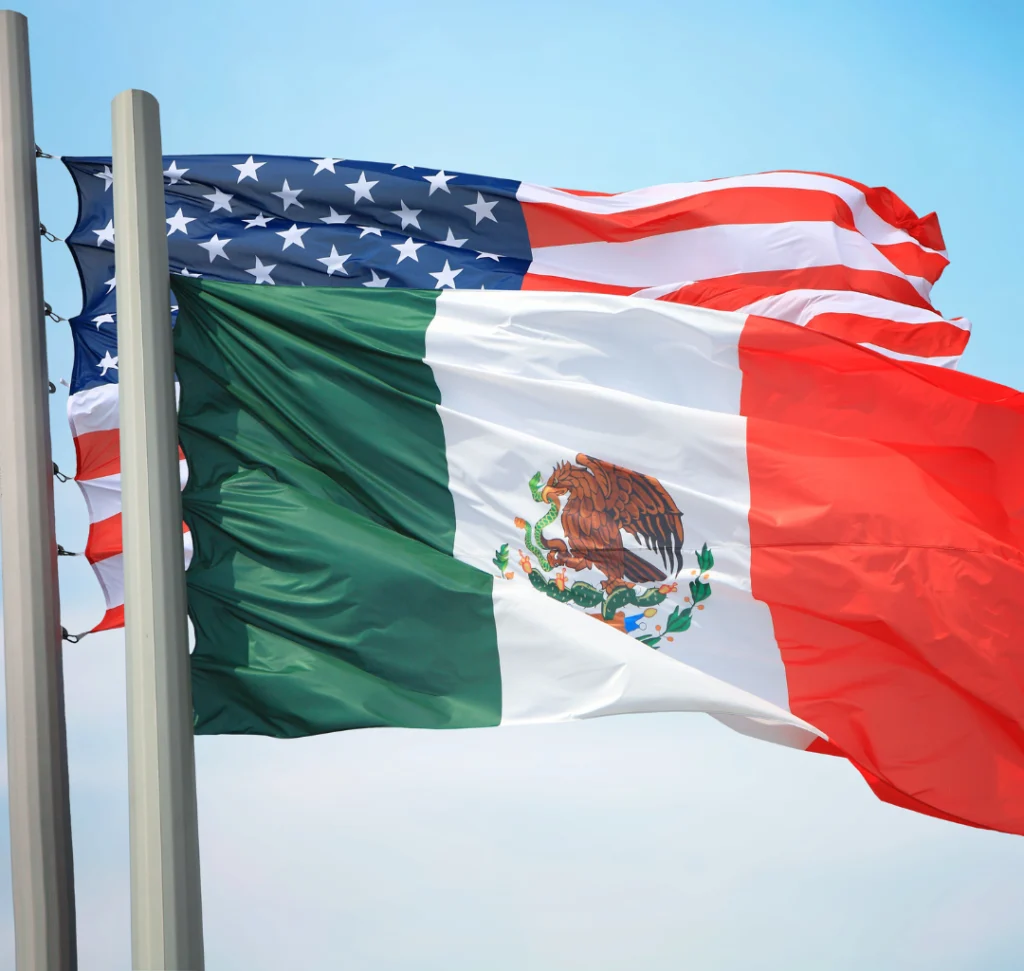
President Trump announced that he will extend the 25% tariffs on imports from Mexico for 90 days.
President Donald Trump announced Thursday that he will extend the 25% tariffs on imports from Mexico for 90 days. Following a dialogue that Trump described as “very successful” with the President of Mexico, Claudia Sheinbaum, both leaders have reached an agreement.
According to Trump, over the next three months, a period of trade negotiations between the two countries will take place with the goal of reaching a new bilateral agreement. During that time, the current tariff scheme will remain in place, imposing 25% tariffs on a wide range of Mexican products entering the U.S. market—except for those covered by the United States-Mexico-Canada Agreement (USMCA), which was signed during Trump’s first administration in 2020.
Trump also announced that higher tariffs will remain in place for certain strategic sectors. In particular, copper, aluminum, and steel products from Mexico will face tariffs of up to 50%, while automobiles will continue to be taxed at 25%. Although the president linked these tariffs to the fight against fentanyl trafficking and other border issues, no specific data was provided to support that connection.

Mexico: the United States’ top trading partner
This agreement stems from the role Mexico plays as the U.S.’s top trading partner. “The complexities of an agreement with Mexico are somewhat different from those with other nations due to both the challenges and advantages of the border,” said Trump. He also mentioned that Mexico committed to removing what he described as “non-tariff trade barriers,” although these were not specified.
Since 2023, Mexico has surpassed China as the leading supplier of goods to the United States and has become a key source of products such as automobiles, electronics, footwear, and textiles. At the same time, the Latin American country remains the second-largest destination for U.S. exports, behind only Canada.
This economic relationship has sparked concern among business sectors on both sides of the border, who fear that a trade war could jeopardize critical supply chains and the region’s economic growth. So far, the Mexican government has not taken direct retaliatory action against the tariffs imposed by Trump, but President Sheinbaum has repeatedly warned that Mexico will respond with similar tariffs if additional duties are applied to its products.

A broader tariff strategy
Trump’s announcement is part of a broader strategy of increasing tariffs, which the president has promoted as a central component of his trade policy agenda. In addition to Mexico, Canada is also facing the threat of new tariffs: if no agreement is reached before midnight Thursday, Canadian products could face tariffs of up to 35%, similar to those applied to Mexico.
Furthermore, dozens of other countries have received official letters from Trump’s team warning of future tariff hikes. Some are already beginning to feel the impact—for example, Brazil, where Trump announced a new 40% tariff on imports this week, with certain strategic exceptions.
Trump has also reiterated his intention to raise the universal tariff on products imported from countries without specific agreements, increasing the current 10% rate to a range of 15–20%. This measure could potentially affect a wide variety of countries and sectors, with possible implications for inflation and global trade.

Trucker Fashion: A Revolution Born on the Road That Still Sets the Trend
Trucker fashion remains relevant due to its authenticity, its seamless integration into streetwear, and its reinterpretation by luxury brands, consolidating itself as a revolution born on the road that evolved from a work uniform into a global cultural symbol

North Dakota among states regaining non-domiciled CDL authority
North Dakota will reissue approximately 150 of the 526 CDLs and CLPs for non-resident drivers that were active during the FMCSA audit.

The Growing Threat of Chameleon Fleets
A CBS ‘60 Minutes’ investigation exposes the rise of ‘Chameleon Fleets’ in the U.S. trucking industry.

US transportation begins to show signs of recovery
With tonnage at record levels and rates on the rise, carriers are leading the expansion of the logistics market. If the forecasts hold true, years of uncertainty could be over.

Trump Administration Restarts California Pipeline to Lower Gasoline Prices
Under Trump, the restart of the Santa Ynez Pipeline aims to boost local crude supply and impact gasoline prices amid persistently high energy costs in California.

Lawmakers push to raise minimum truck insurance compensation to $5 million
The “Fair Compensation for Truck Crash Victims Act” seeks to increase insurance requirements for interstate motor carriers.