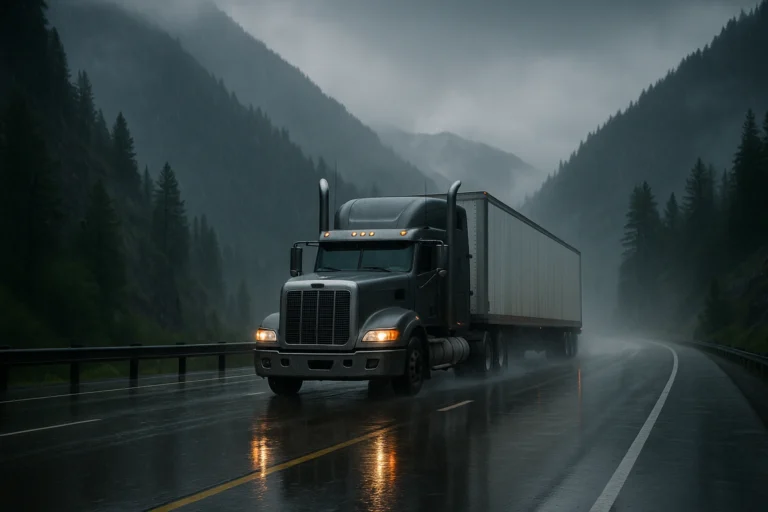
A surge of cold air, persistent rain, and pockets of mountain snow will shape weather and road conditions across the country during Thanksgiving week. The
A surge of cold air, persistent rain, and pockets of mountain snow will shape weather and road conditions across the country during Thanksgiving week. The pattern will impact major interstates, high-elevation passes, and key freight corridors, creating potential delays for OTR drivers and nationwide logistics operations.
The latest outlook from the Old Farmer’s Almanac shows a divided weather map: polar air sweeping the North and the West, mild temperatures across the South, steady rain along the Pacific Coast, and intermittent snow in the Rockies and northern regions. For truckers, that mix means icy secondary roads, reduced visibility, wet or frozen pavement, and operational challenges that could disrupt schedules.
Northeast: Bitter Cold, Rural Ice Risk, and Mostly Clear Conditions on Major Highways
Temperatures across the Northeast will run below average. While no major winter storm is expected, isolated snowflakes may appear in Vermont, Maine, and New Hampshire. The primary hazard for drivers will be ice formation on rural routes and industrial access roads, especially before sunrise.
Heavily traveled interstates — I-95, I-90, I-84 — should remain in relatively good shape, with clear skies and generally good visibility. Even so, drivers should use caution during the early morning hours, when near-freezing temperatures can create black ice on bridges, overpasses, and exit ramps.
For the Mid-Atlantic freight corridor (New York, New Jersey, Pennsylvania, and Washington, D.C.), the setup is similar: steady cold but no precipitation, an unusual pattern for late November that should allow freight flows to continue with minimal weather-related disruptions.
Midwest and Great Plains: Snow Bursts, Low Visibility, and Polar Air
In the Upper Midwest — Minnesota, Wisconsin, and the Dakotas — truckers will face intermittent snow bursts capable of reducing visibility and slicking up rural stretches of I-94, I-90, and I-29. Although temperatures will be slightly milder than normal, drivers should anticipate longer stopping distances, reduced traction, and quick shifts in road surface conditions.
In the Great Plains, polar air will dominate all week. Overnight lows near 25°F (-4°C) and winds of 15 to 20 mph could complicate operations for heavy-duty vehicles, particularly along open stretches of I-70, I-80, and the lower I-40, where crosswinds can destabilize empty or lightly loaded trailers.
While no major storm system is projected, the deep cold will elevate the risk of equipment failures, including hard starts, fuel gelling in untreated diesel, and brittle air-lines in older units.

West and Intermountain West: Persistent Rain, Mountain Snow, and Pass Delays
The West will see the most pronounced impacts. California, Nevada, and Oregon are expected to receive steady, widespread rainfall, complicating travel on high-volume freight corridors such as I-5, I-80, and US-101. Truckers can expect standing water, hydroplaning risks, and slower traffic in congested metropolitan areas.
Mountain regions will face a different challenge. The Intermountain West — Utah, Colorado, Idaho, and Montana — will see a mix of rain and snow, with light accumulation on passes above 6,000 feet (1,829 m). That includes critical freight chokepoints such as:
- Eisenhower Pass (I-70, Colorado)
- Donner Pass (I-80, California)
- Lookout Pass (I-90, Idaho–Montana)
Even minor accumulation can trigger temporary closures, chain controls, mandatory speed reductions, and long delays, especially for convoys or heavy freight traffic. Fleets may need to adjust dispatch windows, reshuffle loads, or plan alternate routing where feasible.
South and Desert Southwest: Stable Conditions and Favorable Trucking Weather
While northern states deal with cold air, the South will enjoy mild and stable conditions. Texas, New Mexico, Arizona, and the desert Southwest will see temperatures near 70°F (21°C) with only isolated showers.
This region will offer some of the best driving conditions in the country — ideal for temperature-controlled freight, time-sensitive deliveries, and cross-country operations. Major southern interstates — I-10, I-20, and I-40 (southern sections) — will remain largely unaffected by weather hazards, providing a reliable east-west corridor.
Alaska and Hawaii: Extreme Risk vs. Calm Weather
Alaska will be deep into winter, with intermittent snow and temperatures dropping below 20°F (-6°C). Truckers operating in remote regions should anticipate slick roads, limited visibility, and extended travel times, along with the constant possibility of sudden closures.
Hawaii, on the other hand, will experience stable and mild weather, with temperatures near 75°F (24°C) and brief showers that will not significantly impact logistics operations within the islands.

How to Make an Argentine Asado to Celebrate Messi
As Lionel Messi turns 39 during the 2026 World Cup, we take a look at the secrets behind Argentina’s most beloved tradition: a great barbecue shared with friends, soccer, and long conversations around the fire

Why Summer is the Most Dangerous Season for Your Truck
During summer, extreme heat, increased traffic, road construction, and mechanical stress create a combination of risks for your truck and your load.

GHOSTRUCK Act to Curb Foreign Manipulation of Truckers’ ELDs
The new bill aims to close a regulatory loophole involving foreign manipulation of ELDs.

Florida Will Mark Certain Drivers With Code 775.261
Starting in October, Florida will identify certain drivers with the code 775.261 on their licenses. What it means for CDL holders, how it could influence insurance evaluations, and the new requirements affected drivers must follow.

Amazing goals from the World Cup! Soccer moves trucks and brings billions to the US economy
The biggest sporting championship in history is injecting billions of dollars into the economy, driving up demand for heavy freight. More tourists spending, more need for services, and more jobs.

What Are the Most Expensive Trucks in the World?
With the Thor 24 leading the list at more than $13 million, these are the most expensive and exclusive trucks on the planet.