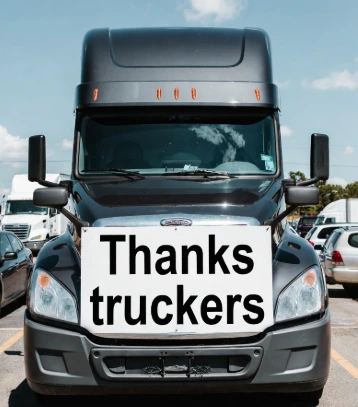
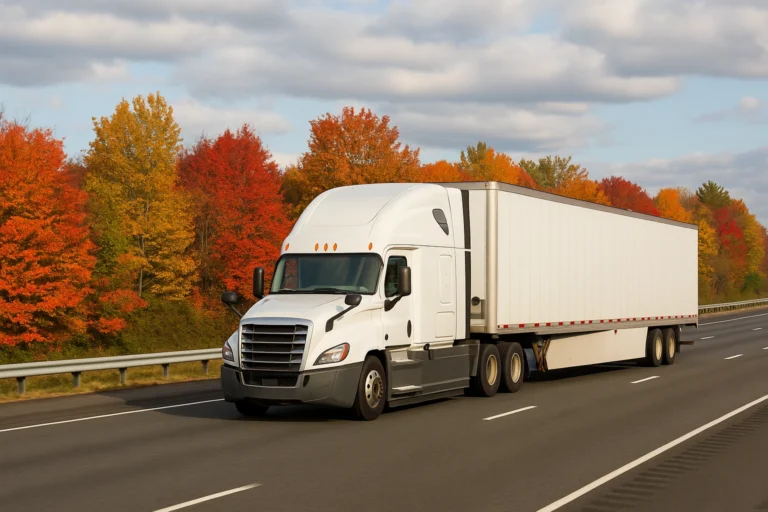
As millions of Americans prepare for Thanksgiving, the nation’s supply chain enters one of its most demanding weeks. Congested roads, winter weather, and record freight volumes put truck drivers at the center of the massive operation that keeps the holiday running.
Every year, while millions of Americans gather in their homes to celebrate Thanksgiving, another movement just as massive unfolds far from dining rooms and family tables: the logistical operation that makes the holiday possible. From mid-November through the following weekend, the U.S. transportation network experiences one of its highest operational peaks, and truck drivers stand at the center of that effort.
Though rarely visible in the holiday imagery, their work is indispensable. They are the ones traveling thousands of miles to deliver food, supplies, and essential products that allow Thanksgiving to unfold without disruption.
A Holiday That Pushes Traffic and Freight Demand to the Limit
Thanksgiving consistently produces one of the busiest travel periods in the country. According to estimates from the American Automobile Association (AAA), more than 55 million people typically travel during the holiday weekend, whether by road or air. This surge transforms major highways into some of the most congested corridors of the year.
Layered onto that congestion is an extraordinary rise in freight movement. Grocery stores restock shelves at accelerated rates, retailers prepare for Black Friday and Cyber Monday, and the distribution of fuel, perishables, and essential goods intensifies. For truck drivers, this translates into more runs, slower highways, and heightened pressure to meet delivery windows that tighten as the holiday approaches.
Everything That Travels Before It Reaches the Table
A typical Thanksgiving meal contains ingredients that may have traveled thousands of miles before reaching the table. This journey is made possible by the trucking system that moves nearly 70% of the nation’s commercial goods.
Frozen turkeys are shipped from processing facilities in states like Minnesota, Arkansas, and North Carolina. Potatoes, onions, sweet potatoes, and pumpkins travel from agricultural regions across the Northwest, California, and Texas. Beverages move through distribution centers operating at maximum capacity in November. Even pantry staples like oil, flour, and spices rely on a constant flow of trucks in the days leading up to the holiday.
The preparation doesn’t stop with food. Thanksgiving triggers millions of long-distance trips, which drives up fuel consumption. Every gas station that receives fuel ahead of the long weekend does so thanks to the work of drivers who maintain the supply chain without interruption.
A Particularly Challenging Week for Drivers
While the country prepares for family gatherings, truck drivers face some of the toughest conditions of the year. The combination of congested highways, early winter weather, and increased freight demand places drivers in a demanding environment that requires skill, patience, and endurance.
Key challenges that shape operations during Thanksgiving include:
Heavy congestion on major interstate corridors
Early snow or storms in northern and central regions
Difficulty finding safe and available parking
Extended hours to meet pre-holiday delivery deadlines
Federal roadway safety data shows a seasonal increase in incidents related to weather and traffic during November and December. As a result, the days leading up to the holiday are often marked by slower routes, unexpected detours, and continuous operations that rarely pause.
The Hidden Link Between Thanksgiving and the Year’s Biggest Shopping Weekend
While Thanksgiving is the symbolic heart of the holiday, the days that follow — Black Friday and Cyber Monday — represent an equally intense logistical challenge. Millions of online orders begin moving through distribution networks within hours.
A significant portion of that volume moves by truck, both long-haul and last-mile. For many drivers and fleet operators, the transition from Thursday’s holiday to Friday’s commercial surge involves no downtime at all — only a rapid shift in cargo types and delivery priorities.
The country relies on that continuity. The resilience of the trucking system ensures that:
stores can restock quickly,
consumers receive their purchases on time, and
logistics hubs operate at full capacity during one of the year’s most demanding weeks.
An Essential Gear in the Holiday Machinery
Thanksgiving may appear to be a national day of rest, but behind that pause is a logistical system — and thousands of truck drivers — working quietly to keep everything running. Their work ensures that food stays fresh, long-distance travel remains possible, and commerce can sustain its most intense weekend.
While the country gathers around the table, an equally important movement unfolds on the highways. Often overlooked, this effort is indispensable for Thanksgiving to exist as Americans know it.

In brief: weigh stations, young drivers, and fuel tax reform in the trucking industry
South Carolina debuts virtual weigh stations for trucking, as ATA pushes youth driver program, and states debate fuel policies. South Carolina launches virtual weigh stations

The Wildest Truck Modifications on the Road Today
Truck customization has become a serious industry, with some builds rivaling high-end RV conversions in complexity and cost. From redesigned sleepers to upgraded suspension systems, these modifications do more than change appearance — they alter weight, electrical load, and the technical profile of the truck.

The most dangerous states in the U.S. during winter weather
While winter conditions are hazardous across the country, some states experience significantly higher accident rates during this season. A study by Samsara, a safety and

Winter storm disruptions lead to FMCSA HOS relief in 40 states
Motor carriers and drivers providing direct assistance in relief efforts in the affected states are covered by a hours-of-service (HOS) exemption. Over the weekend, a

Air Quality Alert in California Impacts Transportation
An air quality alert has been issued as high levels of fine particle pollution (PM2.5) trigger health warnings across several parts of California. The situation is affecting visibility, driver health, and logistics operations, forcing transportation professionals to take extra precautions on highways and in urban corridors

Winter Storm Survival on the Road: What Truck Drivers and Fleet Operators Need to Know Now
Winter storm with snow, ice, and extreme cold are creating dangerous highway conditions across multiple states, forcing truckers to make critical safety decisions before turning the key.