 Hable con un agente al (888) 572-7520
  Enviar mensaje a un agente

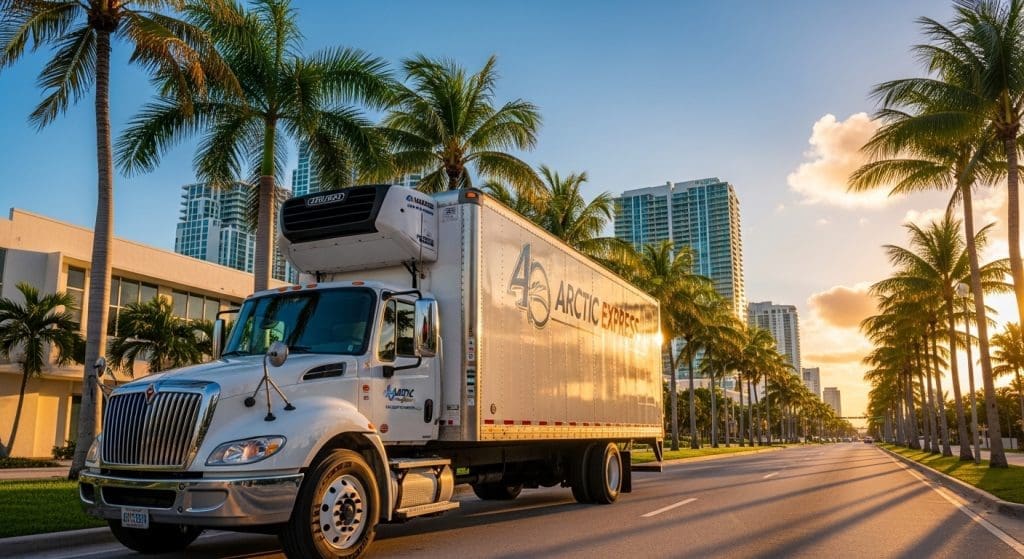

The freight transportation market in the United States has been experiencing a gradual recovery, but one segment has moved ahead of the rest and is now setting the pace for the entire industry: refrigerated transport, universally known as reefer. While other segments are still searching for balance, reefer entered 2026 with strong momentum, rising rates, and structural demand that does not depend on short economic cycles.
For operators with compliant equipment, up-to-date licenses, and well-established routes, the current landscape represents a concrete opportunity. Florida and Mexico are the epicenters of activity, and carriers can take advantage of this moment.
Reefer Leads: The Numbers That Matter
Market data is clear. The national average reefer spot rate, excluding fuel, reached $2.46 per mile in the first weeks of 2026 — a significantly elevated level, 28% higher than the same period last year and 24% above the five-year historical average.
But what matters most is not just the number itself, but the nature of that growth. According to ACT Research, the reefer segment is leading price momentum across all full truckload categories, supported by three reinforcing factors: essential cold-chain freight with consistent demand, tighter specialized capacity than other segments, and a genuine improvement in supply-demand balance.
Unlike 2024 and 2025, when prices were largely driven by temporary weather disruptions, analysts agree that the current strength of the reefer market is built on more solid foundations. Capacity contraction, carrier exits, and tighter driver availability are creating conditions that won’t reverse from one quarter to the next.
Florida: The Corridor Generating the Most Opportunities
Florida has become one of the main drivers of the refrigerated market, for reasons that go beyond produce season. In Lakeland — the state’s largest refrigerated freight market — reefer load postings increased 28% in a single week, with a sustained 35% increase since the state implemented stricter weigh station and inspection controls.
The direct result is reduced truck availability, which pushes prices upward. Corridors in Tampa, Miami, and Orlando are currently seeing demand from three simultaneous sources: healthcare and pharmaceutical distribution, retail restocking, and perishable goods shipments. These sectors compete for the same pool of refrigerated capacity, which has become increasingly scarce.
For carriers with proper documentation, certified equipment, and established regional routes, this translates into something very concrete: more available loads, better rates, and less competition in certain corridors. Shippers in Tampa, Miami, and Orlando are already paying more to secure capacity in advance, strengthening carriers’ negotiating position.
KEY DATA: FLORIDA REEFER MARKET – 2026
Lakeland load increase: +35% in the last month
Rates out of Florida: +10 cents per mile vs. last year
Primary demand: Pharmaceuticals, retail, perishables
Most active cities: Miami, Tampa, Orlando
Capacity condition: Tight / moderate shortage
Mexico–U.S. Corridor: The Route Feeding the Nation
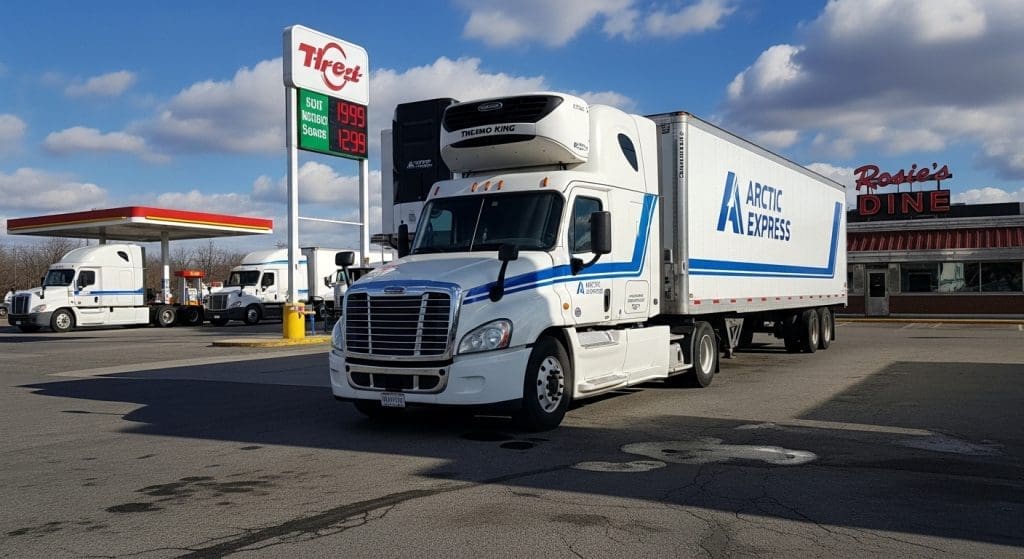
The other major engine of the reefer market is the U.S.–Mexico border. Key crossings — Nogales, McAllen, Calexico, and San Luis — move tons of fruits, vegetables, and perishables every week, supplying markets across the East Coast, Midwest, and West Coast.
McAllen, Texas, offers a clear example of current dynamics. In recent weeks, its reefer market saw a 37% weekly increase in posted loads and a 42% increase over the past month, with most shipments headed to Brooklyn (NY), Elizabeth (NJ), Miami, and Los Angeles. Spot rates out of McAllen reached $2.03 per mile and continue trending upward.
Through Nogales and Calexico flows a wide range of products: tomatoes, cucumbers, peppers, eggplants, watermelons, melons, squash, and a broad variety of fresh vegetables from northwestern Mexico’s agricultural valleys. This freight is structural — not driven by trends or short cycles — and will remain essential regardless of overall freight market conditions.
Carriers who master these cross-border routes have a real competitive advantage: knowledge of border operations, relationships with importers and exporters, and the ability to operate efficiently in a system with its own rules and timing.
Why Reefer Outperforms Other Segments
One of the most common questions in the industry is why refrigerated transport shows more resilience than dry van or flatbed in this market cycle. The answer has several layers.
First, the nature of the freight. Food and pharmaceuticals cannot wait: they have expiration dates, require uninterrupted cold chains, and serve customers who do not tolerate delays. This gives reefer carriers negotiating power that simply does not exist in other segments where freight can sit for days or weeks.
Second, equipment specialization. Not every driver can operate a reefer unit. It requires knowledge of refrigeration systems, temperature protocols depending on cargo type, and compliance with strict regulations for food and medical transport. This barrier to entry reduces competition and protects those already in the segment.
Third, the cost structure. Reefer carriers face higher expenses in insurance, maintenance, regulatory compliance, and equipment, in addition to fuel. These higher costs justify higher rates, and shippers who require these services understand and accept that.
What’s Ahead: Active Spring and Rising Contracts
Spring is expected to keep the reefer market active in the coming months. Produce flows from California, Texas, Georgia, and Florida peak between March and June, historically adding pressure on available capacity and pushing rates higher.
On the contract side, signals are also positive. Reefer contract rates are trending upward heading into Q2 2026. Strong spot market performance and rising operating costs are being reflected in contract negotiations, and shippers — still maintaining budget discipline — are finding their negotiating leverage significantly reduced compared to last year.
For independent operators and small fleets that survived the difficult years of 2024 and 2025, this is the moment to consolidate. Securing contracts with core shippers, locking in mid-term agreements on high-volume lanes, and maintaining equipment in optimal condition are now top priorities.
Strategies to Capitalize on the Moment
Stay compliant. Licenses, certifications, and permits must be fully in order. The busiest corridors are also the most heavily regulated.
Specialize by freight type. Not all reefer loads are the same. Carriers who specialize — in produce, pharmaceuticals, or dairy — build stronger relationships with shippers who value that expertise.
Use data, not intuition. Tools like DAT iQ and USDA AMS reports provide real-time visibility into market opportunities, lane rates, and truck availability. Modern carriers make data-driven decisions.
Secure mid-term contracts. While the spot market is strong, the stability of a well-negotiated contract with a reliable shipper is critical for planning and cash flow.
The Most Profitable Segment
Refrigerated transport has never been the easy path in the industry. It requires investment in equipment, strict regulatory compliance, technical expertise, and strong relationships with shippers who cannot afford mistakes in the cold chain. But for that same reason, when the market favors the segment — as it does now — the rewards are proportional to the effort.
Florida routes and the Mexico–U.S. corridor are not temporary trends. They are structural logistics arteries that move essential goods for millions of people. Carriers who understand them, operate with the right equipment, and maintain professional standards now hold a privileged position in one of the most dynamic freight markets in the United States.
2026 is the year of reefer. The question is: who is ready to take advantage of it?
 Business hours: Monday to Friday from 8:00 AM to 5:00 PM. California time