 Hable con un agente al (888) 572-7520
  Enviar mensaje a un agente

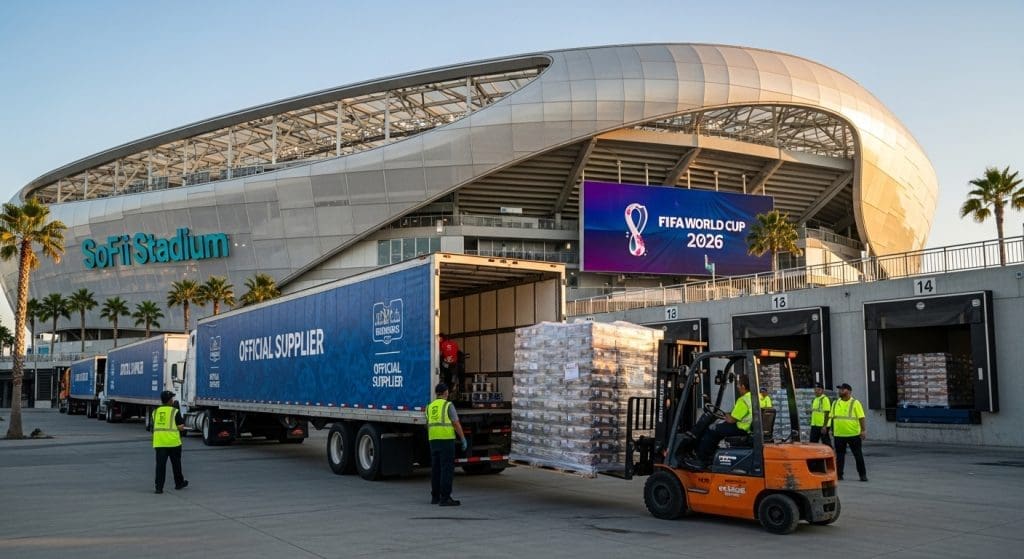

Scheduled from June 11 to July 19 across the United States, Mexico, and Canada, the World Cup 2026 will feature 48 teams and 104 matches, making it the largest sporting event ever organized. But beyond tickets and travel plans, the real challenge lies in coordinating mobility across three countries within just five weeks, amid rising prices and unprecedented demand.
The scale of the event will stretch far beyond airports and hotels. It will place significant pressure on supply chains and over-the-road freight operations across the United States.
Eleven U.S. host cities—including Los Angeles, Dallas, Miami, New York, and Atlanta—will receive millions of visitors over consecutive weeks. This will drive a surge in demand for food, beverages, merchandise, and stadium equipment. As a result, trucking activity will increase sharply, particularly between distribution centers and host cities.
For carriers, the risk is twofold: heavy congestion in urban areas and limited dock availability due to overwhelmed facilities handling event-related logistics.
One nation will lift the @FIFAWorldCup trophy at the New York New Jersey Stadium in just 100 days’ time! 🤩 pic.twitter.com/VRY0uRBFjr
— FIFA (@FIFAcom) April 10, 2026
Pressure Points for Trucking Operations
The routes serving major stadiums will be among the most affected. Venues such as SoFi Stadium in Los Angeles, AT&T Stadium in Arlington, and Hard Rock Stadium in Miami will host tens of thousands of spectators per match.
Truck drivers operating in these areas should expect:
- traffic restrictions near venues
- tighter delivery windows
- delays at urban crossings
Logistics companies already working with stadium suppliers are reviewing contracts and planning alternative routes to avoid the most congested areas.
A Temporary Logistics Shock
The tournament will create a temporary but intense disruption across freight operations:
Surge in freight volume
Transport demand will increase significantly for food, beverages, official merchandise, and stadium infrastructure. More trips to host cities will put additional strain on regional distribution hubs.
Severe congestion
Major metro areas such as Los Angeles, Dallas–Fort Worth, Miami, New York/New Jersey, and Atlanta will experience heavy traffic. Interstate highways like I-95, I-10, I-75, and I-35 are expected to slow down, increasing transit times and reducing efficiency.
Truck restrictions
Temporary road closures, restricted zones near stadiums, and enhanced security measures may limit truck access. Delivery schedules will also face stricter time constraints.
Tighter delivery windows
Suppliers will require precise delivery timing with minimal flexibility, increasing the risk of penalties for delays.
Overloaded facilities
Warehouses and docks will operate at or near capacity, leading to longer wait times and higher detention costs.
Advanced route planning
Carriers will need to rely on alternative routes, real-time routing systems, and GPS technology to navigate disruptions efficiently.
Rising operational costs
Fuel consumption, labor hours, and spot rates are expected to increase due to congestion and demand.
Driver pressure
Longer working hours, tighter schedules, and heavy traffic will raise stress levels and fatigue risks, especially under Hours of Service (HOS) regulations.
Supply chain disruptions
Retail delays and temporary stock shortages may occur, forcing companies to increase safety stock levels.
Capacity competition
High demand for trucking services will lead to increased competition among shippers and rising freight rates.
Unpredictable demand patterns
Freight flows will fluctuate based on match schedules, requiring greater flexibility from logistics operators.
Public Transit: Partial Relief
Public transportation systems—such as MARTA in Atlanta, the Los Angeles Metro, NJ Transit, and Caltrain—will help reduce some passenger vehicle traffic. However, this will not be enough to offset the surge in freight movement during peak weeks.
Planning Will Be Key
For fans, early booking of flights and accommodations will be essential as prices are expected to rise quickly. For the freight industry, the challenge is even greater.
The 2026 World Cup will require coordination across every layer of mobility—from public transit systems to long-haul trucking. More importantly, it will test the ability of the U.S. logistics sector to adapt to one of the largest mass events in recent history.
 Business hours: Monday to Friday from 8:00 AM to 5:00 PM. California time