 Hable con un agente al (888) 572-7520
  Enviar mensaje a un agente

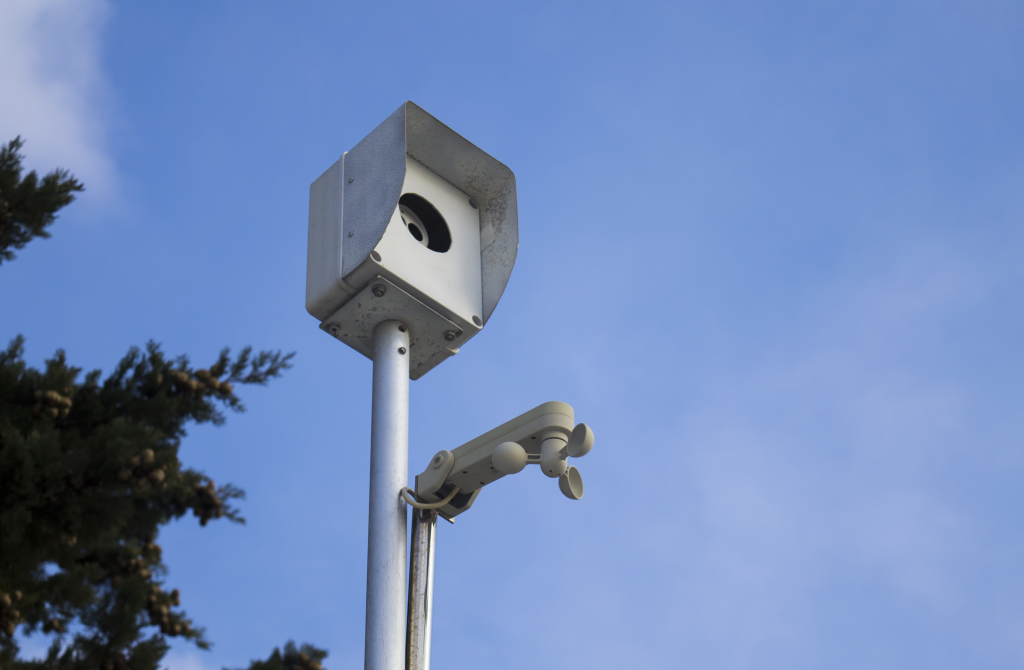

On March 15, California launched a five-year pilot program to install and operate speed enforcement cameras as part of Assembly Bill 645. The program states that speed cameras are a proven safety tool that saves lives and reduces injuries and fatalities on city streets. The cameras were installed in various areas across six California cities: Los Angeles, Long Beach, Glendale, San Francisco, Oakland, and San José.
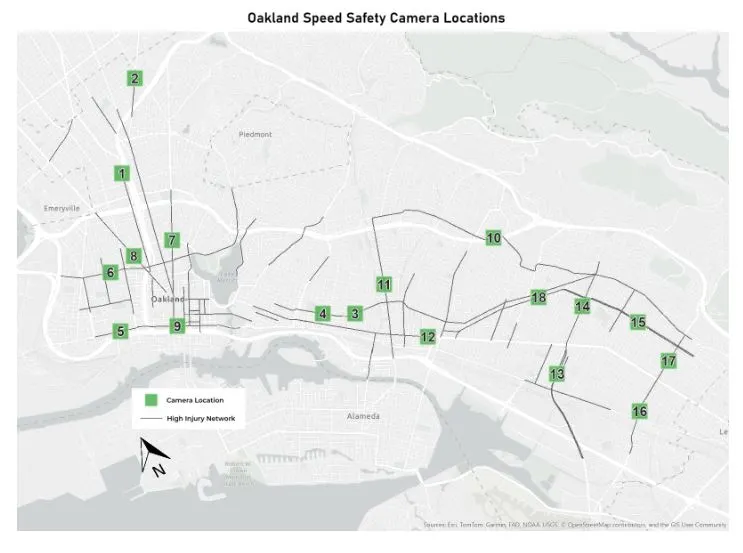
The cameras had been issuing warnings since January 14, 2026, and officially began issuing speeding tickets on March 15, 2026. The city of Oakland, which operates 35 cameras across 18 key locations, recorded approximately 82,000 citations during its first month of operation, according to preliminary data from the city’s Department of Transportation. That equals an average of 60 tickets per day per camera.
Although the system was initially activated on January 14, state law required the city to provide drivers with a 60-day grace period during which only warning notices were issued. Once the warning period ended, fines went into effect using a tiered system based on speed.
More than 80,000 speeding tickets in Oakland
The cameras issue citations by capturing the rear license plate of any vehicle traveling 11 miles per hour or more above the posted speed limit. The fines are structured as follows and are mailed to the vehicle owner:
- Between 11 and 15 mph over the speed limit: $50 fine.
- Between 16 and 25 mph over the speed limit: $100 fine.
- 26 mph or more over the speed limit: $200 fine.
- Drivers recorded at 100 mph or more: $500 fine.
Through this program, Oakland has issued more than 80,000 tickets to drivers traveling throughout the city. According to city data, the highest number of official citations was recorded on southbound 73rd Avenue in the 2345 block, where 8,127 tickets were issued. The highest recorded speed at that location was 43.7 mph.
The highest speed recorded overall by the camera network was 55.3 mph on southbound Hegenberger Road between Spencer and Hawley streets, where 6,902 citations were issued, according to data shared by The Independent.
By comparison, the city of San Francisco recorded approximately 16,500 citations during its first month of enforcement last year. In other words, Oakland showed a 396.97% increase compared to San Francisco.
Fines, safety, and privacy
The speed camera program has generated mixed opinions. However, state law requires the program to provide discounts and alternative options for low-income drivers. In Oakland, for example, offenders may qualify for significant fine reductions, request community service as an alternative form of payment, contest citations through an administrative process, or appeal decisions in superior court by paying a $25 fee.
Additionally, as part of privacy and security measures, the use of facial recognition technology is prohibited, and all collected data remains confidential.
According to data from San Francisco Gate, the Oakland Department of Transportation stated that an official follow-up report is expected to be released by the end of the summer. The report will include broader data and a comprehensive analysis of the high number of citations and the program’s overall results.
 Business hours: Monday to Friday from 8:00 AM to 5:00 PM. California time