 Hable con un agente al (888) 572-7520
  Enviar mensaje a un agente



The 2026 Atlantic hurricane season officially began on June 1 and will continue through November 30, a period that draws close attention from government agencies, businesses, transportation companies, and millions of residents living along the U.S. coastline. Although major meteorological organizations are forecasting below-average activity this year, experts agree that the threat remains significant for large portions of the country.
The National Oceanic and Atmospheric Administration (NOAA) expects between 8 and 14 named storms during the season, with 3 to 6 of those potentially becoming hurricanes. Up to three storms could strengthen into major hurricanes, reaching Category 3 or higher on the Saffir-Simpson scale. While these projections are lower than historical averages, authorities continue to stress the importance of preparedness.
“It only takes one storm to create a catastrophe” is a common message from NOAA forecasters, emphasizing that even relatively quiet hurricane seasons can result in some of the costliest disasters in history.
El Niño May Reduce Activity, But Not the Risk
One of the primary factors influencing the 2026 forecast is the presence of El Niño.
This climate pattern, characterized by warmer-than-average sea surface temperatures in the equatorial Pacific Ocean, typically increases wind shear across the Atlantic basin. Stronger wind shear can disrupt the formation and intensification of tropical systems, reducing the likelihood that storms develop into powerful hurricanes.
However, NOAA, the National Hurricane Center (NHC), and Colorado State University all agree that lower overall activity does not guarantee a season free from severe impacts.
History provides numerous examples of moderate hurricane seasons that still produced devastating consequences due to the path, intensity, or timing of a single storm.
Florida Remains the Most Vulnerable State
According to analyses from the Federal Emergency Management Agency (FEMA), Florida continues to rank as the state most exposed to tropical cyclone risks.
Its geographic location, bordered by both the Atlantic Ocean and the Gulf of Mexico, increases the likelihood of storms approaching from multiple directions. Combined with a large coastal population and extensive critical infrastructure, the state’s exposure remains exceptionally high.
FEMA risk assessments also identify several other states with elevated hurricane vulnerability, including:
- Texas
- Louisiana
- Alabama
- Mississippi
- North Carolina
- South Carolina
These regions combine long coastlines, major metropolitan areas, energy infrastructure, strategic ports, and key transportation corridors that play essential roles in the U.S. economy.
The Impact on Transportation and Logistics
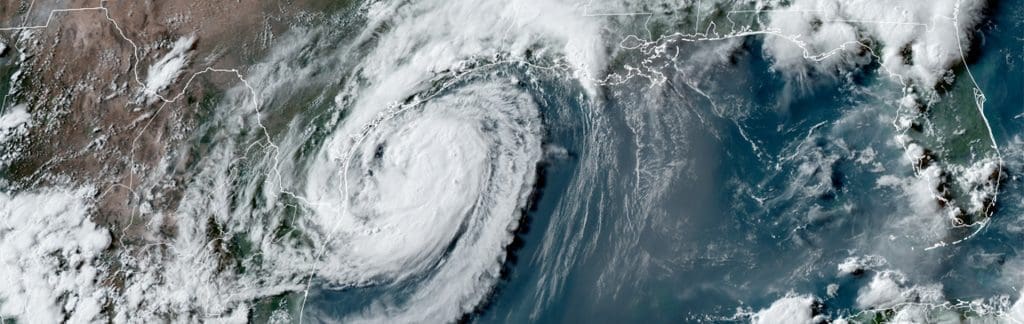
Beyond the direct damage to homes and businesses, hurricanes represent one of the greatest threats to America’s supply chain.
Major storms can force interstate highway closures, disrupt rail networks, suspend port operations, and cause widespread airport delays. The consequences often extend far beyond the immediate impact zone.
When hurricanes strike states such as Texas or Louisiana, the effects can ripple throughout the national economy due to the importance of their ports, refineries, distribution centers, and freight corridors.
Flooding remains one of the most expensive consequences. In many cases, economic losses result not only from destructive winds but also from storm surge, prolonged power outages, and interruptions to commercial activity.
Lessons from Katrina, Harvey, Ian, and Beryl
The concerns expressed by emergency management officials are supported by recent history.
Hurricane Katrina, which struck in 2005, caused more than 1,300 deaths and approximately $125 billion in damages. Hurricane Harvey, which devastated parts of Texas in 2017, generated losses estimated at nearly $158 billion after catastrophic flooding across the region.
More recently, Hurricane Ian in 2022 and Hurricane Beryl in 2024 demonstrated that even with advances in forecasting technology, tropical cyclones continue to create enormous economic and social costs.
These disasters have driven billions of dollars in investments in resilient infrastructure, early warning systems, emergency planning, and evacuation procedures throughout coastal states.
What Authorities Recommend
The U.S. Coast Guard, FEMA, and NOAA continue to encourage residents, businesses, and transportation operators to take proactive measures before storms develop.
Key recommendations include establishing emergency response plans, identifying evacuation routes, protecting critical assets, maintaining emergency supplies, and closely monitoring official weather updates.
Government agencies also emphasize the importance of business continuity planning, particularly for organizations involved in transportation, logistics, energy production, and commerce.
A Threat That Remains Every Year
Although forecasts suggest that 2026 may see fewer storms than some recent seasons, hurricane season remains one of the most significant natural hazards facing the United States.
From Florida to the Carolinas and across the Gulf Coast, millions of residents and thousands of businesses will remain on alert throughout the coming months. Experience has repeatedly shown that the total number of storms does not necessarily determine the severity of a season. In many cases, a single hurricane is enough to disrupt entire communities, paralyze supply chains, and generate billions of dollars in losses.
For official updates and preparedness information, authorities recommend consulting NOAA, the National Hurricane Center (NHC), FEMA, the U.S. Coast Guard (USCG), and Colorado State University’s Tropical Weather and Climate Research program.
 Business hours: Monday to Friday from 8:00 AM to 5:00 PM. California time