 Hable con un agente al (888) 572-7520
  Enviar mensaje a un agente

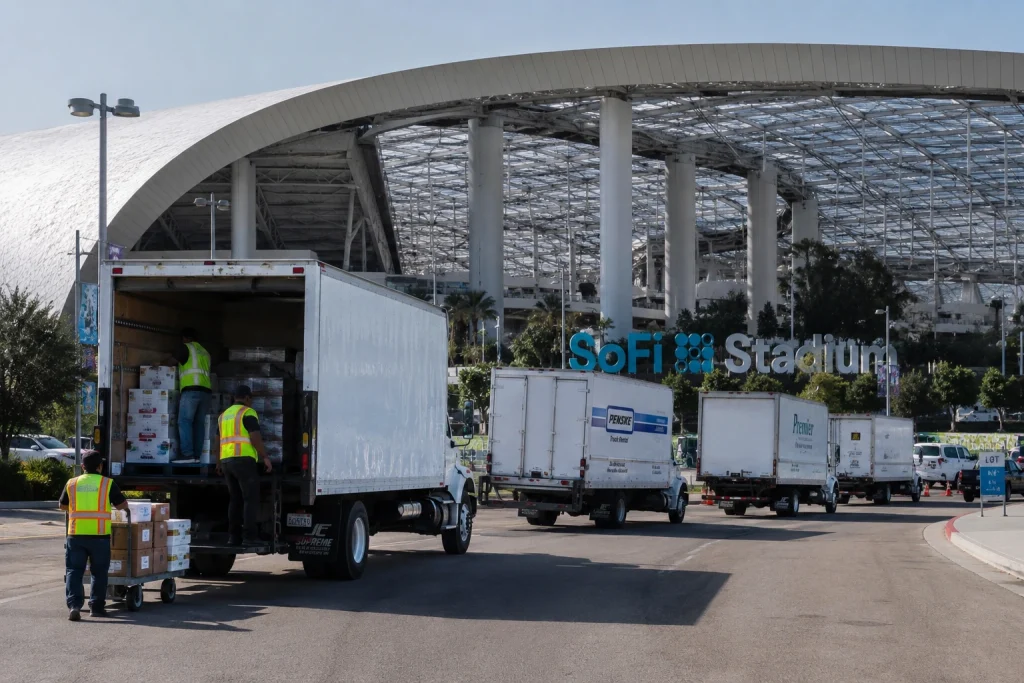

The 2026 FIFA World Cup will begin with a format unlike any previous edition: three opening ceremonies held in three different countries. Mexico, Canada, and the United States will each officially launch the tournament with massive celebrations expected to attract hundreds of thousands of visitors, create traffic restrictions, and put North America’s logistics infrastructure to the test.
For transportation companies, freight operators, and commercial fleets moving through key U.S. freight corridors, the World Cup will be much more than a sporting event. It will also present an operational challenge requiring advanced planning, route monitoring, and delivery schedule adjustments.
The first ceremony will take place on Thursday, June 11, at the historic Estadio Azteca in Mexico City, while Canada and the United States will host their own opening celebrations on Friday, June 12, in Toronto and Los Angeles, respectively.
Three Ceremonies for a Historic World Cup
FIFA has decided that each host nation will have its own opening celebration, marking a historic departure from previous World Cup tournaments.
Mexico’s ceremony will be the first and will take place at Estadio Azteca, which will become the only stadium in the world to host three World Cup opening ceremonies, having previously served as the opening venue in 1970 and 1986.
The second ceremony will be held in Toronto, Canada, while the third will take place at SoFi Stadium in Los Angeles, California, one of the world’s most modern sports venues.
U.S. Viewing Times for the Opening Ceremonies
Fans across the United States can watch the ceremonies at the following times:
Mexico – Estadio Azteca
- Eastern Time (ET): 1:30 PM
- Central Time (CT): 12:30 PM
- Mountain Time (MT): 11:30 AM
- Pacific Time (PT): 10:30 AM
Canada – Toronto Stadium
- Eastern Time (ET): 1:30 PM
- Central Time (CT): 12:30 PM
- Mountain Time (MT): 11:30 AM
- Pacific Time (PT): 10:30 AM
United States – SoFi Stadium, Los Angeles
- Eastern Time (ET): 7:30 PM
- Central Time (CT): 6:30 PM
- Mountain Time (MT): 5:30 PM
- Pacific Time (PT): 4:30 PM
Authorities are advising attendees to arrive several hours early due to security screenings and the expected volume of spectators.
Los Angeles: The Primary Logistics Hotspot in the United States
For the U.S. transportation industry, the Los Angeles ceremony is expected to create the most significant operational impacts.
SoFi Stadium is located in Inglewood, within one of the nation’s most congested metropolitan regions. Local authorities anticipate substantial increases in traffic along key corridors connected to Interstate 405, Interstate 105, Interstate 110, and State Route 91 throughout Friday, June 12.
In addition to event attendees, airports, hotels, bus terminals, and urban mobility services are expected to experience elevated activity levels.
Transportation companies operating in Southern California should prepare for potential delays in urban deliveries and consider alternative routing strategies to minimize disruptions.
Toronto Also Braces for Increased Mobility Demand
Canada’s opening ceremony will be held in Toronto, one of North America’s most important financial and logistics hubs.
Local officials expect heavy traffic volumes on major corridors including the Gardiner Expressway, Don Valley Parkway, and Highway 401, all critical routes for commercial transportation throughout Ontario.
The combination of local fans, international visitors, and tournament-related operations could create temporary congestion around the stadium and downtown areas.
Global Entertainment Spotlight
Mexico’s ceremony will feature a major entertainment lineup led by Shakira and Burna Boy, who are expected to perform “Dai Dai,” the official song of the 2026 World Cup.
Additional performers include Maná, Alejandro Fernández, Belinda, Los Ángeles Azules, J Balvin, Lila Downs, Danny Ocean, and South African artist Tyla.
FIFA has also confirmed a special tribute to Diego Maradona and Pelé at Estadio Azteca, the venue that hosted some of the most iconic moments in World Cup history.
What It Means for Transportation and Logistics
The start of the World Cup marks the beginning of more than a month of intense activity across cities in the United States, Mexico, and Canada.
For carriers, freight brokers, logistics providers, and fleet managers, the tournament will bring increased challenges related to urban congestion, temporary restrictions, large-scale events, and heightened tourism demand.
The opening ceremonies will serve as the first major test of an operation that will continue through July and move millions of people across the continent.
Planning routes in advance, monitoring real-time traffic alerts, and maintaining operational flexibility will be essential to minimizing delays and preserving efficiency during one of the largest sporting events in history.
 Business hours: Monday to Friday from 8:00 AM to 5:00 PM. California time