 Hable con un agente al (888) 572-7520
  Enviar mensaje a un agente

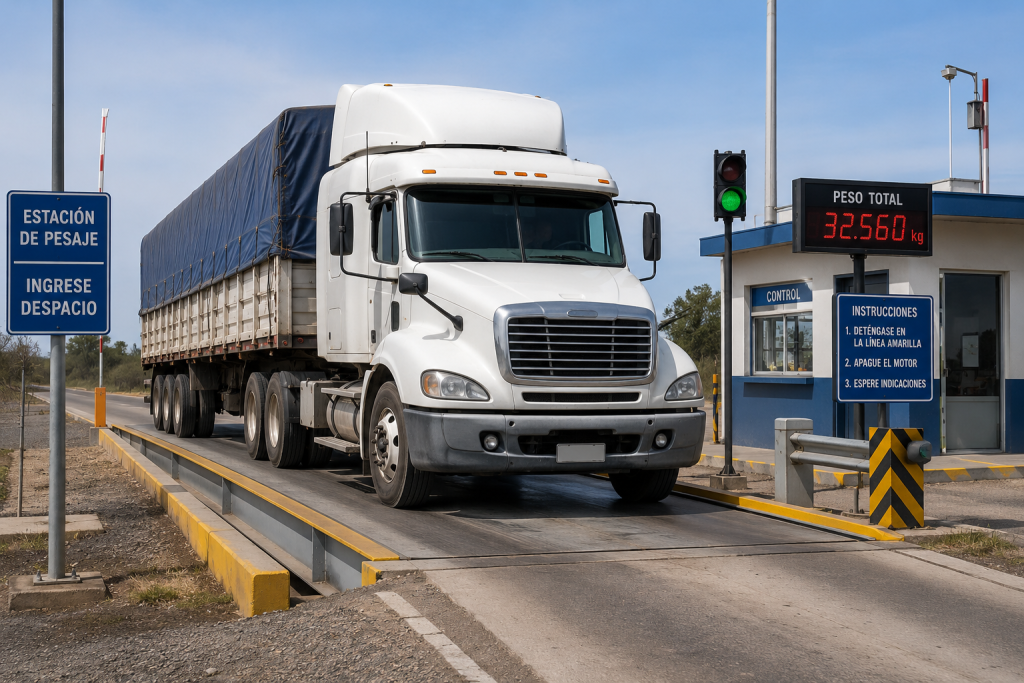

California has some of the strictest commercial vehicle weight regulations in the United States. Both trucking companies and independent owner-operators must comply with the limits established by the California Vehicle Code (CVC) to avoid fines, delays, and even vehicle impoundment.
California’s weight restrictions are designed to protect road infrastructure, improve highway safety, and prevent overloading that can negatively affect braking performance and vehicle stability. A truck that exceeds the legal weight limit can pose a significant risk to both the driver and other road users.
What Is the Maximum Legal Weight for a Truck in California?
In general, the maximum legal gross vehicle weight (GVW) for a tractor-trailer combination in California is 80,000 pounds (36,287 kg). However, there are also specific limits for each axle:
- Single axle: Up to 20,000 pounds
- Tandem axle: Up to 34,000 pounds
The allowable weight also depends on the distance between axles, according to the weight distribution formulas established under California law.
How Is Legal Truck Weight Determined?
In addition to complying with the maximum gross vehicle weight, proper load distribution is equally important to meet state regulations and avoid violations. Enforcement officers evaluate several factors to determine whether a truck complies with California’s weight laws:
- Total gross vehicle weight
- Weight on each axle
- Distance between axles
- Load distribution
- Tire load capacity
California uses specific weight tables to calculate the maximum allowable weight based on a vehicle’s configuration. As a result, two trucks with the same total weight may receive different evaluations depending on how the cargo is distributed.

Consequences of Exceeding Weight Limits
Operating a truck that exceeds California’s legal weight limits can result in penalties ranging from monetary fines to mandatory load adjustments or partial unloading of the cargo. The amount of the fine depends on the excess weight and the specific circumstances of the violation. Additional consequences may include:
- Delivery delays
- Additional inspections
- Potential penalties for both the carrier and the vehicle owner
However, when a load exceeds the legal weight limits and cannot be reasonably divided, carriers may apply for an Oversize/Overweight Permit. These permits often require additional conditions, including:
- Approved travel routes
- Restricted travel hours
- Pilot or escort vehicles, when required
- Restrictions on certain bridges and highways
Important: Operating an overweight vehicle without the required permit may result in significant penalties.
How to Avoid Weight Violations
Before operating a commercial vehicle in California, it is recommended to:
- Verify the vehicle’s weight at a certified scale
- Properly distribute the load
- Check the weight on each axle
- Confirm the vehicle’s weight capacity
- Review route restrictions before departure
Proper trip planning helps reduce operating costs and minimizes transportation delays.
Complying with California’s truck weight limits is essential for operating safely and avoiding costly penalties. Understanding the maximum gross vehicle weight, axle weight distribution requirements, and permit regulations for overweight loads helps carriers, owner-operators, and trucking companies remain compliant while reducing risks on the road.
 Business hours: Monday to Friday from 8:00 AM to 5:00 PM. California time